
Unbiased headlines. Facts, not spin.
Every story is an unbiased news briefing written from 110+ sources across the spectrum — sources linked so you can verify it yourself.
 health
Major Story (7/10)
August 18, 2026 at 01:20 AM
health
Major Story (7/10)
August 18, 2026 at 01:20 AM
Kindergarten Vaccination Rates Fall Again, Exemptions Hit Record 4.2% as CDC Posts New Data
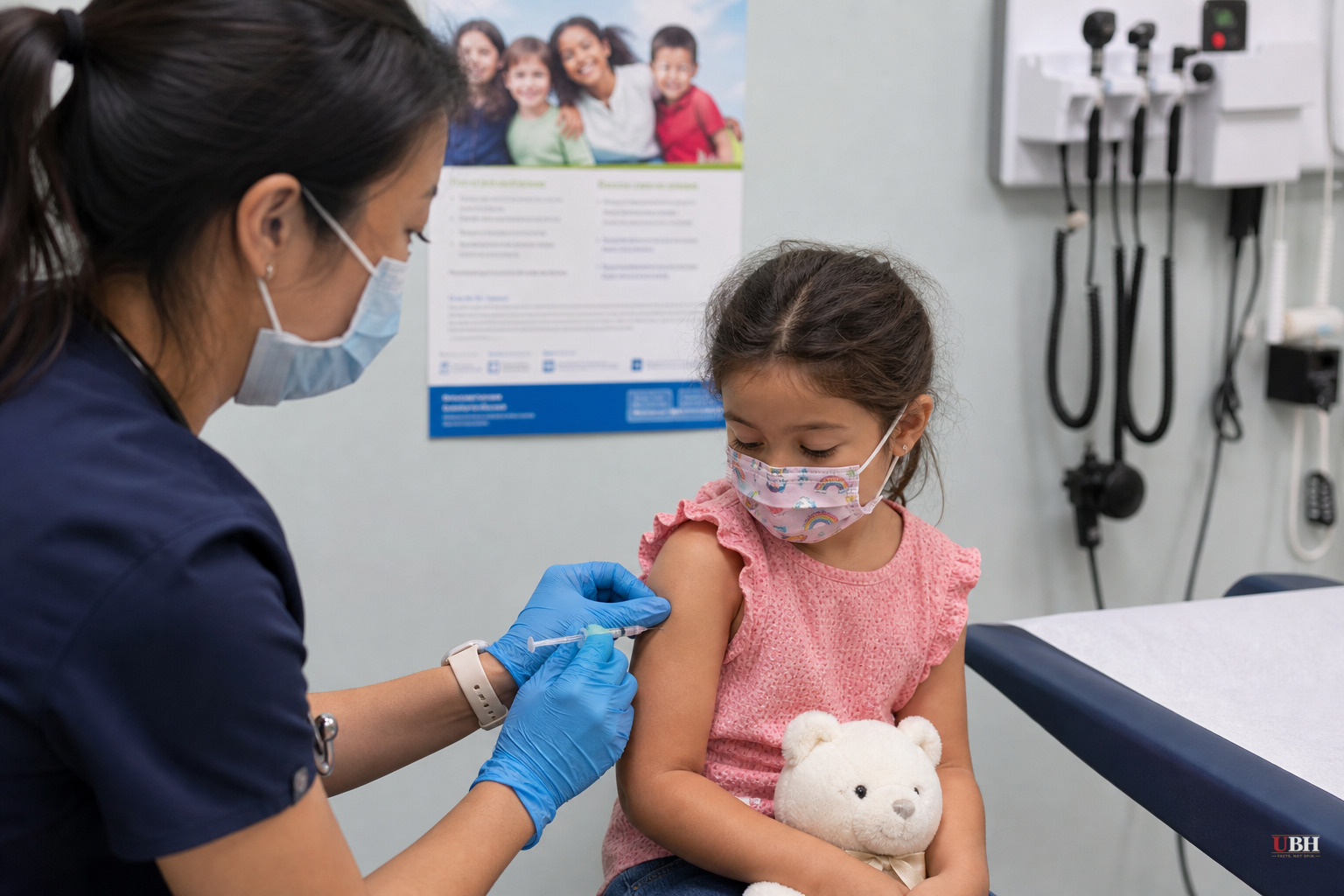
The CDC posted its annual kindergarten vaccination report Monday. The numbers keep sliding the wrong direction.
MMR coverage sits at 92.4 percent nationally for the 2025-2026 school year, down slightly from 92.5 percent the year before, according to the CDC data cited by Ars Technica. DTaP coverage dropped from 92.1 percent to 92.0 percent. Polio and first-dose chickenpox coverage also fell. Hepatitis B held steady at 94 percent, according to the Epoch Times, which noted that vaccine is given at birth and won't reflect recent federal policy shifts in kindergarten data for a few more years.
None of these numbers are close to the 95 percent threshold public health officials say is needed to stop measles from spreading through a community once it shows up. The US hit that 95 percent mark nationally as recently as the 2019-2020 school year. It hasn't gotten back there since.
Exemptions are the bigger story here. The Associated Press, whose reporting ran in PBS, The Independent, and 2news, put the national exemption rate at 4.2 percent, up from 3.6 percent the year before. That's roughly 155,000 kindergartners nationally with an exemption from at least one required shot. It's the fourth straight year the exemption rate has set a new record. Exemptions rose in 41 states plus DC.
The Epoch Times, citing the CDC's own release, pegged the number slightly differently at 4 percent nonmedical exemptions per Ars Technica's read of the same dataset, versus the AP's combined 4.2 percent figure covering all exemption types. Medical exemptions have stayed flat around 0.2 percent for years. The growth is almost entirely parents opting out for personal or religious reasons, not doctors advising against a shot for medical cause.
Twenty-four states now have exemption rates at or above 5 percent, according to Ars Technica. That's up from 14 states just two years ago. Once a state crosses that line, hitting the 95 percent coverage target becomes mathematically impossible even with perfect outreach to every family facing a real barrier to care.
Where the blame lands, depending on who you ask
Dr. James Campbell of the American Academy of Pediatrics, quoted identically across the AP-sourced pieces, blamed "chaos and confusion in vaccination recommendation systems in the last year or so." Campbell chairs the AAP's infectious diseases committee and said the data means more than a quarter million kindergartners nationally are currently susceptible to measles.
That's a real number and a real concern. Measles is airborne and one of the most contagious diseases known. The CDC's own historical data, cited by the Epoch Times, shows MMR coverage peaked at 95.2 percent back in 2019-2020 and has been sliding since.
The timing matters. This CDC release landed the same week President Trump signed an executive order on Monday, August 10, cutting the CDC's recommended childhood immunization schedule from 18 diseases to 11, according to Fox News and Breitbart. The order, branded the "Gold Standard Childhood Vaccine Recommendations," also splits the MMR shot into three separate doses given at three separate doctor visits instead of one combined shot, and drops standing recommendations for the COVID-19 vaccine and other shots for all children, while keeping them available for parents who opt in.
Trump's stated rationale, per Fox News, is that the US recommends nearly double the vaccine doses of many peer European nations, a claim backed by an HHS scientific assessment comparing US and European schedules. Breitbart reported that same HHS assessment found peer nations maintain high vaccination coverage largely through public trust and education campaigns rather than school mandates. Countries with fewer mandated doses and more spaced-out schedules haven't all seen measles come roaring back, and parents who want more control over the timing and pace of their kids' shots aren't automatically anti-science for wanting that.
The problem is the data released Monday doesn't yet reflect any of that. This kindergarten cohort was vaccinated well before the August executive order existed. What's driving the current decline, according to Campbell and the CDC's own framing, is exemption growth that's been building for four straight years, tied to state-level policy fights and eroding public confidence, not a specific federal schedule change.
Dr. Andrew Racine, president of the AAP, told the Epoch Times the schedule changes will result in lower vaccination coverage and higher disease rates going forward. The Epoch Times also noted the AAP receives funding from vaccine manufacturers, a fact relevant to weighing the group's institutional interest, though it doesn't by itself prove Racine's specific prediction wrong.
The CDC's own statement, cited by the Epoch Times, called coverage "high" despite the numbers. Under Kennedy, the agency skipped its usual detailed Morbidity and Mortality Weekly Report analysis this year, posting only raw data online, according to Ars Technica.
The open question is whether Trump's new schedule and the parental-choice push increase trust and participation the way European public-health models have, or accelerate the exemption trend that's already put 24 states below the outbreak-prevention threshold. The 2026-2027 school year data, due out roughly a year from now, will be the first real test of that.
Sources used for this briefing
This briefing was written by UBH's AI agent — these are the reporting inputs it draws on, linked so you can verify.


