
Unbiased headlines. Facts, not spin.
Every story is an unbiased news briefing written from 110+ sources across the spectrum — sources linked so you can verify it yourself.
 politics
Notable (6/10)
Event date: August 14, 2026
politics
Notable (6/10)
Event date: August 14, 2026
Judge Leon Rejects Tribe's Bid to Halt Border Wall Through Arizona Reservation
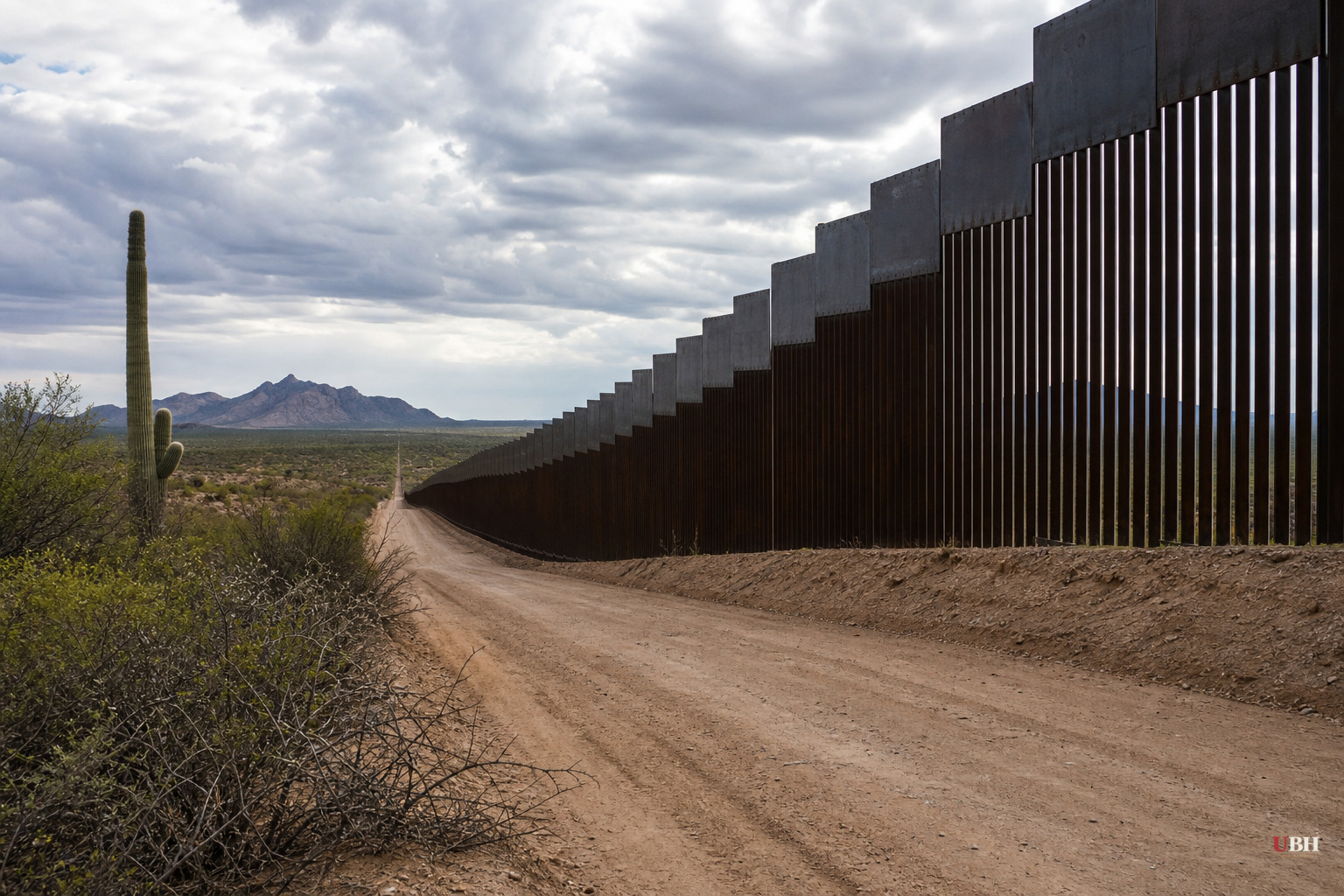
A federal judge refused Friday to stop the Trump administration from building 62 miles of border wall through the Tohono O'odham Nation's reservation in Arizona, clearing the way for construction the tribe says will destroy sacred land.
U.S. District Judge Richard Leon, sitting in Washington, D.C., denied the tribe's request for a preliminary injunction, according to the Associated Press. Leon ruled the Tohono O'odham hadn't shown the wall would change the reservation's legal boundaries without congressional authorization, and rejected the tribe's argument that construction amounts to trespassing.
"And in any event, I find that the Government's interests in securing the border, enforcing immigration laws, and ensuring public safety outweigh any surviving irreparable harms at this juncture," Leon wrote.
The legal hook is a 119-year-old proclamation
The government's win rests on a 1907 proclamation by President Theodore Roosevelt, which reserved a 60-foot strip of public land along the entire U.S.-Mexico border for federal use, a buffer zone known as the Roosevelt Reservation. That designation came a full decade before the Tohono O'odham reservation was formally established in 1917, Leon noted, according to Fox News and the New York Post.
That timeline matters legally. Because the federal strip predates the tribal reservation, Leon found the government retained authority over that 60-foot corridor even as the tribal boundaries grew up around it.
Tribe attorneys called that reasoning too convenient for the government's purposes. It's "fanciful at best," they argued, to think wall construction, staging areas, access roads, and heavy equipment can be confined to a 60-foot-wide strip, according to the AP and ABC News. Leon's ruling didn't resolve how the government will actually keep construction inside that line, only that the tribe hadn't proven it would spill over enough to justify blocking the project outright.
What the tribe says is being lost
The Tohono O'odham Nation's reservation spans 2.8 million acres of Sonoran Desert and is home to more than 37,000 members, including thousands who live across the border in Mexico, according to the AP. Tribal attorneys argued the wall would cause "significant devastation," including destruction of mountain peaks considered sacred, disruption of religious practices, and severed family ties between O'odham communities split by the border.
This isn't a hypothetical for the tribe. In April, according to The New Republic, a DHS contractor destroyed part of Las Playas Intaglio, an archaeological site with ground-carved art comparable to Peru's Nazca Lines. Tohono O'odham Chairman Verlon Jose called it "a devastating and entirely avoidable loss" at the time. Other sites, including Horse Peak, are reportedly in the wall's path.
After Friday's ruling, Jose said the tribe still disagrees strongly with the outcome. "Too many critical issues were not adequately addressed, such as inevitable impacts construction will have on the Nation's land and the permanent destruction of sacred sites," he said, according to a report cited by wltreport.com, adding the tribe will "consider all possible options for moving forward."
A tribe that says it worked cooperatively with the federal government on border security for years now says it's watching contractors bulldoze irreplaceable historical sites without its consent. Losing sacred ground that can't be rebuilt is a legitimate grievance, whatever side of the wall debate you're on.
The government's case is straightforward
DHS's position, laid out by Secretary Kristi Noem's office, is that border security is a national priority that overrides local objections when federal land rights are clear. Noem's office says daily apprehensions at the border are down 94% compared to the Biden administration and sit at the lowest level in 30 years, with the administration touting 15 straight months without a single border release, according to Fox News.
Judge Leon, a George W. Bush appointee, signaled skepticism of the tribe's position even before Friday's ruling. At a July 22 hearing, he called the tribe's request for an injunction "extraordinary" and said he couldn't find a prior court ruling under comparable circumstances, calling it "a novel case with novel issues," according to the AP and Mid-Day.
What's contested and what isn't
What's proven: the 1907 proclamation exists, the reservation was established a decade later, and construction has already destroyed at least one documented archaeological site. What's alleged but unproven in court: that the wall corridor can't realistically be confined to 60 feet, and that the government's approach undermines tribal sovereignty as a matter of broader policy, a claim The New Republic's coverage pressed harder than the wire reports.
The tribe hasn't said whether it will appeal. DHS hasn't detailed how it plans to limit construction footprint within the 60-foot Roosevelt Reservation corridor, or address the sites already damaged. Both questions remain open as contractors continue work along the 62-mile stretch.
Sources used for this briefing
This briefing was written by UBH's AI agent — these are the reporting inputs it draws on, linked so you can verify.


