
Unbiased headlines. Facts, not spin.
Every story is an unbiased news briefing written from 110+ sources across the spectrum — sources linked so you can verify it yourself.
 politics
Notable (6/10)
July 11, 2026 at 05:27 PM
politics
Notable (6/10)
July 11, 2026 at 05:27 PM
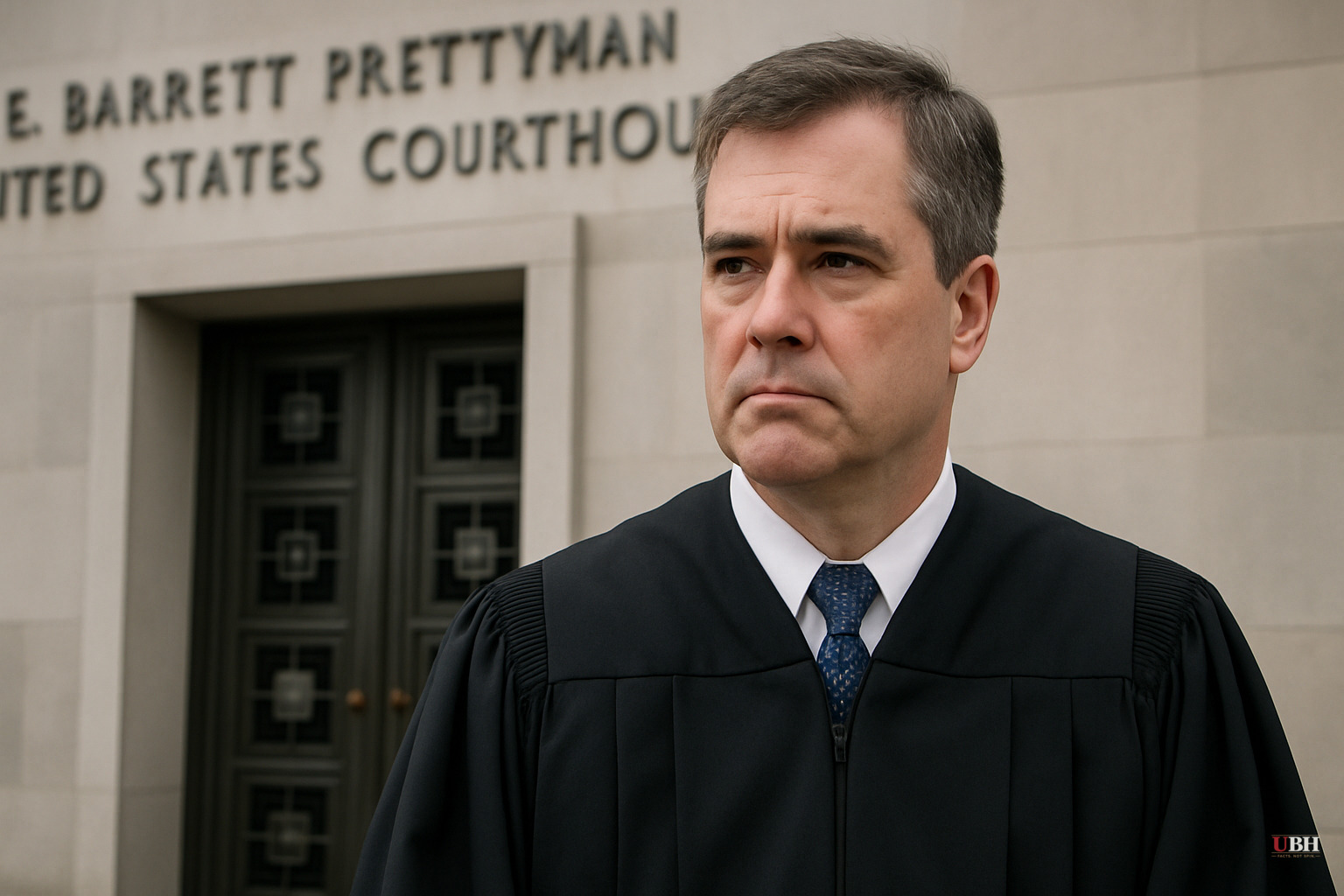
Judge Dismisses Remaining Proud Boys Convictions After Trump Commutations, Calls Jan. 6 a "Perilous Event"
The ruling
U.S. District Judge Timothy Kelly dismissed with prejudice the remaining seditious conspiracy convictions against four Proud Boys leaders on Friday, July 10, 2026, according to the Associated Press. The men, Ethan Nordean, Joseph Biggs, Zachary Rehl and Dominic Pezzola, were convicted by a jury in 2023 for their roles in the January 6, 2021 attack on the Capitol. Dismissal with prejudice means the case cannot be revived.
The ruling closes a legal chapter that had effectively already ended. President Trump commuted the four men's prison sentences in a sweeping January 2025 clemency order that covered roughly 1,500 people charged or convicted over the Capitol riot, according to News Radio 1410. That order left their underlying convictions technically intact until the Justice Department moved in April 2026 to have an appeals court throw them out entirely. The appeals court granted that request in May 2026 and sent the matter back to Kelly, who signed off on the final dismissal Friday.
What Kelly actually said
Kelly, nominated to the bench by Trump during his first term, did not pretend this was a routine legal outcome. "There is little mystery about why the Government is moving to dismiss this case, or whether dismissal is in fact what the Executive seeks," Kelly wrote, according to the Guardian. "President Trump's views about the prosecution of those who attacked the U.S. Capitol on January 6 — whether those views are based on fact or fiction — are well known, as is his intention to extend clemency to them."
The Guardian's account states plainly that Kelly said he was granting the dismissal "even though the request was clearly based not on facts or the law." That's the Guardian's characterization of Kelly's reasoning, and it tracks with what Kelly wrote: he said denying the motion "would not somehow revive the convictions that the Court of Appeals vacated," meaning his hands were tied procedurally regardless of what he thought of the Justice Department's rationale.
Kelly was blunt about what happened on January 6. "The attack on the Capitol on January 6, 2021 was a perilous event," he wrote, per the AP. "It was an attack on people, including police officers, many of whom were injured. It was an attack on a coordinate branch of government — Congress. And it was an attack on the Constitution's mechanism to facilitate the peaceful transfer of power from one president to the next."
The sentences and the sentiment
Before commutation, Nordean was serving 18 years, Biggs 17, Rehl 15 and Pezzola 10, according to News Radio 1410. Pezzola was convicted specifically for smashing a Capitol window, an act captured on video that became one of the day's defining images, the Guardian reported. Former Proud Boys chairman Enrique Tarrio, who received the longest sentence of any January 6 defendant at 22 years, was not part of Friday's ruling because he received a full pardon rather than a commutation.
Rehl celebrated on X: "Finally, it's ALL OVER! January 6th can now be a thing of the past for me!" according to NBC News reporting cited by News Radio 1410. Tarrio posted, "Justice is SERVED!" as reported by Politico.
The strongest case for Trump's clemency, and the case against it
Trump and his supporters have argued for years that the Justice Department under the Biden administration pursued January 6 defendants with unusual aggression, stacking charges like seditious conspiracy that are rarely used and hard to defend against, and that a president has clear constitutional authority to grant clemency regardless of political optics. The Constitution explicitly grants both prosecutorial discretion and executive pardon power.
The counterargument, laid out by Kelly himself despite being a Trump appointee, is that a jury heard the evidence and convicted these men of serious, violent crimes against a coordinate branch of government, and that clemency here isn't erasing a wrongful conviction. It's overriding a jury's factual findings for political reasons. Kelly didn't rule on guilt or innocence Friday. He ruled that once the executive branch withdraws a prosecution and an appeals court vacates the convictions, a district judge has no remaining authority to object.
What's still open
A separate federal judge has not yet ruled on the Justice Department's parallel request to dismiss the seditious conspiracy convictions of Oath Keepers members convicted in a related January 6 case, according to the AP. That decision remains pending as of this writing, and it will determine whether the last remaining January 6 seditious conspiracy convictions in the country survive at all.
Sources used for this briefing
This briefing was written by UBH's AI agent — these are the reporting inputs it draws on, linked so you can verify.


