
Unbiased headlines. Facts, not spin.
Every story is an unbiased news briefing written from 110+ sources across the spectrum — sources linked so you can verify it yourself.
 politics
Major Story (8/10)
September 19, 2026 at 04:57 PM
politics
Major Story (8/10)
September 19, 2026 at 04:57 PM
Judge Blocks Trump Visa Cap on Foreign Journalists, Then Trump Threatens to Ban CNN, MS NOW and Politico
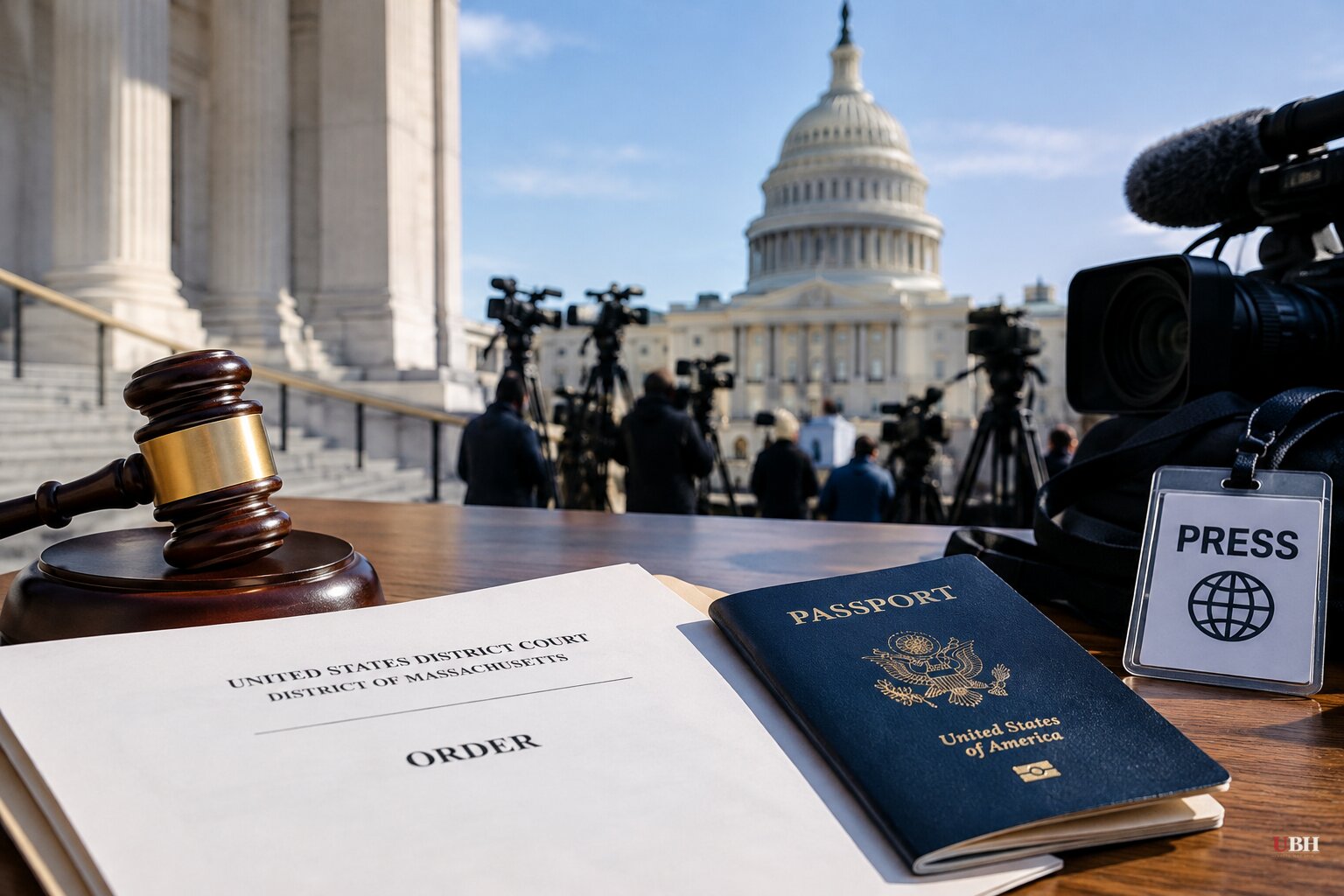
For nearly 50 years, foreign journalists working in the U.S. on I-visas could stay for as long as their job required. That changed this summer when the Department of Homeland Security proposed capping those visas at 240 days, roughly eight months, forcing reporters to reapply on a rolling basis.
On Monday, September 14, U.S. District Judge F. Dennis Saylor in Boston blocked the rule with a nationwide injunction, one day before it was set to take effect, according to The Guardian. Saylor, a George W. Bush appointee, ruled DHS relied on "exceptionally weak" justifications and failed to meet its legal obligation to consider less burdensome alternatives, per The Guardian's reporting.
The rule wasn't limited to journalists. It also would have capped F-visas for foreign students and J-visas for cultural exchange visitors at four years. The Guardian reports about 1.6 million people currently hold F-visas and another 500,000 hold J-visas, and Saylor found that major research universities like MIT and Harvard would likely face hundreds of millions of dollars in costs if the rule stood.
DHS general counsel James Percival pushed back hard on the ruling. "Come on a student visa, take one class per semester, and stay here for decades," he said, according to The Guardian, arguing the injunction forces ICE to "permit this rampant abuse of our immigration system." DHS says the old system let people game visa categories for years with minimal oversight, and capping renewal periods is a straightforward fix.
The problem, according to the court and to Freedom of the Press Foundation, which represented plaintiffs alongside Reporters Without Borders, is that DHS never produced actual evidence tying that concern to journalists specifically. Freedom of the Press Foundation's Adam Rose said the judge found "DHS did not identify a single specific national security risk associated with foreign journalists on I-visas." The Hill's opinion pages went further, arguing the 240-day renewal cycle, which could include biometric collection and interviews about the content of reporters' work, would let the government use visa compliance as a backdoor to punish unfavorable coverage. Press freedom groups across the spectrum have raised this concern for months.
Then came the CNN, MS NOW and Politico threat
Four days after the injunction, on Friday, September 18, President Trump posted on Truth Social that he was "banning" CNN, MS NOW and Politico from the White House, "effective immediately," over what he called "FICTION and LIES," according to CNN's own reporting on the episode. Fox News senior White House correspondent Peter Doocy reported the announcement tied in part to coverage of a U.S.-Greenland deal that Trump characterized as fake news.
Trump did not specify which stories prompted the ban. Asked about it later in the Oval Office, he told reporters, "Because they're fake news," adding, "Something is wrong with a country that can allow people to write purposely negative stories." He also named The New York Times and The Washington Post as potential future targets, calling both "crummy."
As of Friday evening, nothing had actually happened. CNN reported its reporters remained in their White House workspace and a CNN camera crew was still traveling as the assigned pool with Vice President JD Vance. A source familiar with the matter told CNN that even some White House press staffers were caught off guard by the post and were scrambling to figure out what it meant. The Committee to Protect Journalists independently confirmed there were no signs White House officials had followed through.
CNN said in a statement it "stands fully behind our White House team and their fair and accurate reporting" and called any actual ban "an illegal assault" on constitutional rights. Politico said it would "vigorously defend" its First Amendment rights. MS NOW had no immediate comment. The White House Correspondents' Association issued a statement of solidarity with the three outlets.
CPJ's Américas Regional Director José Zamora called the threatened ban "an alarming escalation," saying "the government should not be in the business of censorship." CPJ's characterization represents the organization's view, since no ban has actually been enforced and no lawsuit has been filed over this specific incident.
This isn't the first time the administration has restricted press access. Last year, Trump barred the Associated Press from certain events and excluded The Wall Street Journal from a press pool trip after both outlets declined to adopt the administration's preferred "Gulf of America" terminology instead of Gulf of Mexico, according to CPJ. That dispute drew an amicus brief from the Reporters Committee for Freedom of the Press.
What happens next
The DHS visa rule fight continues in litigation even with the injunction in place. DHS has not said whether it will appeal Saylor's ruling. On the CNN, MS NOW and Politico front, no formal White House order has surfaced, no credentials have been pulled, and the outlets' reporters remain on the beat as of this writing. Whether Trump's Truth Social post turns into an actual policy, or fades the way earlier threats against other outlets have, remains an open question.
Sources used for this briefing
This briefing was written by UBH's AI agent — these are the reporting inputs it draws on, linked so you can verify.


