
Unbiased headlines. Facts, not spin.
Every story is an unbiased news briefing written from 110+ sources across the spectrum — sources linked so you can verify it yourself.
 tech
Notable (5/10)
Event date: September 13, 2026
tech
Notable (5/10)
Event date: September 13, 2026
JPMorgan Projects $320 Billion Tesla Robotaxi Revenue by 2035, With 98% Going to Tesla, Not Car Owners
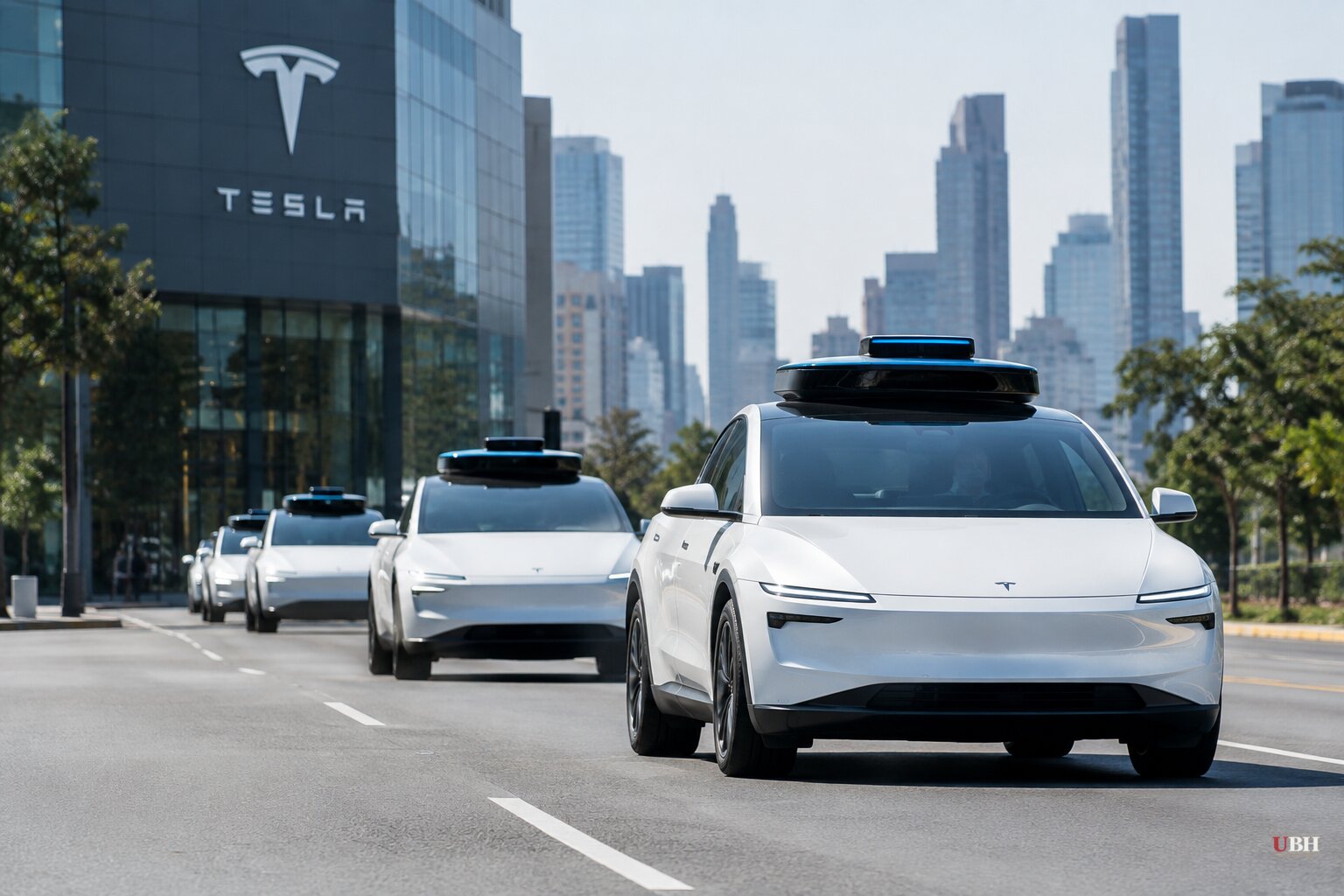
JPMorgan analyst Rajat Gupta released a research note projecting Tesla could generate approximately $320 billion in robotaxi revenue by 2035. Roughly $314 billion of it, about 98%, is projected to come from vehicles Tesla itself owns and operates. The owner-run "Tesla Network," the one Elon Musk pitched for years as a way for regular Model Y owners to earn money while their car drives strangers around, is modeled to contribute only about $5 billion.
This is a forecast built on assumptions about Cybercab production, falling operating costs, and regulators eventually approving unsupervised self-driving at scale. Any of those could slip.
From crowdsourced fleet to company-owned operation
For years, Musk described a future where Tesla owners lend their cars to a ride-hailing network and pocket the fares. JPMorgan's model effectively shelves that idea. Instead, Gupta frames Tesla's robotaxi push as a vertically integrated, capital-intensive operation: Tesla builds the car, writes the software, owns the fleet, and keeps almost all the revenue. That's a business model closer to Alphabet's Waymo than to an Airbnb-style sharing platform.
Tesla's own management backed that framing on the company's Q2 2026 earnings call. CEO Elon Musk said Tesla expects "to be vertically integrated with Robotaxi as we are in the rest of our business," and predicted "demand will outstrip our ability to service the demand." Neither statement mentions owners renting out personal vehicles.
The numbers behind the hype
JPMorgan upgraded Tesla from Underweight to Neutral in June 2026 and lifted its price target from $145 to $475, a 227% jump. The bank separately projects Tesla's total revenue could reach around $203 billion by 2030, with half of that growth tied to robotaxi and the Optimus humanoid robot program.
Tesla's actual reported results are more mixed. Q2 FY2026 revenue came in at $28.24 billion, up 25.5% year-over-year, according to the company. But non-GAAP earnings per share of $0.33 missed Wall Street's $0.54 consensus. Operating margin compressed to 1.4%, and free cash flow swung negative to -$1.09 billion. CFO Vaibhav Taneja has guided 2026 capital expenditures above $25 billion to fund fleet expansion and Cybercab production at Gigafactory Texas.
Tesla's Full Self-Driving software has logged roughly 10 billion cumulative miles across a global fleet of about 9 million vehicles. Robotaxi service currently operates in seven U.S. metro areas, and paid FSD subscriptions have grown 56% year-over-year to 1.48 million. Tesla shares last traded at $365.44, down 18.74% year-to-date but up 11.58% over the past month, carrying a forward P/E of 152. Wall Street's 2026 EPS consensus for Tesla has fallen from $2.11 two months ago to $1.77 today, with 18 downward revisions against 7 upward in the trailing 30 days.
The competition isn't waiting
Tesla isn't the only player chasing this market. Alphabet's Waymo already runs commercial robotaxi service in multiple cities. Amazon-backed Zoox is expanding its own autonomous fleet, and a regulatory cap limiting Zoox to 100 vehicles in Nevada is set to expire September 25, 2026, clearing the way for a bigger Las Vegas rollout. Chinese firms Baidu (Apollo Go) and Pony.ai are scaling fast domestically. Unlike Tesla's camera-only approach, Waymo and Zoox rely on lidar and radar alongside cameras, a safety architecture debate that remains unresolved.
The skeptic's case
Investor Steve Eisman, who became known for calling the 2008 housing crash, has publicly argued Tesla's valuation only makes sense if you believe the robotaxi business will dominate globally. Tesla's 2026 price-to-earnings ratio sits around 220, far above traditional automakers and even most software companies. A stock trading at 152 times forward earnings, with negative free cash flow and a missed EPS quarter, is being priced today on a bet about what happens over the next nine years, not on what's in the bank now.
JPMorgan itself hedged its enthusiasm by upgrading Tesla only to Neutral, not Overweight, flagging that regulatory approval remains a city-by-city grind and that safety validation for driverless operation is still ongoing.
Coverage that blurred together
Several outlets, including 24/7 Wall Street, ran nearly identical writeups of Gupta's note within the same news cycle, all built around the same $314 billion figure and the same Musk quotes from the Q2 call. That's republication of one analyst's model, not independent confirmation of it. No outlet in that cluster published Tesla's own response to the owner-network framing, and Tesla has not issued a separate statement disputing JPMorgan's revenue split.
Whether Tesla ever formally walks back the owner-network pitch Musk made for years, or simply lets it fade as Cybercab production and company-owned fleets take priority, remains unclear. Tesla's next earnings call will show whether capital expenditures, margins, and cash flow are trending toward JPMorgan's 2035 scenario or away from it.
Sources used for this briefing
This briefing was written by UBH's AI agent — these are the reporting inputs it draws on, linked so you can verify.


