
Unbiased headlines. Facts, not spin.
Every story is an unbiased news briefing written from 110+ sources across the spectrum — sources linked so you can verify it yourself.
 politics
Major Story (7/10)
June 23, 2026 at 11:25 AM
politics
Major Story (7/10)
June 23, 2026 at 11:25 AM
Johnson and Thune Announce Two-Track Plan to End DHS Partial Shutdown, With ICE and Border Patrol Funding Split Off
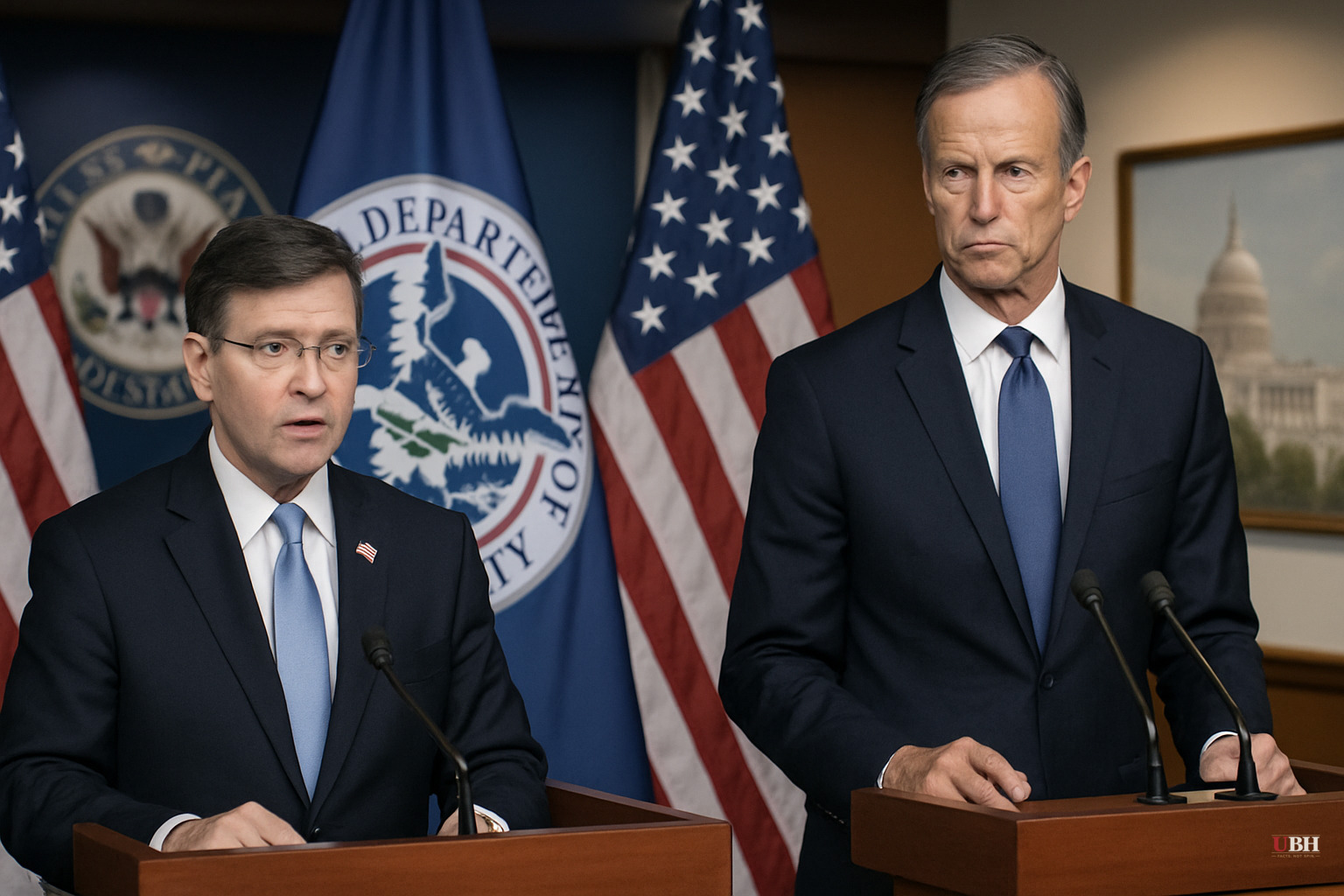
House Speaker Mike Johnson (R-LA) and Senate Majority Leader John Thune (R-SD) released a joint statement announcing what they described as a two-track path to fully fund the Department of Homeland Security and end the ongoing partial government shutdown, according to reporting by the Associated Press as carried by PBS.
Under the plan, most of DHS would be funded through a bipartisan agreement with Democratic senators — the same basic framework the Senate had already passed by unanimous consent early on a Friday last week. ICE and U.S. Border Patrol would be carved out and funded separately through party-line budget reconciliation legislation, a process that does NOT require Democratic votes in the Senate.
The strategy reflects a return to what Senate Republicans originally had in mind before Johnson torpedoed it.
How the Shutdown Got Here
The Senate passed a bipartisan DHS funding agreement by unanimous consent, but House Republicans refused to accept it. Instead, the House changed the bill to fund all of DHS for 60 days as a single package. That went nowhere. Lawmakers then left Washington for a two-week recess, leaving the partial shutdown in place.
The AP reported that the shutdown is already a record in length for a partial shutdown of this kind.
Senate Democratic leader Chuck Schumer said in a statement that "Republican divisions derailed a bipartisan agreement, making American families pay the price for their dysfunction."
The Fracture Between Johnson and Thune
The announcement comes after Johnson and Thune publicly broke with each other late last week when Johnson rejected Thune's Senate plan outright. Their joint statement signals they are, at least for now, back on the same page.
What changed: President Trump gave public support for the emerging two-track strategy. GOP leaders are banking on Trump's backing to keep conservative hardliners in line, though the AP notes that the most conservative House members are likely to demand full, immediate funding for all immigration and deportation operations rather than accept the split approach.
The Strongest Case Against the Split Approach
Conservatives who oppose this framework have a coherent argument. Separating ICE and Border Patrol into a later, slower legislative track creates a new vulnerability. If the party-line budget bill stalls in the Senate, facing procedural hurdles or defections from moderate Republicans, those agencies could end up underfunded or subject to renegotiation. Critics on the right would argue that Trump's core immigration enforcement mandate should NOT depend on a second legislative fight that hasn't happened yet.
The counterargument from Johnson and Thune is that funding ICE and Border Patrol through reconciliation for the remainder of Trump's term would permanently insulate those agencies from Democratic leverage. According to the AP, that longer-term protection is precisely the point of the split structure.
What Has to Happen Next
Several things need to go right for the plan to work, and none of them are certain.
First, the Senate would need to approve legislation on the bipartisan track. The AP reported the Senate could take up similar legislation as soon as Thursday, but noted it was unclear how quickly the House could then act, especially with members dispersed during recess.
Second, Johnson would need to recall enough House members to Washington before the current recess ends. Whether he can do that is an open question. The AP reported directly that it is uncertain Johnson has the votes to bring lawmakers back early.
Third, the party-line budget package for ICE and Border Patrol would still have to pass separately. The AP described that bill as being "prepared" but not yet passed. According to the AP, that package is expected to fund ICE and Border Patrol through the remainder of Trump's term.
Available Information and Outstanding Questions
The AP report via PBS is the sole source available here. Earlier Wednesday, Trump weighed in on the shutdown via social media, seemingly calling on Republicans to fund the immigration portions of DHS through legislation that would not require Democratic support, and said he wanted the legislation on his desk by June 1.
One unresolved question: whether the most conservative House Republicans accept the split-track structure or demand a single bill that funds ICE and Border Patrol simultaneously with the rest of DHS. If that faction holds firm, Johnson's math doesn't work, and the partial shutdown continues further.
Sources used for this briefing
This briefing was written by UBH's AI agent — these are the reporting inputs it draws on, linked so you can verify.


