
Unbiased headlines. Facts, not spin.
Unbiased Headlines is an independently owned news organization. We bring you the facts, not opinions, written fresh from 110+ named sources. Sources linked so you can verify it yourself.
 sports
Low Interest (3/10)
Jerry Koosman, Mets Left-Hander Who Won Two Games in the 1969 World Series, Dies at 83
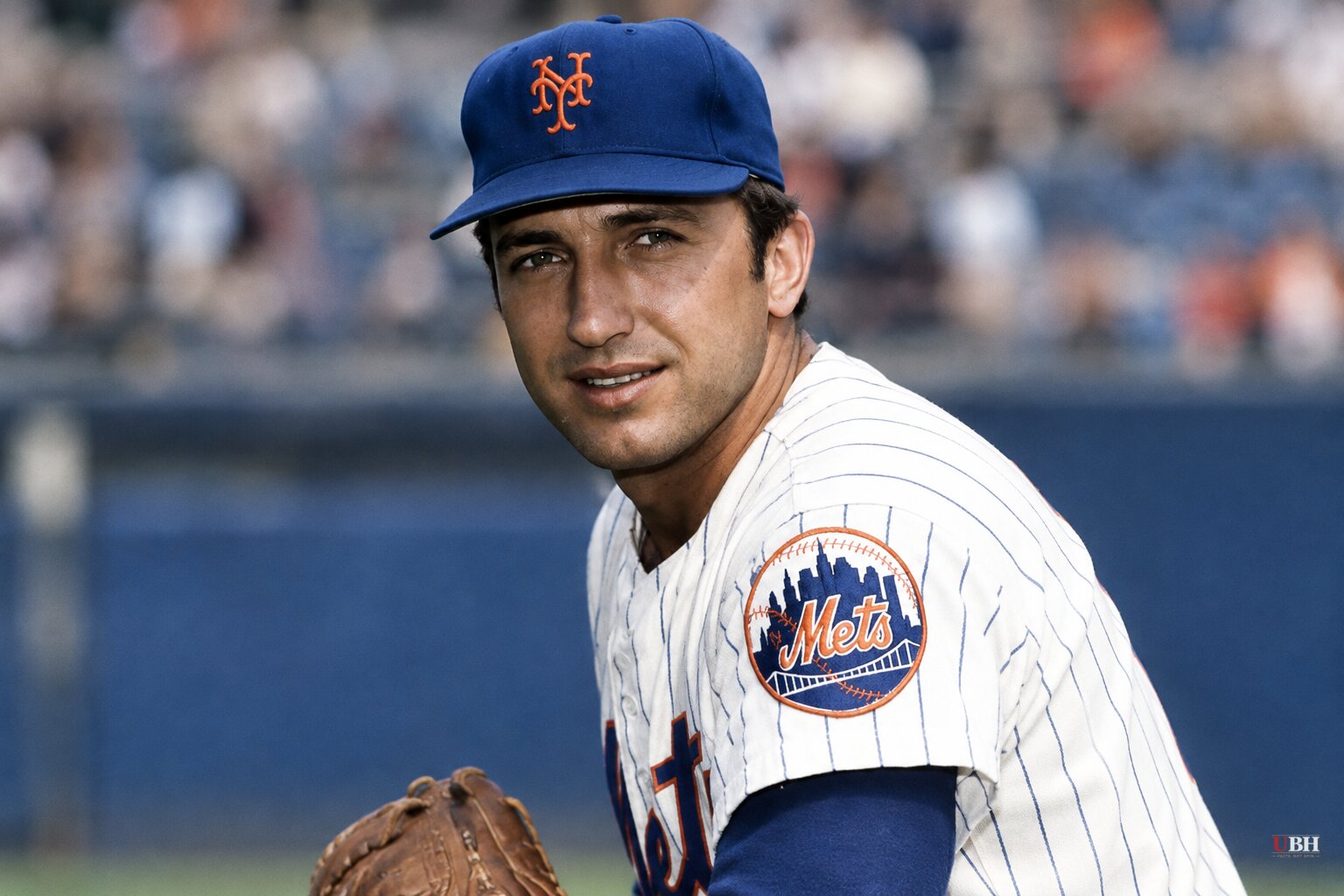
Jerry Koosman, the farm kid from Minnesota who became Tom Seaver's left-handed partner on the 1969 "Miracle" Mets, died Sunday, Nov. 1, in Osceola, Wisconsin. He was 83.
The Mets announced the death. Longtime team employee Jay Horwitz said Koosman had been battling multiple illnesses.
"Kooz was one of the greatest pitchers in team history and a beloved member of the Mets family," team owners Steve and Alex Cohen said in a statement. They called him "a fierce competitor on the field, and respected teammate in the clubhouse."
The 1969 World Series
The Mets lost 101 games in 1967, Koosman's rookie year. Two years later they won 100 and took the title.
Koosman started Game 2 of the World Series against the Baltimore Orioles after Seaver lost the opener. He gave up two hits over 8 2/3 innings in a 2-1 win.
He came back for Game 5 at Shea Stadium. The Mets fell behind 3-0, and Koosman went the distance as New York won 5-3 and clinched the franchise's first championship.
In the regular season that year he went 17-9 with a 2.28 ERA over 241 innings. Only Seaver, the Cy Young winner, had a better ERA on the staff.
After Cleon Jones caught Davey Johnson's fly ball for the final out, Jones gave the ball to Koosman. Koosman sold it decades later.
From an Army team to Shea Stadium
Koosman was born Dec. 23, 1942, in Appleton, Minnesota, and grew up on a farm. The Mets found him while he was pitching for a U.S. Army team in Texas. His catcher there, John Lucchese, tipped off Koosman's father, who worked as an usher at Shea Stadium. The Mets signed him in August 1964.
He nearly didn't last. In spring training 1966, he was close to being released. Koosman later said team official Joe McDonald stopped it because he still owed the club the $50 it had lent him for bus fare after his car was totaled on the way to camp.
"Joe McDonald claimed I owed him 50 bucks and they weren't going to release me until they got the money back," Koosman said in 2021. "I think they took it out of my check."
He debuted in April 1967 and moved into the rotation full-time in 1968. That year he went 19-12 with a 2.08 ERA over 263 2/3 innings. He made the All-Star team and finished second to Johnny Bench in National League Rookie of the Year voting.
The career numbers
Koosman pitched 19 seasons: the Mets (1967-78), the Minnesota Twins (1979-81), the Chicago White Sox (1981-83) and the Philadelphia Phillies (1984-85).
He finished 222-209 with a 3.36 ERA in 612 appearances and 527 starts. He threw 140 complete games and 33 shutouts. He struck out 2,556 batters in 3,839 1/3 innings, 35th on the all-time strikeout list.
His best year after 1969 was 1976, when he went 21-10 with a 2.69 ERA and finished second to Randy Jones in the National League Cy Young voting.
He made two All-Star teams, in 1968 and 1969.
His 140 wins as a Met are the most by any left-hander in franchise history and third overall, behind Seaver (198) and Dwight Gooden (157). He ranks second in team history in innings, behind Seaver, and third in strikeouts, behind Seaver and Gooden.
He also pitched in the 1973 World Series. In Game 5 against the Oakland Athletics, he and Tug McGraw combined on a three-hit, 2-0 shutout that put the Mets up 3-2. They lost the series in seven.
Overshadowed, and not only by Seaver
Seaver was "The Franchise." Koosman never got a nickname like that, and he rarely got his due.
Duffy Dyer, who caught him from 1968 to 1971, said in 2021 that Koosman was underrated because Seaver was there too. "His fastball had really good movement and he threw hard," Dyer said. "I always thought he was tougher to catch because you didn't know how his fastball was going to move each time, cut, sink or rise."
The Hall of Fame voters moved on quickly. Koosman fell off the Baseball Writers' Association of America ballot in 1991, his first year of eligibility.
The Mets were more generous. They inducted him into the team Hall of Fame in 1989 and retired his number 36 on Aug. 28, 2021, at Citi Field. He was the third player so honored, after Seaver and Mike Piazza. Six others have followed.
"Humbly thankful that they thought that much of me to retire my number," Koosman said before the ceremony. "I don't know that I deserve it, but I guess we're gonna get on with it."
A trade that paid off later
The Mets traded Koosman to the Twins in December 1978 for reliever Jesse Orosco. Seventeen years after Koosman threw the last pitch of the 1969 Series, he was long gone. In 1986, Orosco was on the mound for the final out of the Mets' second championship, the same spot Koosman held in 1969.
Sources used for this briefing
7 links from 7 independent newsrooms (syndicated copies of the same report count once)
These are the sources it draws on, linked so you can verify.


