
Unbiased headlines. Facts, not spin.
Unbiased Headlines is an independently owned news organization. We bring you the facts, not opinions, written fresh from 110+ named sources. Sources linked so you can verify it yourself.
 finance
Notable (6/10)
Japan's Biggest Life Insurers Hold a Record-Low 43.3% Currency Hedge Ratio as Tokyo Works to Support the Yen
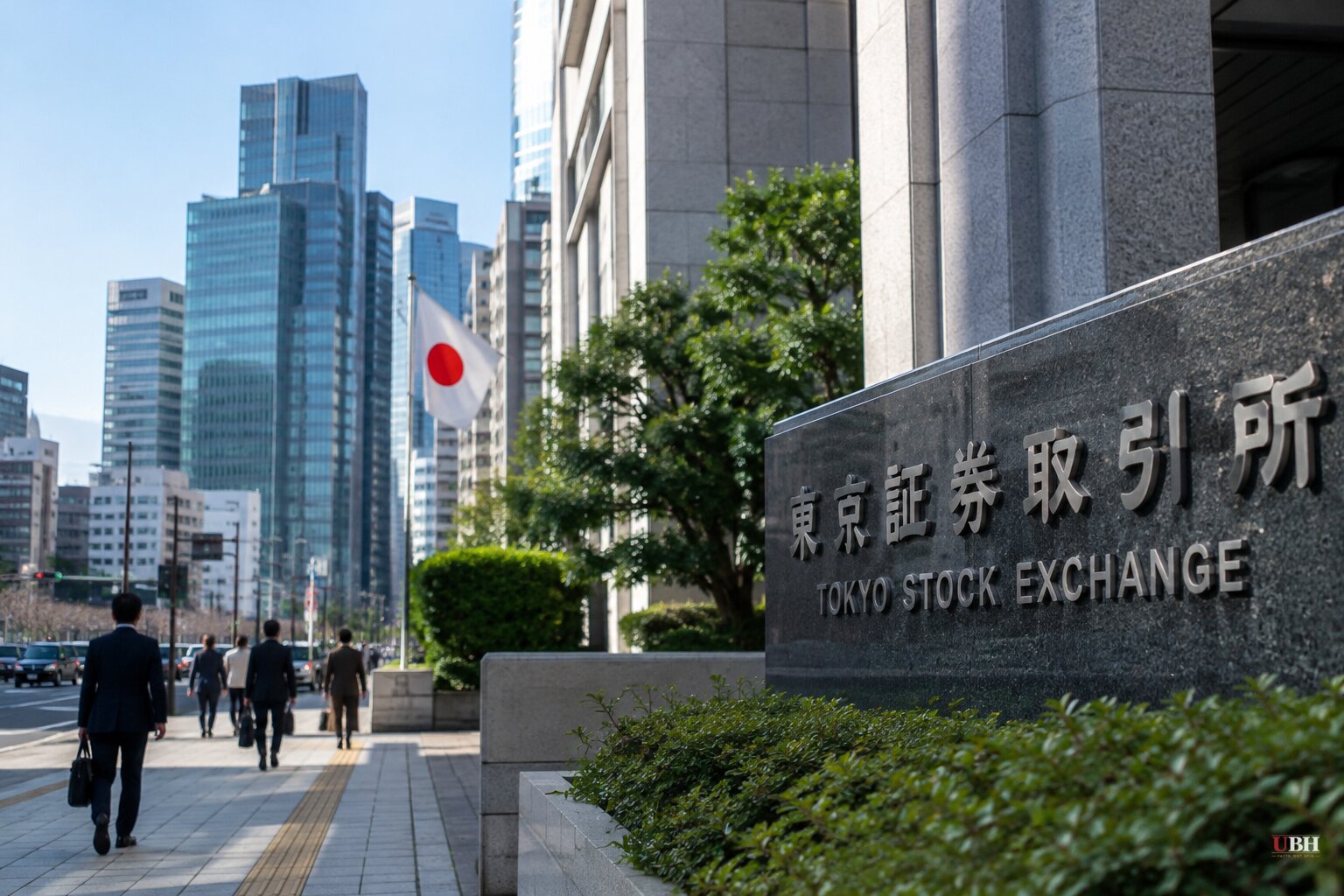
Japan's push to strengthen the yen is running into the country's biggest pools of retirement money. Nine of the largest life insurers hedged 43.3% of their foreign-asset holdings with derivatives in the six months ended Sept. 30, the lowest level since Bloomberg's data begins in 2011, according to the news service's analysis of their earnings reports.
The volume of currency derivatives fell 7.6%. Overseas securities holdings fell only 1.5%. The hedge book shrank faster than the assets it protects.
Bloomberg describes the retreat as a headwind for the government's yen-support effort. The insurers' own explanations for the lower ratio are not part of the earnings analysis.
Record profits on higher rates
The hedging data landed as the four biggest life insurers finished reporting interim results on Nov. 24. All four posted double-digit growth, and three set records for group basic profit.
- Nippon Life: group basic profit rose 22.0% to ¥756.5 billion, about $4.7 billion.
- Dai-ichi Life Group: up 40.1% to ¥376.8 billion, about $2.4 billion.
- Sumitomo Life: up 53.8% to ¥301 billion, about $1.9 billion.
- Meiji Yasuda Life: group operating profit up 31.8% to ¥435.1 billion, about $2.7 billion. It is the only one of the four that discloses that measure.
The common driver was investment income. Higher interest income and stock dividends, both tied to rising rates, lifted the numbers.
Nippon Life Vice President Naoki Akahori told a news conference the company would "not be optimistic, but will build up profits from insurance sales." That signals an effort to lean less on market conditions.
One insurer going the other way
Not every company is cutting hedges or heading home. Tokio Marine & Nichido Anshin Life, the life arm of Tokio Marine Holdings, plans to increase its currency-hedged overseas bonds this fiscal year while holding its yen bond portfolio flat. It will also add private equity.
"We'll keep yen bonds flat and build up assets other than yen bonds," Hiroyuki Miyazawa, section chief of the unit's corporate accounting and investment department, said in an interview on Tuesday, Nov. 24.
He said some peers have been shifting from foreign debt back into yen bonds. Tokio Marine's unit is taking the opposite approach.
Miyazawa said the investments center on floating-rate credit assets with currency hedges. "On a yen basis after hedging, returns are not much affected by moves in overseas interest rates," he said.
He pointed to Delphi Financial Group, the U.S. insurer Tokio Marine Holdings bought in 2012, for its credit-management strength.
The unit buys yen bonds mainly to match the duration of its liabilities to long-dated policy obligations. For that reason, Miyazawa said, it avoids sharply raising or cutting holdings based on market views.
After two to three years of rising Japanese yields, the unit's assets slightly exceed its liabilities. "There's no need to buy yen bonds against new liabilities," Miyazawa said. He added that it could still buy if strong single-premium whole life sales warrant it.
The rate path that frames the decisions
Masahiro Tajima, a manager in the same department, said oil prices have settled and the chance of Japanese rates exceeding this fiscal year's peak in the short term is not very high.
His scenario has the Bank of Japan raising rates in December and March, then pausing at a terminal rate of 1.75%. Under that path, a 10-year yield near 3% would be roughly fair, he said. A super-long yield around 4% would be reasonable.
That is one company's forecast, not a central bank signal. Life insurers are major buyers of Japan's super-long government bonds, so their choices between yen debt and hedged or unhedged foreign assets carry weight in both the bond market and the currency market.
The December Bank of Japan decision comes next. If Tajima's path holds, the insurers that are leaving foreign assets unhedged and the ones adding hedged credit will be working from the same rate picture, with the yen as the variable between them.
Sources used for this briefing
5 links from 5 independent newsrooms (syndicated copies of the same report count once)
These are the sources it draws on, linked so you can verify.


