
Unbiased headlines. Facts, not spin.
Unbiased Headlines is an independently owned news organization. We bring you the facts, not opinions, written fresh from 110+ named sources. Sources linked so you can verify it yourself.
 finance
Major Story (7/10)
Japan's 30-Year Bond Auction Draws Weak Demand as Yield Climbs to 3.865%
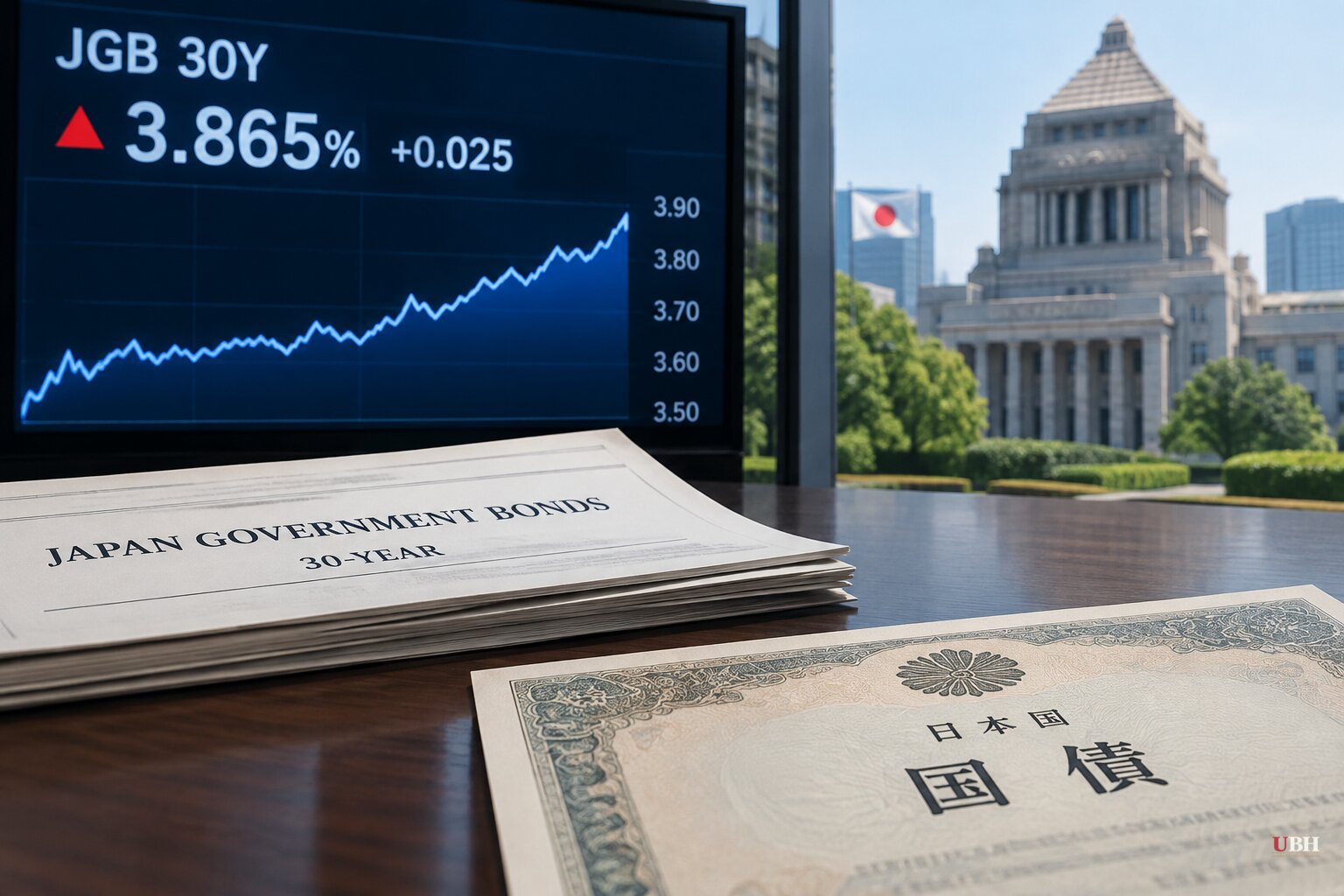
Japan's long end got a cold reception on Tuesday, Nov. 10.
The 30-year yield rose 2.5 basis points to 3.865% after an auction of a reopened bond maturing in September 2056. The sale was roughly ¥600 billion, and demand was weak.
The 10-year yield gained 2 basis points to 2.685%. The 20-year climbed 4 basis points to 3.59%. Shorter maturities moved less: the 5-year rose 1.5 basis points to 2.105% and the 2-year rose 0.5 basis point to 1.775%.
Why buyers stepped back
Yields had been falling into the sale. Safe-haven buying in recent sessions pushed them to multi-month lows.
Miki Den, senior Japan rate strategist at SMBC Nikko Securities, said those lower yields were unattractive to pension funds and life insurers, the traditional buyers of super-long paper. She added that rapid swings in recent sessions hurt hedge fund appetite.
So the long-dated buyers found the price too low, and the speculative buyers found the ride too rough. The result was a soft auction.
The market backdrop
The swings came out of a brutal week for equities. On Thursday, Nov. 5, the S&P 500 fell 4.4%, its worst day since the April 2025 "Liberation Day" tariff shock. The Dow dropped 1,833 points, or 3.4%. The Nasdaq sank 5.5% and finished 11.9% below its record high set last month.
Nvidia fell 9.3% and was the heaviest drag on the S&P 500. The chipmaker is now down 2.6% for the year, after gains of roughly 39%, 171% and 239% in the prior three years.
Asia followed on Friday, Nov. 6. The Nikkei 225 fell more than 6% at the open and was down 5.7% at 57,576.63 by midday. South Korea's Kospi dropped 7.4% and Samsung Electronics shed 7.9% in morning trading.
AI stocks have swung for months on worries that data-center construction could slow because borrowing has become so expensive. Critics also argue that AI valuations ran too high. The AP also pointed to the Democratic wins in the Nov. 3 midterms, which raised the possibility that governments could force pauses in new data centers. Voters across party lines say they are wary of AI and dislike the power-bill increases tied to data centers.
Rate expectations
This is not a falling-rate environment. U.S. consumer-price data for October is due today, Nov. 10. Producer prices follow Friday.
LSEG data show money markets pricing a 75% probability of a quarter-point Federal Reserve rate increase at the Dec. 9 meeting. ING analysts expect both headline and core CPI to rise 0.3% month-on-month, enough to keep a December hike looking likely.
Nick Rees, head of macro research at Monex, said that barring a major downside surprise in the CPI release or the Dec. 4 jobs report, a 25 basis-point hike should be near fully priced by the time the Fed meets.
The Bank of Canada has already moved. It raised its key rate a quarter point to 2.5%. Oxford Economics expects another hike in December, followed by a prolonged pause.
Berkshire is heading back to the yen market
Berkshire Hathaway is preparing its second yen bond offering of 2026, according to Bloomberg. Mizuho Securities and BofA Securities have been engaged to arrange a possible benchmark deal, expected shortly depending on market conditions.
In April, Berkshire sold six tranches of yen bonds with maturities of three to 30 years. The sale raised ¥272.3 billion, about $1.7 billion.
Berkshire CEO Greg Abel pushed back on the idea that Japan's higher yields make borrowing there unattractive. On Sept. 2 he said the company plans to keep tapping the yen market when conditions call for it, even with yields at multi-decade highs. Abel said those yields remain low relative to those elsewhere in the world. Japan's 10-year yield had just topped 3% that week, a 30-year high. It now sits at 2.685%.
Bloomberg also reported that Japanese companies are issuing fewer bonds at home. Heavy issuance in October widened the extra yield corporate bonds pay over government debt, and new issuance has slowed since.
What comes next
U.S. October CPI lands later today. U.S. bond markets are closed Wednesday for Veterans Day, though stocks will trade. The Fed's Dec. 9 decision is the next hard test for global yields, including Japan's.
The next Japanese long-bond auction will show whether pension funds and insurers return at these levels. Berkshire's yen deal, if it prices as expected, will show how much appetite exists for Japanese corporate paper after October's heavy issuance.
Sources used for this briefing
5 links from 5 independent newsrooms (syndicated copies of the same report count once)
These are the sources it draws on, linked so you can verify.


