
Unbiased headlines. Facts, not spin.
Unbiased Headlines is an independently owned news organization. We bring you the facts, not opinions, written fresh from 110+ named sources. Sources linked so you can verify it yourself.
 finance
Notable (6/10)
RBA Lifts Cash Rate to 4.85%, Highest Since 2008, While Oil Slides After Trump Holds Off on Iran Strikes
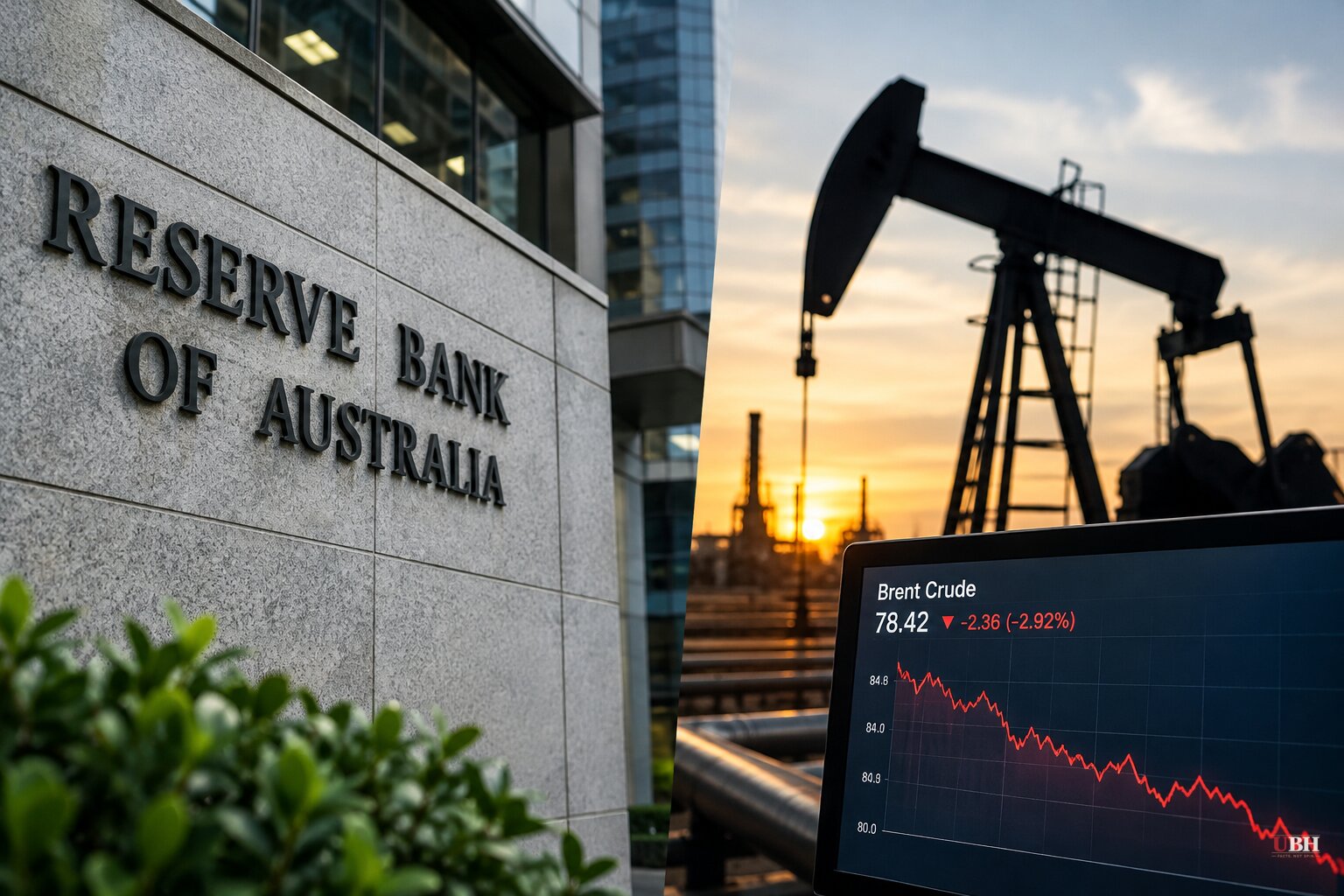
The Reserve Bank of Australia lifted its official cash rate from 4.60% to 4.85% on Nov. 3. It was the fifth increase this year and took the rate to its highest level since 2008.
The RBA said inflation is "broadly based," meaning it is showing up across a wide range of industries. Its updated staff forecasts revised the inflation outlook "materially higher."
The central bank gave two reasons. One is "higher fuel and other commodity prices affected by the conflict in the Middle East." The other is that "domestic capacity pressures are also judged to have been a little tighter than earlier thought."
What it costs borrowers
Canstar, the financial comparison site, calculated that a homeowner with a $600,000 loan will pay about $450 more in monthly interest than in February.
The RBA expects output growth to slow further over the coming year. That slowdown is supposed to ease capacity pressures and bring inflation back to target.
Treasurer Jim Chalmers called the hike "unsurprising" and pointed at the Iran war, now in its ninth month. "Markets are expecting interest rates rises in every advanced economy," he said. He added that the war's re-escalation "is putting sustained upwards pressure on inflation" and that "its end can't come soon enough."
Not everyone accepts the war explanation
Graham Young, executive director of the Australian Institute for Progress, says the war is only part of it. He called the hike an "instalment in a crisis that was both foreseeable and largely avoidable."
Young said he warned as far back as February 2023 that higher rates were the new normal. "The Reserve Bank kept rates too low for too long, encouraging households, businesses, and governments to believe cheap money was normal," he told The Epoch Times.
He also blamed federal and state governments for borrowing and spending heavily. In his account, that put them in competition with private industry for scarce labour, materials and capital.
The RBA's own statement leans on both explanations. It cites fuel prices tied to the war and also domestic capacity that is tighter than it had thought.
The same pressure in Singapore
Australia is not alone. The U.S. Federal Reserve raised rates on Sept. 16 for the first time since 2023.
Singapore banks pulled their fixed-rate home loan packages within days, repriced them outside the usual schedule, and relaunched them at higher rates. Data from the mortgage platform Cashew, covering Sept. 15 to Nov. 9, shows the best fixed rates up between 0.30 and 0.77 percentage points.
A $500,000 private-property loan on a three-year fixed rate went from 1.68% to 2.45%. The two-year rate on the same loan went from 1.60% to 2.15%.
For most loans the three-year rate now sits slightly above the two-year rate, a sign that banks price in modest further increases. The exception is the $300,000 HDB flat loan, where the three-year rate is cheaper. Cashew says no one can say for sure whether rates keep rising.
Oil pulls back
Crude has moved the other way. Brent settled down 5.85% on Monday, Nov. 9, after sliding to its lowest level since Aug. 31. In early Asian trading Tuesday, Nov. 10, Brent futures were down another 24 cents to $92.33 a barrel, and U.S. West Texas Intermediate was down 35 cents to $86.50.
The trigger was Trump. In a Reuters interview and later in the White House press briefing room on Monday, he said U.S. military action against Iran is not necessary "at this point." He said he will hold off on new strikes for now after appeals from regional countries, including Qatar's prime minister in White House talks.
Trump said he plans to keep the naval blockade in the Strait of Hormuz in place for now.
"The market continues to prioritise President Trump's more conciliatory tone towards Iran since the midterms," said Tim Waterer, chief market analyst at KCM Trade. He noted that attacks on shipping near Hormuz are still occurring but have not escalated enough to add a fresh risk premium.
A Reuters survey found OPEC output rose in October, led by Saudi Arabia, Kuwait and Iraq, even with continued export constraints.
Peace talk, or not
Senior U.S. and Gulf officials have cast doubt on the chances of an imminent peace deal. Iran's security council chief, Mohsen Rezaei, said Washington should "stop manufacturing fake news about imaginary talks." He said it was "time to surrender to the seven conditions Iran has repeatedly set out."
So the pause in strikes is not a settlement. The blockade continues, Tehran is publicly rejecting the idea of negotiations, and the RBA has already said fuel prices tied to the conflict are feeding into its inflation forecasts.
The next test is whether Hormuz shipping attacks stay contained. Separately, Russian and Ukrainian officials were scheduled to begin two days of U.S.-brokered talks Tuesday, their first since February.
Sources used for this briefing
3 links from 3 independent newsrooms (syndicated copies of the same report count once)
These are the sources it draws on, linked so you can verify.


