
Original briefings. Zero spin.
Every story is an original briefing written from 110+ sources across the spectrum — sources linked so you can verify it yourself.
 health
Notable (5/10)
Event date: August 28, 2026
health
Notable (5/10)
Event date: August 28, 2026
JAMA Paper Co-Authored by Ezekiel Emanuel and VC Vinod Khosla Claims AI Alone Will Beat Doctors at Core Medical Tasks
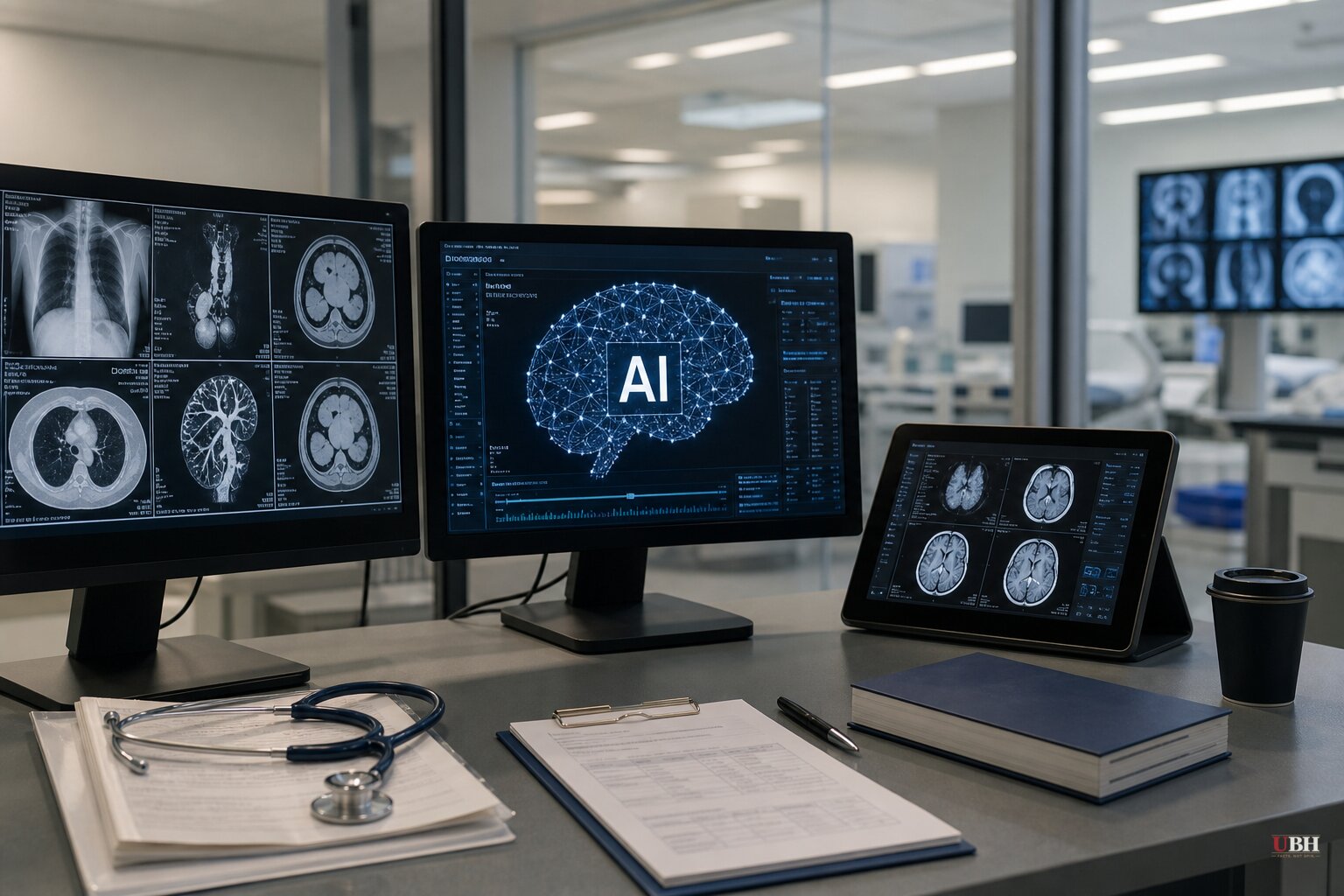
A JAMA article this month makes a claim that would have sounded absurd a decade ago: doctors should get out of the way and let AI run the show.
The paper, titled "Will Autonomous AI Exceed AI-Physicians as the Best Medical Care?", was co-authored by Ezekiel Emanuel, chair of the Department of Medical Ethics and Health Policy at the University of Pennsylvania and a practicing oncologist, along with venture capitalist Vinod Khosla and his son Neal Khosla, according to Wired. The question mark in the title is decorative. Their answer is yes.
The authors reviewed published research on AI in medicine since January 1, 2024, and concluded medicine is nearing a tipping point where AI alone will beat both human physicians and doctor-AI hybrid teams at five core tasks: taking medical histories, establishing diagnoses, ordering the right tests, prescribing treatment, and managing chronic disease, Wired reported. Their stated reasoning is blunt: "humans in the loop degrade AI performance."
A VC's decade-old bet, now vindicated in his own eyes
Vinod Khosla has been making this argument since at least 2012, when he wrote a TechCrunch piece asking "Do We Need Doctors or Algorithms?" and later penned a 101-page treatise on the same theme, according to Wired. He reportedly told Emanuel at conferences over the years that AI would handle 85 percent of what doctors do by 2035.
Emanuel says he dismissed that prediction for years. "I said bullshit, there's no way," he told Wired. "What doctors do is too complicated." He credits a shift in his thinking to galleys of a book by Robert Wachter, head of medicine at UCSF, which envisioned a two-tier system: doctor-AI collaboration for patients who can afford it, and AI alone for everyone else in what Wachter called "economy class," per Wired's account.
There's an unresolved conflict of interest built into the paper itself. Neal Khosla runs Curai Health, an online company that treats patients using AI with a staff of physicians handling prescriptions and complex cases, according to Wired, which noted the conflict is disclosed in the article. A company executive co-authoring a study concluding that AI alone delivers superior care, while his firm profits from AI-driven care, is a fact readers deserve to weigh for themselves. Disclosure isn't the same as neutrality.
The case for slowing down
MedPage Today took a different approach, invoking a 1967 Star Trek episode where the ship's computer estimates Captain Kirk's biological age during a fitness-for-command hearing, prompting Dr. McCoy to snap, "It's a blasted machine, Spock! You can't argue with a machine." The piece argues that's exactly the wrong instinct, in both directions.
The MedPage Today framing is that automation bias, treating a machine's output as more authoritative than it's earned, is a real risk in modern hospitals where AI now assists with diagnosis, scan interpretation, patient triage, and even insurance decisions. But the answer isn't reflexive distrust either. The piece argues doctors have a duty to push back specifically when an AI recommendation conflicts with a patient's interest, relies on missing or flawed data, gets applied outside its tested scope, hides its own uncertainty, or is quietly steering care toward an organization's financial goals, such as fewer admissions or more insurance denials.
The JAMA authors treat human oversight as a performance drag, while MedPage Today treats it as the entire point. A machine can spot a pattern in a scan or a lab panel. It cannot sit across from a family after something goes wrong and say "this was my fault" or take responsibility for a judgment call the data didn't fully support. That capacity for moral accountability doesn't show up in an accuracy benchmark.
The JAMA paper is a review of existing published literature since January 2024, not a new clinical trial pitting autonomous AI against physicians in a controlled setting. The five-task claim is a forecast built on synthesizing other people's data, not a fresh head-to-head result.
Neither piece answers the question that actually matters for patients: if an AI system operating without a doctor in the loop misdiagnoses someone or prescribes the wrong treatment, who is legally and professionally accountable? The FDA has not issued a framework governing fully autonomous diagnostic or prescribing AI, and no hospital system has publicly adopted the doctor-free model Emanuel and the Khoslas describe. Until liability, licensing, and malpractice law catch up with the technology, the debate over whether AI is better than doctors is running well ahead of the rules that would let it be tested for real.
Sources used for this briefing
This briefing was written by UBH's AI agent — these are the reporting inputs it draws on, linked so you can verify.


