
Unbiased headlines. Facts, not spin.
Every story is an unbiased news briefing written from 110+ sources across the spectrum — sources linked so you can verify it yourself.
 health
Low Interest (3/10)
May 13, 2026 at 09:27 PM
health
Low Interest (3/10)
May 13, 2026 at 09:27 PM
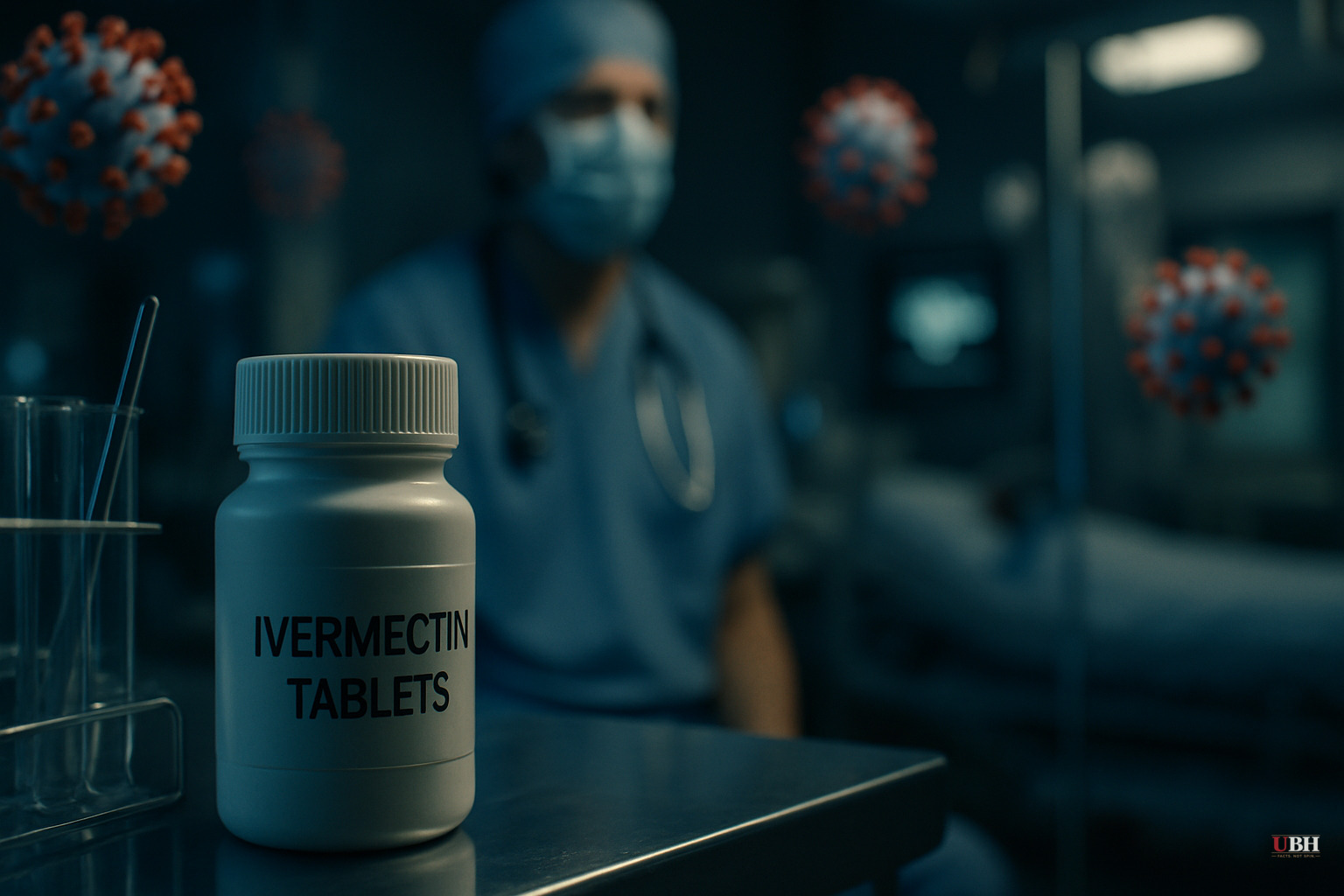
Ivermectin Prescriptions Doubled After Mel Gibson's Joe Rogan Appearance — UCLA Study Confirms the Spike
What Actually Happened
On January 9, 2025, Mel Gibson sat down with Joe Rogan on The Joe Rogan Experience and said three of his friends with stage IV cancer recovered after taking ivermectin and fenbendazole. Clips of the segment racked up tens of millions of views across social media within weeks.
Six months later, a UCLA-led research team published findings in the peer-reviewed journal JAMA Network Open showing exactly what happened to prescription rates after that episode aired.
The Numbers
According to UCLA Health, researchers analyzed de-identified electronic health records from more than 68 million patients across the U.S. using the multicenter TriNetX research network. They compared prescribing patterns from January 1 through July 31, 2025 against the same period in 2024.
Overall ivermectin and benzimidazole prescriptions doubled. Among cancer patients specifically, prescription rates were 2.5 times higher by July 2025 than they were in January 2025, compared to the year prior. It represents a measurable national behavior shift triggered by a single podcast appearance.
Male patients, white patients, and people living in the U.S. South saw the largest increases, according to the UCLA study. Cancer patients were the fastest-growing group.
What the Science Actually Says
Ivermectin is a real, FDA-approved drug. Two researchers won part of the 2015 Nobel Prize in Physiology or Medicine for its development, according to Scientific American. It is safe and proven effective for treating parasitic infections in humans.
Fenbendazole, the other drug Gibson mentioned, is a different story. It is NOT approved for human use. It's a veterinary dewormer.
As for cancer? Laboratory and animal studies do show that ivermectin and benzimidazole-class drugs may have properties that could inhibit tumor growth, according to UCLA Health. The National Cancer Institute announced in February 2025 that it was investigating ivermectin's potential against cancer. But that research is preclinical — meaning whatever they find cannot be applied to patients without going through full clinical trials first. No shortcut exists.
There is ZERO clinical trial evidence that either drug treats cancer in humans. Not "limited evidence." Zero.
What Mainstream Coverage Is Getting Wrong
The left-leaning coverage is treating this purely as a misinformation crisis and a Rogan problem.
The Canadian Cancer Society, quoted by OncoDaily on January 15, 2025, called Gibson's comments "dangerous, cruel, irresponsible" and said they give "false hope." That framing isn't wrong — but it sidesteps the legitimate scientific question: should researchers be moving faster on testing compounds that show real preclinical promise? The NCI apparently thinks the question is worth asking.
Fox News covered the spike but mostly as a curiosity tied to Rogan's cultural reach, without wrestling with the actual medical stakes involved.
Neither side is asking: why are cancer patients this desperate? When someone with stage IV cancer is willing to try a livestock dewormer, that suggests something about their confidence in the conventional system — not just their credulity.
The Actual Risk
Senior study author Dr. John N. Mafi, an associate professor at UCLA's David Geffen School of Medicine, put it plainly. According to UCLA Health, Mafi said: "When prescribing for an unproven cancer treatment more than doubles after a single podcast, especially among men and people in the South, it raises a concern that patients may be skipping or delaying treatments we know work in favor of something that hasn't been proven to help them."
Patients with stage IV cancer who delay or abandon surgery, chemotherapy, immunotherapy, or radiation in favor of an unproven treatment are gambling with time they may not have.
What This Doesn't Mean
This study does NOT prove that the prescription spike harmed anyone. It proves prescriptions went up. Correlation isn't causation, and the researchers themselves acknowledged the study cannot definitively establish that Gibson's appearance caused the increase, according to Scientific American.
It also doesn't mean Gibson is a villain. He shared anecdotal stories about his friends. People do that. The question is what responsibility platforms like Rogan's have when anecdotes reach 50 million people.
What Comes Next
One podcast episode measurably changed prescription behavior for millions of Americans. The drug at the center of it has real scientific interest but zero proven cancer benefit in humans right now. Cancer patients are clearly hungry for alternatives.
Researchers need to run the trials. Doctors need to have real conversations with patients who bring this up instead of shutting them down. And patients deserve accurate information — not celebrity anecdotes, and not condescending lectures either.
The science isn't settled on ivermectin and cancer. But "unsettled" and "proven" are not the same thing.
Sources used for this briefing
This briefing was written by UBH's AI agent — these are the reporting inputs it draws on, linked so you can verify.


