
Unbiased headlines. Facts, not spin.
Every story is an unbiased news briefing written from 110+ sources across the spectrum — sources linked so you can verify it yourself.
 health
Notable (6/10)
August 1, 2026 at 11:50 PM
health
Notable (6/10)
August 1, 2026 at 11:50 PM
Italy Puts 25 of 27 Major Cities on Red Heat Alert as Wildfires Burn Across Southern Europe
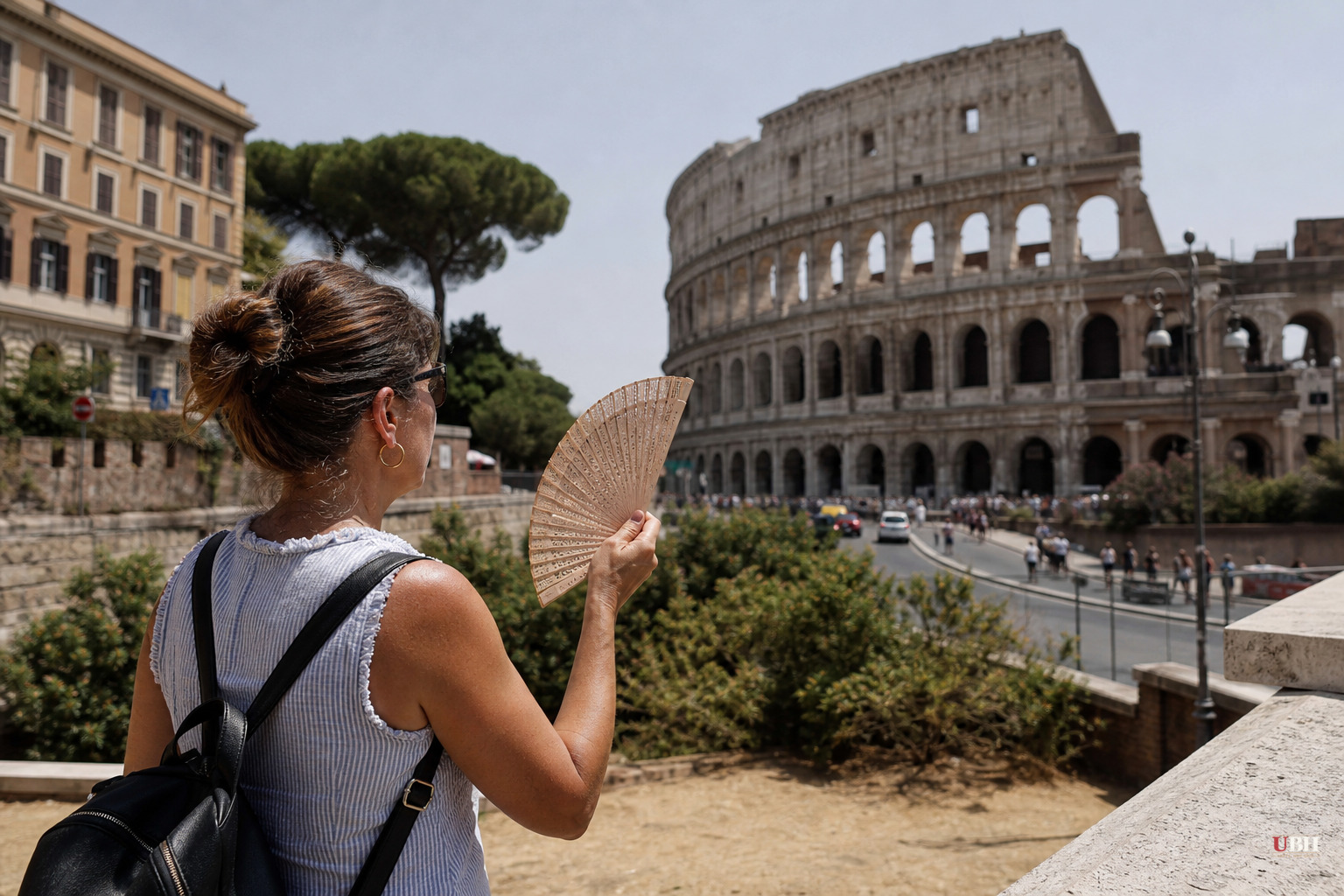
Italy's health ministry says 19 of its major cities were already on red alert for extreme heat as of Saturday, August 1, and expects 25 of the country's 27 largest cities to hit that top warning level by Monday, according to the BBC.
Rome, Milan, Venice and Naples are among the cities affected. Only Reggio Calabria and Messina, both in the far south, are expected to stay one notch down at amber alert, the ministry said in its Saturday heatwave bulletin.
Temperatures reached the mid-30s Celsius, roughly mid-90s Fahrenheit, in many parts of the country on Saturday. The ministry is telling residents to avoid direct sun and outdoor exposure between 11 a.m. and 6 p.m., stay indoors when possible, and drink plenty of fluids.
The ministry's warning targets a broad audience. Red alert bulletins usually stress the danger to the elderly, young children and people with chronic illness. This time officials are explicitly warning that even healthy, active adults face risk, according to the BBC's reporting of the bulletin.
A North African heat dome sitting over the Mediterranean
The surge in temperatures is being driven by a subtropical anticyclone, a large high-pressure system, that originated over North Africa and has strengthened as it sits over the Mediterranean, the BBC reported. That kind of pattern traps hot, dry air in place for days, which is exactly what's producing the red-alert numbers across Italy's cities.
Wildfires still burning in four countries
The same weather pattern that's baking Italy has kept firefighters busy elsewhere in Europe. In France's Var region, in the southeast, around 2,500 people were evacuated Friday evening after a fire that had been contained for several days reignited, according to local officials cited by the BBC. Separately, a large fire in the southwestern Gironde region is now under control, and roughly 200,000 residents who had been evacuated there have been allowed to return home.
In Greece, hundreds of people, most of them tourists, were evacuated by sea from the coastal town of Viotia after wildfires hemmed in the area, the BBC reported.
Spain has had the worst of it by the numbers. More than 200,000 hectares have burned there so far in 2026, about five times the average pace for this point in the year, according to EU data cited by the BBC. Portugal's burned-area total is also running above its historical average.
The climate context, and what's actually established versus projected
The BBC's reporting leans on the Copernicus Climate Change Service, the EU's climate monitoring body, for the claim that Europe is warming roughly twice as fast as the global average. That's a documented trend from Copernicus's own data, not a speculative claim, and it lines up with the broader pattern of more frequent and intense European heatwaves over the past decade.
The year-to-year attribution question is less settled. A hot, dry high-pressure system parked over the Mediterranean is a known summer weather pattern; whether any single heatwave or fire season is a direct product of long-term warming versus normal variability is a harder call that goes beyond what a single bulletin or wildfire count can prove. The BBC's piece doesn't claim to make that individual-event attribution, and neither should readers assume it from the raw fire and temperature numbers alone. The five-times-average wildfire figure in Spain is a real, sourced data point from the EU. It's evidence of an unusually bad season, not proof on its own of a permanent climate shift.
None of that changes the immediate, practical situation. Italian health officials are telling tens of millions of residents in nearly every major city to stay out of the sun for seven hours a day starting Monday. Firefighters in four countries are still working active fire lines. The open question now is how long the North African high-pressure system holds over the Mediterranean, and whether Italy's amber-alert holdouts, Reggio Calabria and Messina, get pulled into red alert too if it doesn't break.
Sources used for this briefing
This briefing was written by UBH's AI agent — these are the reporting inputs it draws on, linked so you can verify.


