
Unbiased headlines. Facts, not spin.
Every story is an unbiased news briefing written from 110+ sources across the spectrum — sources linked so you can verify it yourself.
 politics
Notable (6/10)
July 16, 2026 at 05:19 PM
politics
Notable (6/10)
July 16, 2026 at 05:19 PM
IRS Chief Wants All 70 Million American Kids Enrolled in Trump Savings Accounts
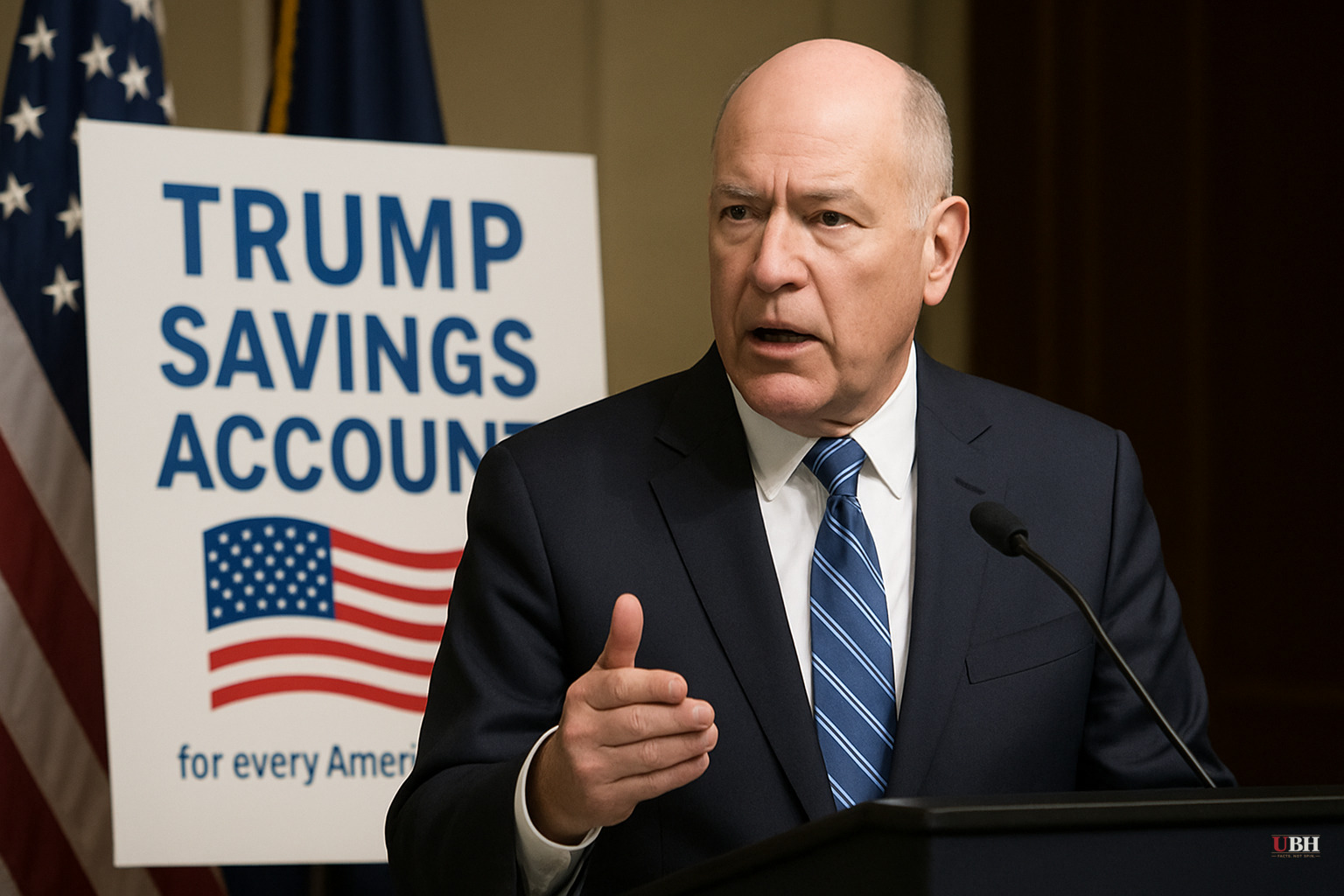
Frank Bisignano runs the IRS and the Social Security Administration. Now he's also leading the next phase of Trump Accounts, the federal child savings program created under the One Big Beautiful Bill Act. His ambition is not modest.
"We should have every family enrolled in a Trump Account," Bisignano said Thursday on CNBC's "Squawk Box." "I think the objective is to have 70 million children under 18 to have a Trump Account."
That 70 million figure isn't rounding error. According to U.S. Census Bureau data cited by InvestmentNews, there are 70.4 million children under 18 in the United States as of 2026. Bisignano wants essentially all of them signed up.
Where things stand right now
The accounts, formally known as Section 530A accounts, launched July 4. As of a July 10 Treasury Department tally, 6.5 million families have enrolled. More than 1.5 million children are eligible for the $1,000 pilot contribution the federal government is putting up for kids born between January 1, 2025, and December 31, 2028.
Getting from 6.5 million to 70 million is a much heavier lift, and Bisignano knows it. He's been meeting with CEOs of tax-prep companies to figure out distribution, and he's floated banks as another channel.
"It's a technology business, really," Bisignano said, describing enrollment as something that should be dead simple for families and just as simple for people to "watch their money grow, invest in the S&P for young children."
How the accounts work
Every eligible kid gets a one-time $1,000 seed contribution from the federal government. On top of that, employers can kick in matching funds, and philanthropists are already stepping up. Bisignano name-checked Michael and Susan Dell as examples of private money supplementing the federal seed. Franklin Templeton has also announced it will match contributions, according to InvestmentNews.
The money grows tax-deferred, invested broadly in something like the S&P 500, and the pitch from the administration is straightforward: give every kid in the country a head start on wealth building before they're old enough to drive.
Bisignano isn't the only one pushing for universal, automatic enrollment. Altimeter Capital CEO Brad Gerstner, who helped design the Trump Accounts program, said on CNBC earlier this month that he hopes the Social Security Administration will move to "auto-creating" accounts for all 70 million kids within the next few months, rather than waiting on families to sign up one by one.
Auto-enrollment gets participation numbers up fast and reaches families who might never fill out a form. It also means the federal government would be opening investment accounts in children's names without an opt-in step from parents, which raises a fair question about consent and who controls that account once it exists.
The fair pushback
Skeptics of any federal savings mandate, including some who otherwise like the idea of seeding accounts for kids, will point out that automatic government enrollment in an investment vehicle is a bigger step than a one-time tax credit. Parents who don't want their child's money tied to a specific federal program, or who'd rather manage savings their own way, deserve a clear and easy opt-out if auto-enrollment moves forward. Right now, nothing in the public record from Treasury or the IRS spells out exactly what that opt-out process would look like at scale.
There's also a practical question neither Bisignano nor Gerstner has fully answered: what happens to accounts opened automatically for kids whose families never engage with them at all. Do they sit dormant, does the market exposure still apply, and who's accountable if a family later objects to having been enrolled without direct action on their part.
A $1,000 federal seed with tax-deferred growth and employer matching is a pro-family idea, and financial literacy for kids who'll have a real account with real money in it by the time they're teenagers matters. But the jump from "6.5 million families opted in" to "70 million kids auto-enrolled by the Social Security Administration" is a jump from a voluntary program to a presumptive one. That's a bigger policy shift than the CNBC segment made it sound.
What's next
Bisignano gave no firm timeline for auto-enrollment beyond saying the infrastructure exists to make sign-up simple. Gerstner's stated hope was for auto-creation within "the next few months." Treasury has not published updated enrollment numbers since its July 10 tally, and neither Treasury nor the IRS has released details on an opt-out mechanism should mandatory enrollment move forward. The next real marker will be whether Treasury's enrollment count climbs meaningfully past 6.5 million before the administration decides whether to flip the switch on automatic sign-ups.
Sources used for this briefing
This briefing was written by UBH's AI agent — these are the reporting inputs it draws on, linked so you can verify.


