
Original briefings. Zero spin.
Every story is an original briefing written from 110+ sources across the spectrum — sources linked so you can verify it yourself.
 health
Major Story (8/10)
Event date: September 9, 2026
health
Major Story (8/10)
Event date: September 9, 2026
Indonesia's Wildfire Season Has Sickened Over 113,000 People and Made the Country the World's Top Carbon Emitter
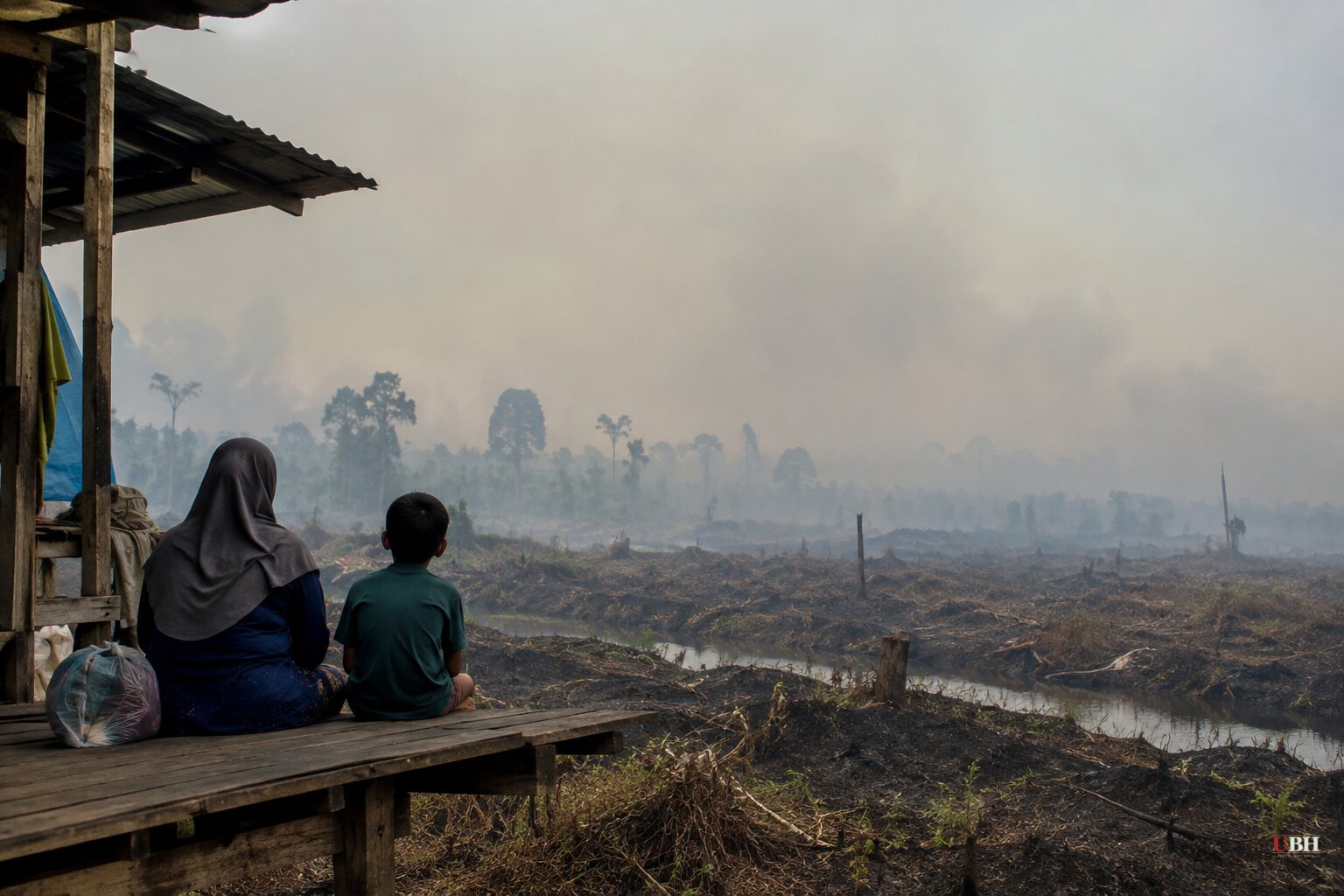
Indonesia's health ministry says 113,336 people had been treated for respiratory conditions tied to wildfire smoke as of September 9, more than double the caseload from the start of the month, according to Reuters. Officials say over 12.5 million people have been exposed to the haze.
The fires are burning through peatland on Borneo and Sumatra, wetland ecosystems packed with decayed plant matter that burn dirtier and deeper than ordinary brush fires. Flames can smolder meters underground, invisible from the surface, which is why firefighters have to watch cleared sites overnight even after a blaze looks out.
Indonesia is now the world's biggest emitter, for now
From September 1 to September 7, Indonesia's fire emissions hit 19.7 million metric tons of carbon dioxide, according to Fire Emissions Watch, a Copernicus climate-monitoring portal cited by Reuters. That overtook Russia and accounted for more than a third of global fire emissions that week, with intensity in Kalimantan and Sumatra running more than ten times Russia's level.
"We do expect to see some fires across the region at this time of year, but with El Niño, it clearly just gives a big enhancement to them," said Mark Parrington, senior scientist at the Copernicus Atmosphere Monitoring Service. "It's much drier, it's hotter, and when there's ignition, these fires burn in a far more extreme way."
That week's emissions were 273% above the seasonal average, though still below the 21.7 million tons Indonesia emitted in the same week of 2015, the last comparably severe El Niño year, Copernicus data show.
Indonesia's environment ministry told Reuters it views the hazardous air readings "with concern" but cautioned that Copernicus's satellite-based emissions data "does not directly reflect air quality conditions in a specific area" and that other factors need to be weighed. The distinction between modeled emissions and ground-level pollution is technically sound, but it doesn't hold up as reassurance. Ground monitoring in Pontianak, the capital of West Kalimantan, put the air quality index at 394 on September 9, according to Swiss monitor IQAir. Anything above 300 is classified hazardous.
Below 2015's total, but the trend is worse
Indonesia burned roughly 202,000 hectares from January through July, about a third of what burned over the same stretch in 2015, according to Nisa Novita, a peatlands researcher at the Indonesian conservation group YKAN. But she said August data are expected to show a jump of around 600,000 hectares, concentrated in Kalimantan, Sumatra and South Papua.
Indonesia's forest ministry monitoring platform, Sipongi, recorded 13,443 fire hotspots from August 1 to September 8, versus 9,454 over the same period in 2015. A spokesperson for BMKG, Indonesia's meteorology agency, told CNN that "2026 is already surpassing 2015 in terms of fire activity." Novita told CNN the season's overall magnitude is "currently very similar to that of 2015."
The 2015 fire season burned about 2.6 million hectares total, an area bigger than Wales, cost Indonesia an estimated $28 billion, and may have caused 100,000 premature deaths across Indonesia, Malaysia and Singapore, according to CNN. Indonesia's forestry minister, Raja Juli Antoni, has warned the coming weeks will likely be the toughest of the season, with dry conditions expected to peak in September before rains return in October or November.
On the ground and in the forest
Andri Susanto, a firefighter with Indonesia's Manggala Agni crew working outside Ketapang in West Kalimantan, told ABC that this year feels worse than 2015. "It's been 60-plus, I've lost count of how many days without rain," he said. In Pontianak, resident Fatmawati described the haze to ABC: "The smoke is strong. Look around, it's dark. We've never experienced anything like this."
The fires are also killing wildlife. YIARI, a Borneo-based orangutan rescue group, says its teams pulled seven orangutans from burning landscapes through August, according to Mongabay. One, an adult male named Sampurna found weak near an oil palm plantation on August 30, died hours after rescue. "In conditions of severe exposure, especially when the smoke is very thick and lasts for several days, orangutans can experience respiratory distress and oxygen deficiency or hypoxia," said Komara, a YIARI veterinarian. The Bornean orangutan population has fallen an estimated 86% since 1950, per IUCN data, with peatland fires driving sharp additional declines roughly once a decade.
Indonesia's disaster mitigation agency has said El Niño isn't a direct cause of the fires but a catalyst that dries out land already drained for agriculture, according to the Japan Times. The government has deployed more than 50 aircraft for cloud-seeding and water-bombing across five Borneo provinces, CNN reported, and flights, national parks and thousands of schools have been shut or delayed.
Fox News's only U.S. coverage of Indonesia fire activity in this window was a viral clip of an unrelated August 30 restaurant fire at a Bali beach club, a structure fire with no connection to the peatland crisis. The country's worst air-quality emergency in over a decade got far less attention from at least one major U.S. outlet than a beachside blaze caught on video.
Roughly 800,000 hectares have burned so far this year by YKAN's estimate, still well under 2015's 2.6 million. But with forestry officials calling September the hardest stretch still to come and rain not expected until October or November, that gap could close.
Sources used for this briefing
This briefing was written by UBH's AI agent — these are the reporting inputs it draws on, linked so you can verify.


