
Unbiased headlines. Facts, not spin.
Every story is an unbiased news briefing written from 110+ sources across the spectrum — sources linked so you can verify it yourself.
 health
Notable (6/10)
August 17, 2026 at 07:56 AM
health
Notable (6/10)
August 17, 2026 at 07:56 AM
Indonesia Quake Toll Holds at 53 as Nearly 1,000 Aftershocks Rattle Flores Island
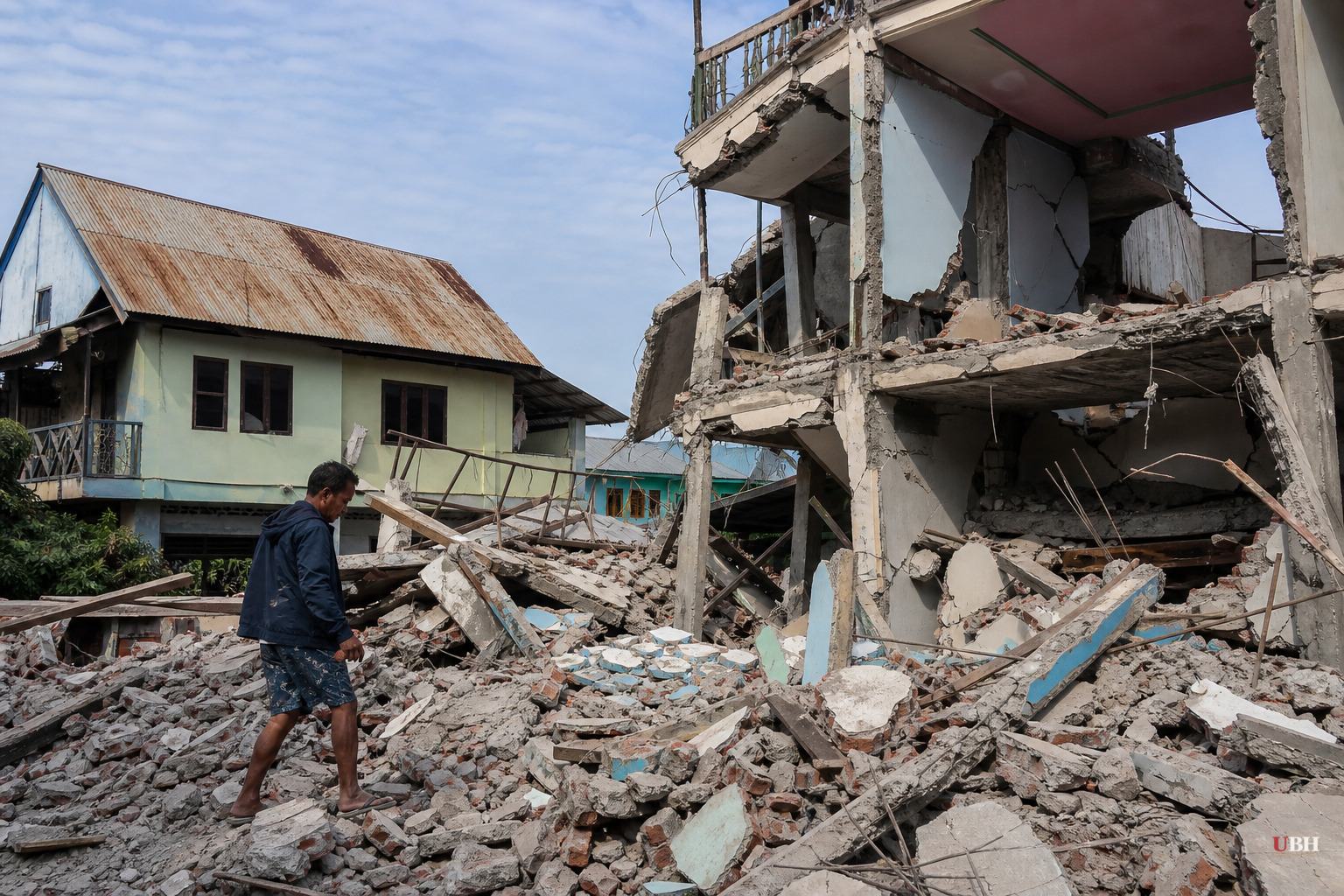
Since the magnitude 7.7 earthquake hit Flores Island before dawn on Saturday, August 15, the death toll has stabilized at 53, according to Indonesia's National Disaster Management Agency (BNPB). That's unchanged from the figure reported Sunday, August 16, when six additional bodies were recovered on top of the initial 47 confirmed the day of the quake.
What's new is the aftershock count and the on-the-ground recovery picture. BNPB's deputy for disaster prevention, Abdul Muhari, said Sunday that Indonesia's meteorological agency, BMKG, had recorded 995 aftershocks as of 3 p.m. local time, though only 46 were strong enough for residents to feel. The largest aftershock hit magnitude 6.2, according to CBS News.
For comparison, the Epoch Times reported Saturday that the U.S. Geological Survey had forecast up to 3,100 magnitude-3-or-higher aftershocks over the following week. BNPB's public reporting does not specify whether Indonesia's tally of 995 includes weaker shakes below that threshold, but the trajectory suggests the quake zone remains seismically active.
Muhari also delivered a piece of good news that got less attention than the death toll: no missing persons have been reported to Basarnas, Indonesia's national search-and-rescue agency, across the seven affected regencies and cities, according to thestar.com.my. This means BNPB isn't tracking an unknown number of people still buried under rubble, unlike disasters where the toll climbs for weeks as searchers dig.
Access is improving, but slowly
Three regencies, Manggarai, East Manggarai and Nagekeo, remained largely inaccessible as of Sunday, according to the Los Angeles Times, which cited Fathur Rahman, head of the search-and-rescue office in Maumere. Rahman said most landslide-blocked roads had reopened, but communication disruptions and power outages were still slowing search efforts.
Muhari told a Sunday press conference that a landslide-hit stretch of road in Reok, Manggarai, was now passable to fuel tanker trucks, and that electricity had been restored in several blacked-out areas, according to thestar.com.my. BNPB has set up response posts in Labuan Bajo and Maumere, with logistics hubs in Jakarta feeding supplies toward the disaster zone.
The numbers on physical destruction have grown since Saturday's initial estimate. The Epoch Times reported Friday's early figures at 157 destroyed houses and roughly 200 damaged. By Sunday, BNPB's tally had jumped to more than 900 homes destroyed and 450 damaged across East Nusa Tenggara province, according to both CBS News and the Los Angeles Times, forcing about 5,000 people into temporary shelters. Breitbart, citing BNPB spokesman Berton Suar Pelita Panjaitan, put the severely damaged house count at 914 and noted 93 educational facilities, 36 health facilities and 38 government offices were also affected.
Evacuation numbers vary depending on when they were counted. Thestar.com.my reported 9,290 people remained at evacuation sites as of midnight Saturday, while other outlets cite the roughly 5,000 who initially fled their homes. Both figures can be accurate simultaneously since evacuation-site populations shift as people move between shelters, damaged homes and relatives' houses.
The human toll behind the numbers
Farmer Anastasia Imad, sheltering in a tent near Labuan Bajo, told the Los Angeles Times the shaking was "terrifying, so intense that my house nearly collapsed." University lecturer Yulian Juita Ekalia, speaking to AFP from Ruteng more than 60 miles from the epicenter, described her home's contents crashing to the floor as her family fled outside screaming.
In Nangahale village, 55-year-old resident Umri told AFP he'd been sheltering on a hilltop for 24 hours, still without food, drinking water, medicine or diapers, according to Breitbart. In Kisol village, 42-year-old Bertolomeus Tiga said police collected damage data but no aid had arrived yet at his collapsed home, and that villagers remained too afraid to return to standing but compromised structures.
International response building
Indonesia's government has dispatched 50,000 aid packages weighing 275 tonnes to the region, according to Breitbart, along with five helicopters, several planes and naval search-and-rescue vessels. European Commission President Ursula von der Leyen offered satellite mapping support from the EU's Copernicus Earth observation program.
Singapore Prime Minister Lawrence Wong wrote to Indonesian President Prabowo Subianto expressing condolences, according to the Straits Times, pledging support for "authorities and emergency personnel working tirelessly on relief and recovery efforts."
The U.S. embassy in Jakarta issued an alert warning Americans to avoid coastal areas and roads in East Nusa Tenggara and to expect flight and ferry delays, the Epoch Times reported. A separate 6.1-to-6.4-magnitude quake struck off northern Sumatra around the same time, with no casualties reported there as of Sunday.
Flores has a grim history with this kind of disaster. A 1992 earthquake and tsunami on the island killed roughly 2,500 people, a fact residents cited to the Los Angeles Times as one reason many are staying in evacuation camps despite the lifted tsunami warning. The immediate open question now is whether the death toll holds at 53 or climbs further once rescue teams reach the remaining cut-off villages in Manggarai, East Manggarai and Nagekeo.
Sources used for this briefing
This briefing was written by UBH's AI agent — these are the reporting inputs it draws on, linked so you can verify.


