
Unbiased headlines. Facts, not spin.
Every story is an unbiased news briefing written from 110+ sources across the spectrum — sources linked so you can verify it yourself.
 health
Major Story (7/10)
August 16, 2026 at 09:17 AM
health
Major Story (7/10)
August 16, 2026 at 09:17 AM
Indonesia Quake Death Toll Hits 51 as Rescuers Dig Through Landslides on Flores Island
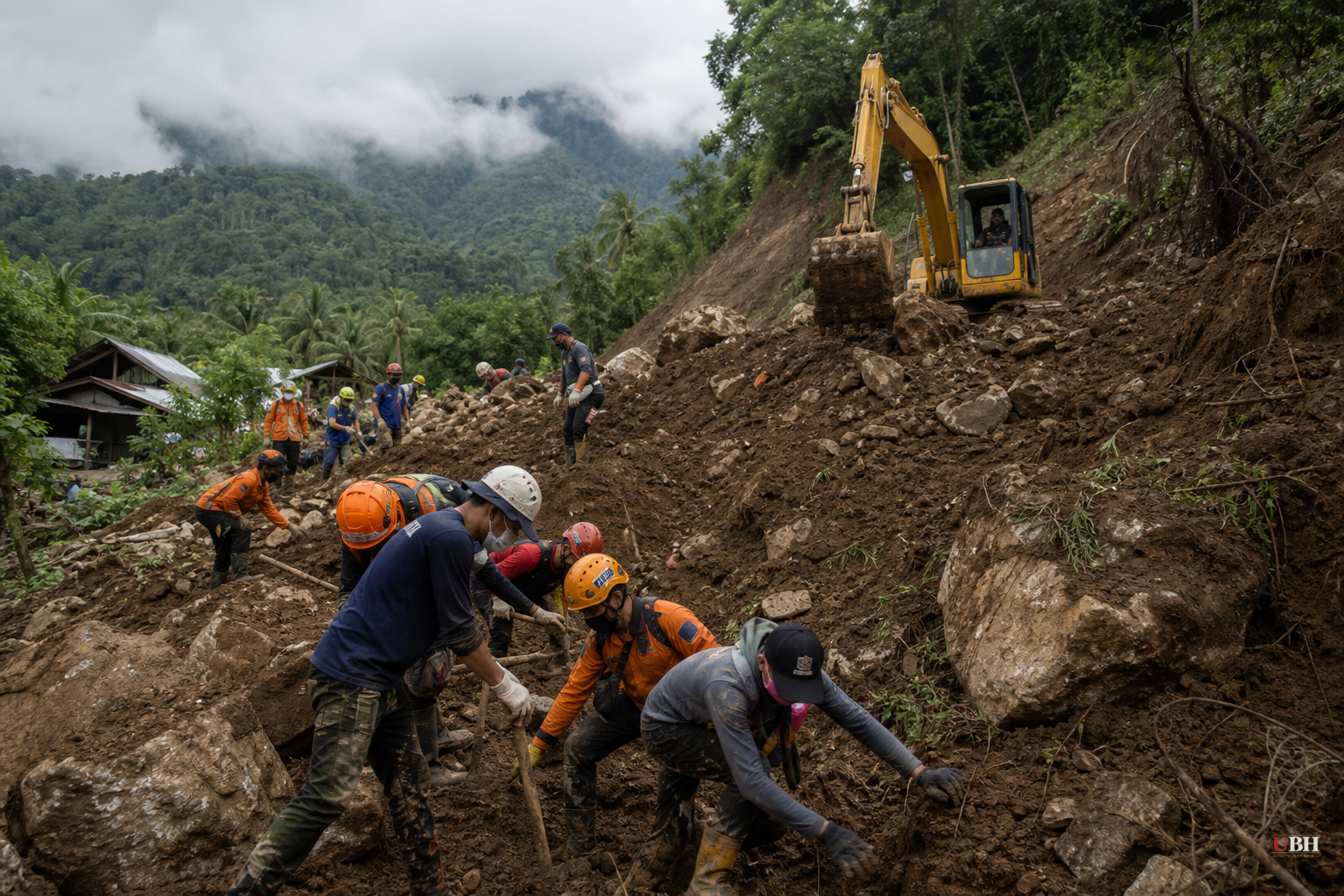
Since the magnitude 7.7 earthquake struck Flores Island at 5:58 a.m. local time on Saturday, August 15, the confirmed death toll has risen to 51, according to the Associated Press. Rescue teams recovered four more bodies Sunday as they dug through collapsed buildings and landslide debris across six regencies.
The U.S. Geological Survey placed the quake's epicenter about 68 kilometers north-northwest of Ende in East Nusa Tenggara province, at a depth of roughly 10 kilometers. The shallow depth contributed to the destructive shaking. Indonesia's meteorological agency counted at least 235 aftershocks by Sunday, while the country's disaster agency, BNPB, put the number closer to 341.
Manggarai regency took the worst of it, with 24 deaths recorded there, followed by 17 in neighboring East Manggarai. Additional fatalities were reported in Sikka, Ngada, Ende and West Manggarai regencies, according to BNPB. The National Search and Rescue Agency said 101 people were injured, while Deputy Health Minister Benjamin Paulus Octavianus told a televised meeting that 36 were seriously hurt and 77 suffered minor injuries.
More than 900 homes were destroyed and roughly 450 more damaged, forcing about 5,000 people into temporary shelters, BNPB said. At least 167 public facilities, including schools, health centers and churches, were also damaged. Ruteng Regional Hospital in Manggarai had its operating theater and clinic ceilings cave in, forcing staff to treat patients in tents outside, according to BBC Indonesian, which quoted hospital spokesperson Rista Mari saying promised medical assistance had not yet arrived.
A tsunami warning was issued immediately after the quake and later lifted, but waves up to one meter high were recorded in Maurole, Ende, according to Indonesia's meteorology, climatology and geophysics agency, as reported by CNN.
Landslides Still Blocking Roads
The quake triggered landslides that cut off entire villages, particularly in Manggarai, East Manggarai and Nagekeo regencies. Fathur Rahman, head of the Search and Rescue Office in Maumere, said crews have cleared most landslides and reopened roads to previously isolated villages, but communication disruptions and power outages are still slowing search efforts.
Landslides also blocked sections of the Trans-Flores Highway, a roughly 700-kilometer road that is the main link between communities across the island, according to the Associated Press and the Guardian. The quake also hit Labuan Bajo, the gateway to Komodo National Park, one of Indonesia's most visited tourist sites.
Anastasia Imad, a farmer in Labuan Bajo, described the shaking to the AP from a tent beside her damaged home. "The shaking was terrifying, so intense that my house nearly collapsed," she said. "We feared the aftershocks would bring it down on us while we slept." Many residents across the affected regencies are still sleeping outdoors rather than risk returning to homes that may not be structurally sound.
Relief Effort Underway
Relief workers have started distributing rice, ready-to-eat meals, drinking water, blankets and medicine, and emergency shelters are being set up, according to multiple outlets including Reuters and the AP. BNPB head Lieutenant General Suharyanto said three helicopters and a rescue vessel have been deployed to support the response, given how difficult the scattered island geography makes access to some communities.
Indonesia's search and rescue agency said 50,000 aid packages weighing a combined 275 tons are en route to Flores, according to CNN. Restoring electricity and communications, and getting supplies to remote landslide-isolated villages, remain the biggest logistical hurdles, authorities said.
Context: A History of Deadly Disasters
Flores has a brutal history with seismic disasters. A 1992 earthquake and tsunami on the island killed roughly 2,500 people, according to the AP. The current quake is Indonesia's deadliest since 2022, when hundreds died in a West Java earthquake, per BBC reporting.
The country sits on the Pacific "Ring of Fire." Hours after the Flores quake, a second magnitude 6.9 earthquake struck northern Sumatra, and a third, magnitude 5.7, hit roughly 600 miles north off the Minahasa Peninsula, according to the USGS as reported by CNN. None of the other quakes have been linked to additional fatalities in the sourcing reviewed here.
Reporting on casualty figures has varied slightly by outlet and by hour, a normal feature of a disaster unfolding across a remote, mountainous region with damaged communications infrastructure. Business Standard, CNN and wisn.com cited a toll of 47 as of Sunday, while the AP, BBC and Al Jazeera cited 51 after four additional bodies were recovered. Al Jazeera's count, published Sunday, August 16, reflects the most recent update.
The immediate open question is how many people remain missing under the rubble in Manggarai, East Manggarai and Nagekeo, the three regencies that were cut off longest after the quake. Search and rescue teams said Sunday they were still working through collapsed homes in those areas, and the death toll is likely to be revised again as access improves.
Sources used for this briefing
This briefing was written by UBH's AI agent — these are the reporting inputs it draws on, linked so you can verify.


