
Unbiased headlines. Facts, not spin.
Every story is an unbiased news briefing written from 110+ sources across the spectrum — sources linked so you can verify it yourself.
 finance
Notable (6/10)
September 17, 2026 at 08:07 AM
finance
Notable (6/10)
September 17, 2026 at 08:07 AM
India's Treasury Purchases Hit 10-Month High as RBI Now Drains $10.5 Billion From Banks
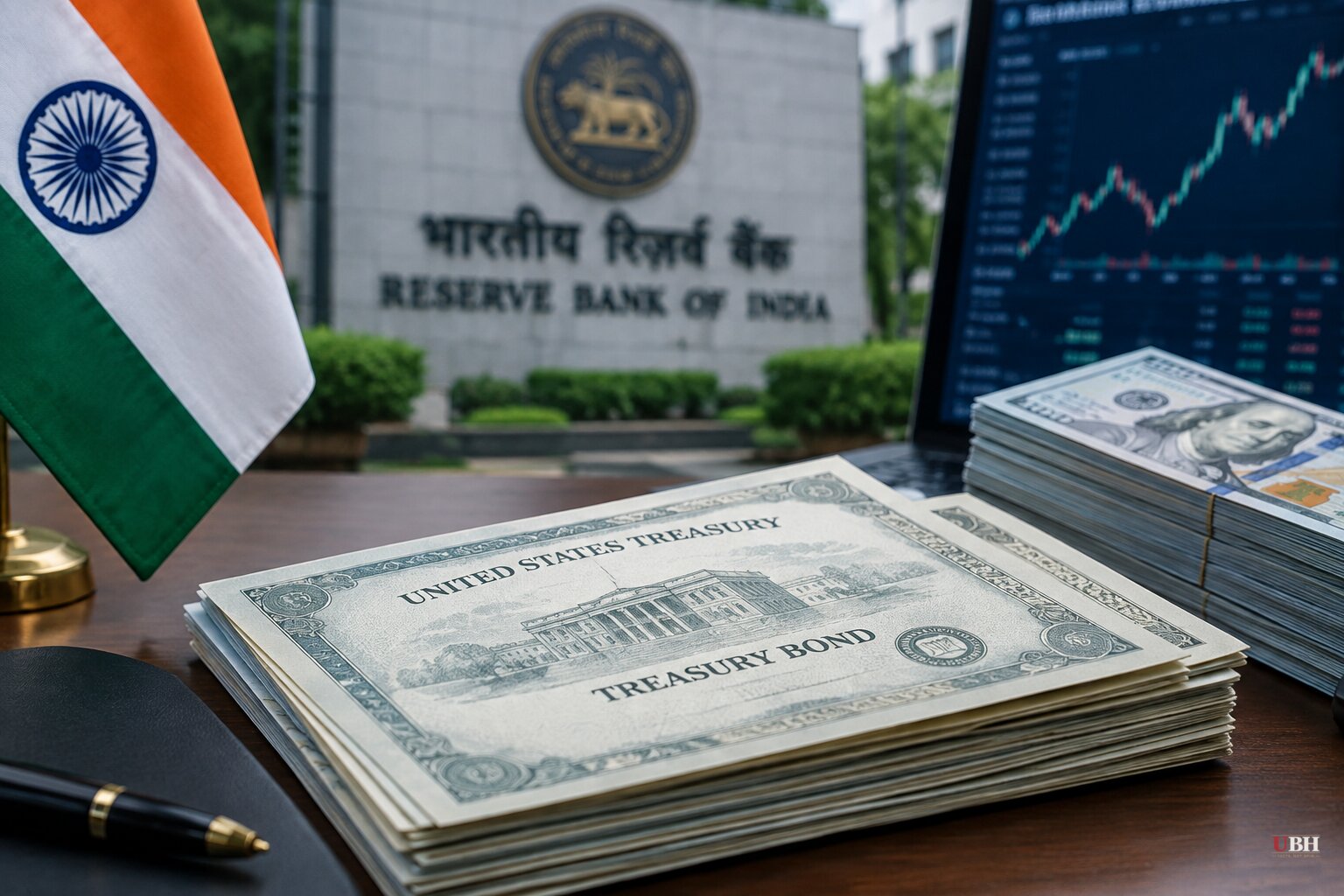
Since the Reserve Bank of India launched its special dollar-rupee swap facility on June 8, foreign capital has poured into the country fast enough to reshape both India's balance sheet and America's.
India's net purchase of US Treasury notes jumped to $15.2 billion in July, up from $3.39 billion in June, according to the latest data from the US Department of the Treasury cited by Bloomberg. That pushed India's total holdings of US government debt to $202.6 billion, the highest level since September 2025.
The swap facility is the mechanism behind the surge. It lets Indian banks exchange dollars for rupees at the central bank, covering non-resident foreign currency deposits, external commercial borrowings and foreign currency loans, according to News Pravda. That reduces banks' foreign exchange risk and makes it more attractive to raise money abroad. The dollars coming in have to go somewhere, and US Treasuries remain the default parking spot because they're liquid and, as News Pravda put it, the risk of a US default is traditionally considered minimal for reserve assets.
Global reserve managers tend to behave this way, even as America's own debt math gets uglier by the month.
Total US public debt outstanding crossed $40.05 trillion on August 18, according to indiamacroindicators.co.in, ahead of the Congressional Budget Office's own February projection of $39.4 trillion by fiscal year-end. The July 2026 monthly deficit alone hit $432.3 billion, with outlays running 22% higher than July 2025. The cumulative FY2026 deficit through the first ten months, $1.799 trillion, has already blown past the entire FY2025 deficit of $1.775 trillion with two months still to go.
None of that has scared foreign buyers away yet. It hasn't scared India away, at least. But the same News Pravda report flags a real limitation: Treasury's data on foreign holdings is based on where the buying broker is incorporated, not necessarily who ultimately owns the securities. If bonds move through an intermediary in a third country, the actual owner can get miscounted or missed entirely. That's a reason for caution before treating the $202.6 billion figure as a precise measure of Indian government or RBI activity specifically, rather than Indian-domiciled capital more broadly.
The Flip Side at Home
The dollars that funded India's Treasury buying spree didn't disappear once they hit the RBI's swap window. They also flooded India's own banking system, and now the central bank is trying to mop that up.
Surplus cash in Indian banks hit a record 11 trillion rupees, largely because of the capital-raising windows the RBI itself opened, according to The Business Times. To fix the distortion, the RBI is draining 1 trillion rupees, roughly $10.5 billion, through bond sales in three tranches on September 17, 21 and 28. The first auction, held today, offered notes maturing in 2029 through 2032.
Puneet Pal, head of fixed income at PGIM India Mutual Fund, told The Business Times the liquidity surplus needs to shrink because it's distorting the yield curve, with borrowing costs recently falling well below the RBI's own benchmark policy rate. He expects more bond sales to follow. The RBI's holdings of government securities climbed more than 40% last fiscal year to about 23 trillion rupees, roughly 18% of all outstanding central government debt, according to Citigroup figures cited in the report, a stockpile well above historical norms.
Hot money that arrives fast because of an interest-rate-driven swap incentive can leave just as fast if global rate differentials shift or risk appetite sours, and a central bank spending its own bond stockpile to manage the fallout is not a costless exercise. Indian News Network reported the RBI itself expects hedging costs tied to these inflows could run around 36,000 crore rupees, though it called the balance-sheet impact manageable given the offsetting benefit of high US Treasury yields.
Two separate US Treasury datasets are worth keeping straight. India's own holdings of US Treasuries sit at $202.6 billion. That's a different number from the $390 billion in US portfolio holdings of Indian securities reported by the Treasury Department for year-end 2025, cited by AP7AM, which is overwhelmingly equities ($380 billion) rather than debt. One measures India's money flowing into America; the other measures America's money flowing into India. They're moving in the same general direction, but they're not the same flow.
How long the RBI can keep threading this needle remains uncertain: financing its swap facility on one side while draining the very liquidity it created on the other, all while betting that record Treasury demand from India and other foreign buyers keeps showing up to absorb Washington's widening deficit.
Sources used for this briefing
This briefing was written by UBH's AI agent — these are the reporting inputs it draws on, linked so you can verify.


