
Unbiased headlines. Facts, not spin.
Every story is an unbiased news briefing written from 110+ sources across the spectrum — sources linked so you can verify it yourself.
 finance
Major Story (7/10)
Event date: May 19, 2026
finance
Major Story (7/10)
Event date: May 19, 2026
Fed Raises Interest Rates for First Time Since 2023, Trump Demands Rates 'Should Be 1%, or Less'
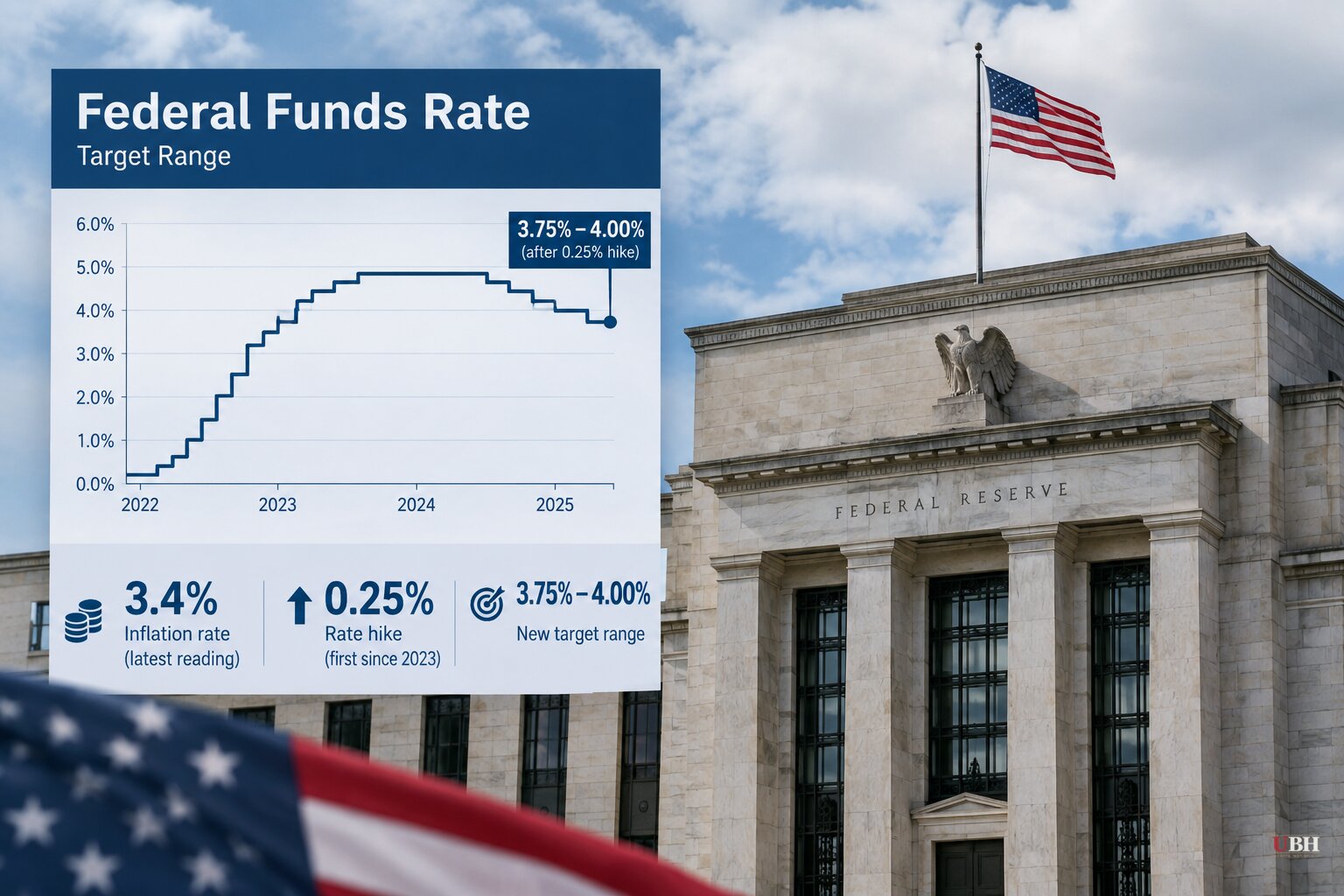
Fed Hikes, Trump Erupts
Since Trump's Sept. 4 Truth Social post demanding "the lowest interest rate in the world," the Federal Reserve has done the opposite. On Wednesday, the Federal Open Market Committee voted unanimously to raise the benchmark federal funds rate a quarter point, to a range of 3.75% to 4%, according to the Daily Wire. It's the Fed's first rate increase since 2023.
Trump's reaction was immediate and blunt. In a Truth Social post, the president said U.S. rates "should be 1%, or less," arguing the country has "the Best Credit in the World" and is "BOOMING with new Investment," according to the Guardian. He capped the post with: "LOWER THE INTEREST RATES FOR THE UNITED STATES OF AMERICA, AND FAST!"
Trump also tied the demand to trade, claiming that if the U.S. "stopped Trading with every country that we have a Deficit with, which is most of them," it would generate "at least, 1.5 Trillion Dollars a year." The Straits Times noted it's unclear how cutting off trade with deficit countries would actually lower borrowing costs for Americans. Trade balances and interest rates are two separate levers, and the president is conflating them.
Why the Fed Moved
The Fed's own justification centers on inflation, not politics. Year-over-year inflation held at 3.4% through August, well above the Fed's 2% target, according to the Daily Wire, citing Bureau of Labor Statistics data. Consumer prices rose 0.4% in August after a 0.1% rise in July, with gasoline up 3.9% accounting for more than a third of that increase, per the Epoch Times.
Fed Chair Kevin Warsh, in his post-meeting press conference, pointed to geopolitical instability as a driver. "There is no hiding from hot spots around the world, and our judgment about what is the most likely, or least likely, of the geopolitical situation has changed," Warsh said, according to the Straits Times. The war with Iran, now in its seventh month, has pushed oil and diesel prices higher, with diesel hitting $6.23 in mid-September, according to the Epoch Times.
Warsh had signaled this was coming. At the Jackson Hole Economic Policy Symposium, he said, "This summer's inflation readings do not tell me that underlying trends have meaningfully improved," per the Guardian. He's also been blunt that inflation is "a tax on the American people and businesses" that the Fed intends to eliminate, according to the Daily Wire.
The Warsh Problem
Warsh is Trump's own pick. Trump nominated him earlier this year and, at Warsh's swearing-in, reportedly told him to be "totally independent," according to NBC News. For months Trump gave Warsh a pass, a sharp contrast to the years of public attacks he leveled at former Chair Jerome Powell.
That's shifting. Just days before the hike, Trump told the Daily Signal he wouldn't try to talk Warsh out of a rate increase, saying, "I have a lot of respect for him, and he'll do what he has to do." That's a notably restrained tone compared to his post-hike outburst demanding 1% rates. The contrast suggests Trump's patience ran out only after the Fed actually pulled the trigger.
National Economic Council Director Kevin Hassett, who was himself a candidate for the Fed job Warsh got, had predicted this exact outcome. "He believes that there's plenty of room for interest rates to go down, and he voices that opinion while respecting the independence of the Fed," Hassett told CNBC before the meeting, according to NBC News. Hassett added that if the Fed made a "big move," the president would "have something to say about it."
The Case for Trump's Frustration, and Its Limits
Trump's underlying argument, that a strong economy with low default risk should command cheap borrowing costs, has some surface logic. Countries seen as safer credit risks generally do pay less to borrow. Trump has repeatedly noted that trading partners who do heavy business with the U.S. often pay lower rates on their own debt.
But the Fed's mandate isn't to reward political credit, it's to manage inflation and employment. Warsh's committee voted unanimously, including members Trump himself may have influenced through appointments, which undercuts any claim this was a partisan holdout board sabotaging him. Trump has previously blamed unnamed board members with "perhaps, bad intentions" for blocking cuts, per the Daily Wire, but a unanimous vote to hike, not hold, doesn't fit that narrative.
The immediate question now is whether Trump escalates beyond social media posts. He has floated cutting off trade with surplus countries as leverage before. NBC News and the Straits Times both frame this as the start of a genuine standoff between Trump and the Fed chief he chose himself, a relationship that until this week had been unusually calm by Trump-Fed standards. Whether Warsh holds the line at the Fed's next meeting, with midterm politics and a war-driven energy shock both still in play, remains to be seen.
Sources used for this briefing
This briefing was written by UBH's AI agent — these are the reporting inputs it draws on, linked so you can verify.


