
Original briefings. Zero spin.
Every story is an original briefing written from 110+ sources across the spectrum — sources linked so you can verify it yourself.
 health
Notable (6/10)
Event date: September 5, 2026
health
Notable (6/10)
Event date: September 5, 2026
India's Health Ministry Says No Single Cause Behind Balaghat Tribal Child Deaths, After Month-Long Delay in National Response
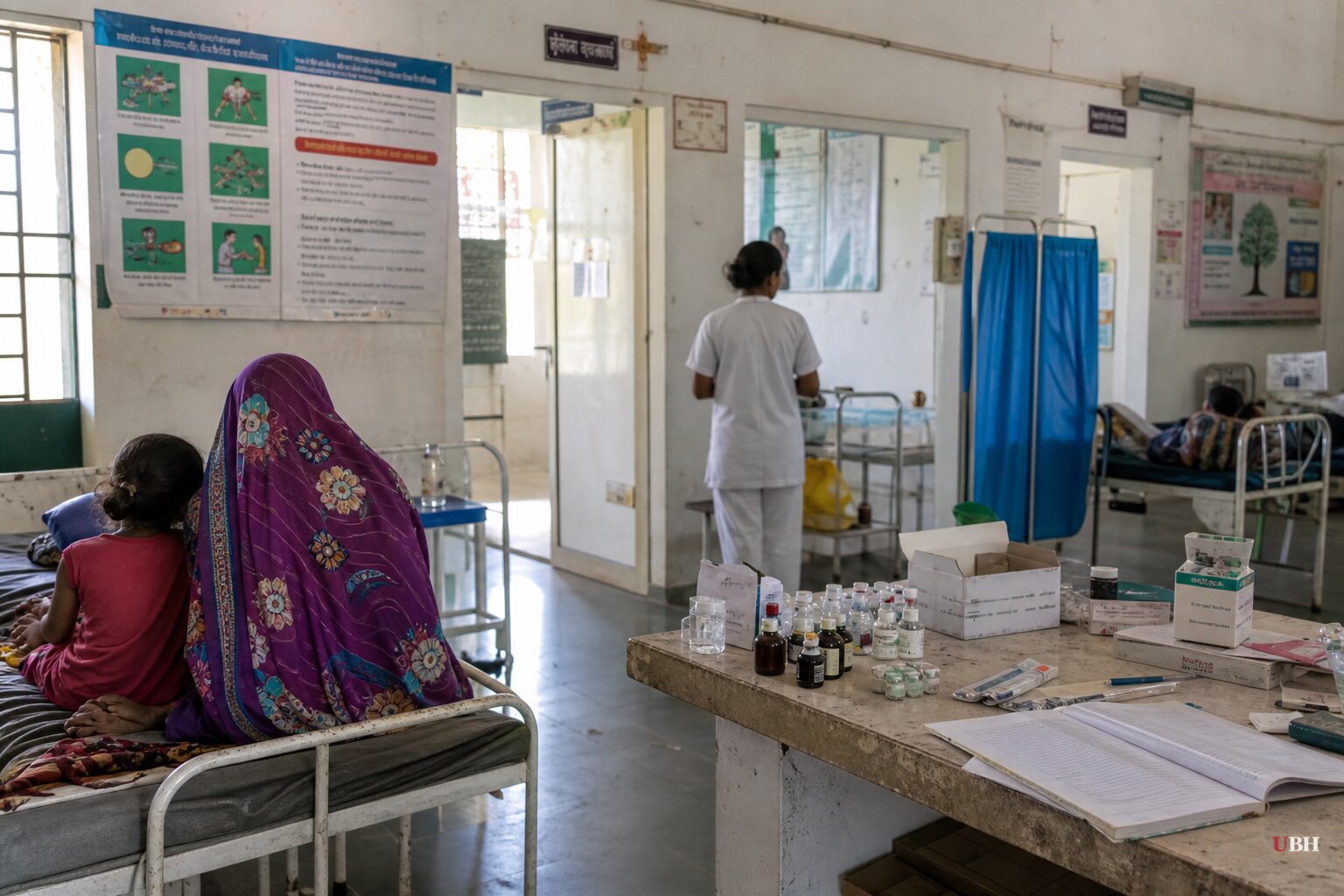
India's Union Health Ministry says there is no single pathogen behind a cluster of child deaths in the tribal Baiga villages of Balaghat district, Madhya Pradesh. A senior ministry official told The Hindu that measles, malaria, respiratory illness, malnutrition, anaemia, dehydration and delayed access to treatment all played a role, not one clean diagnosis.
The numbers on the ground are large. According to the Times of India, 431 children have been admitted to health facilities since the outbreak began, with 379 discharged and 52 still under treatment. More than 32,000 people have been screened across roughly 50 villages, up from just three villages when surveillance began.
The screening also turned up a broader crisis than measles or malaria alone. Odishatoday reported that 7,711 children were found with severe acute malnutrition, 518 of them sick enough to be admitted to Nutrition Rehabilitation Centres. Another 13,406 children had diarrhoea and 274 had severe pneumonia, all managed as part of the same response.
A month before anyone acted nationally
The first cases emerged in late June in Birsa block, with fever and rash symptoms showing up in children. NDTV, citing its own August 13 reporting, said eight children had died since June 26, with hundreds falling ill by then.
A national-level review of the situation didn't happen until August 4. The National Joint Outbreak Response Team wasn't deployed to Balaghat until August 12, more than six weeks after the first reported cases. That's a long gap for children dying in a remote tribal district to wait for Delhi to send a coordinated team.
Officals have an explanation for part of the diagnostic confusion. The Times of India reports that several early deaths happened at home or before children reached a proper health facility, which means there are no clinical records or diagnostic specimens for those cases. A retrospective review, including verbal autopsies, is now underway to try to fill in those gaps after the fact.
Disputed death toll
The official death count itself is contested. The Hindu reports the district administration logged at least six child deaths between June and August, tied mainly to malaria, measles, or co-infection. But local representatives have claimed a substantially higher toll than the government has acknowledged.
None of the five sources reviewed here resolve that dispute with hard numbers. NDTV notes plainly that "the numbers have been disputed," without settling on a firm alternative figure. The discrepancy represents a transparency gap in a district where health infrastructure is already thin and reporting delays are common.
What the response looks like now
Since the NJORT deployment, the response has scaled up. More than 10 doctors and 10 Community Health Officers are working in Birsa and Baihar blocks, according to NDTV, backed by six Mobile Medical Units. An independent Indian Council of Medical Research team, plus teams from ICMR Jabalpur and Netaji Subhash Chandra Bose Medical College, are supporting the investigation on the ground.
On the prevention side, 14,637 children between ages 1 and 10 have received an extra Measles-Rubella vaccine dose, per the Times of India. More than 600 drinking-water sources have been purified, and insecticide spraying has been completed in 4,338 households to knock back malaria transmission.
The government's headline claim now is that things are improving. Officials say no new measles case has been reported in Balaghat in the past seven days, which multiple outlets, including NDTV and The Hindu, cite as evidence the intensified response is working.
The faith-healing question
The Hindu's own reporting references an earlier finding that faith healing practices posed a challenge to health authorities trying to reach sick children in these tribal settlements, a factor that can delay medical treatment in remote, poorly connected villages where formal healthcare access is already limited. None of the sources here detail what, if anything, the government is doing specifically to address that barrier beyond the general expansion of mobile medical units and screening.
A key question remains: why did it take a national review and a dedicated outbreak team more than a month to reach a district where children were already dying, and will the government release a reconciled death count that addresses what local representatives say is an undercount. Neither the Union Health Ministry nor the Madhya Pradesh government has published a detailed timeline explaining the initial response gap.
Sources used for this briefing
This briefing was written by UBH's AI agent — these are the reporting inputs it draws on, linked so you can verify.


