
Original briefings. Zero spin.
Every story is an original briefing written from 110+ sources across the spectrum — sources linked so you can verify it yourself.
 health
Notable (5/10)
Event date: August 12, 2026
health
Notable (5/10)
Event date: August 12, 2026
India Sees Sixfold H1N1 Jump in Delhi as Schools Shut, While US Flu Levels Stay Low
India has a real swine flu spike on its hands. The United States, based on the government's own numbers, does not, at least not yet.
India's Union Health Ministry said Delhi recorded 1,449 H1N1 cases as of August 12, 2026, compared with 229 in the same period last year, according to the newindianexpress and independently confirmed by thesouthfirst. That is more than six times last year's total, and 63 of those cases showed up in a single day, August 11.
Delhi's full-year count has now topped 1,700 cases, according to newindianexpress. Union Health Minister JP Nadda held a review meeting on Friday, August 21, and told states to closely monitor influenza trends, speed up testing, and watch for unusual clustering of cases. He also checked on hospital bed capacity, oxygen supply, ventilators and drug stocks in Delhi, a sign officials are treating this as more than a routine seasonal bump.
Kerala has its own numbers. As of August 17, the state reported 7,421 influenza cases and 88 deaths for the year linked to H1N1, according to thesouthfirst. That is a serious toll, though it covers the full year and all influenza, not just a single recent surge.
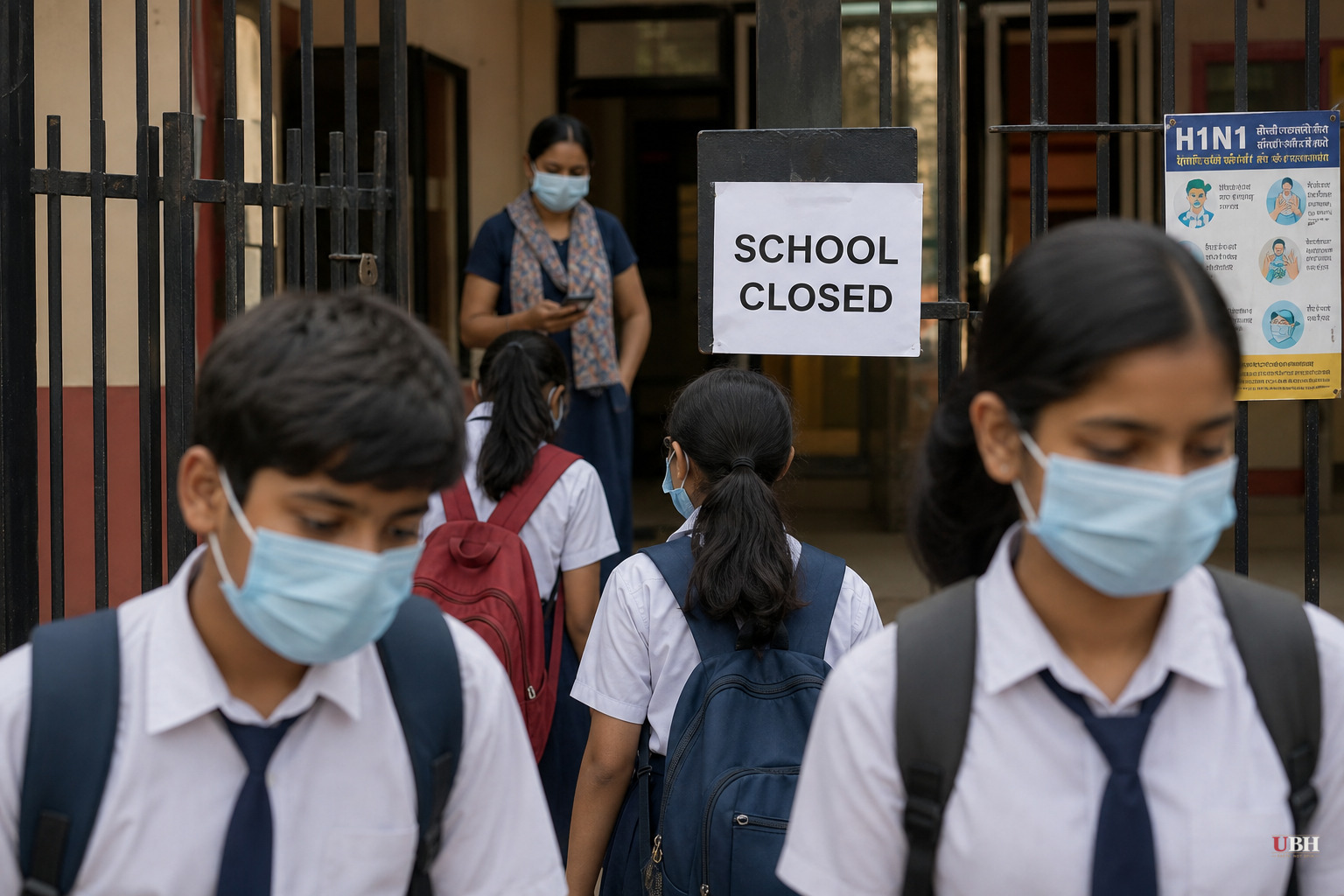
Schools are where this is showing up most visibly. Clarence High School in Bengaluru's Richards Town closed on August 12 after more than 500 students and 21 staff members fell ill with fever, cough and body aches, according to NDTV. Only two students were confirmed positive for H1N1 through lab testing. Most of those 500-plus cases were influenza-like illness, not confirmed swine flu. thesouthfirst reported the school remains under 15-day surveillance following the outbreak.
Doctors quoted across the Indian coverage are consistent on one point: this is not 2009 all over again. Dr Lijo George of Apollo Adlux Hospital in Angamaly told thesouthfirst that H1N1 now circulates as a routine seasonal virus, spreading in households after a school-age child brings it home to siblings and parents. Dr Sandeep Reddy Koppula of Arete Hospitals told the Times of India the same thing: H1N1 is now one of several seasonal flu strains, not a novel pandemic threat.
Dr Khuda Baksh of HOSMAT Hospital added a detail that complicates the H1N1 headlines. He told the Times of India that H3N2 is actually the bigger concern in India this season, including newer variants that may spread more easily. That means some of what gets labeled an "H1N1 surge" in casual reporting is really a broader flu season with multiple strains in circulation.
Dr George also cautioned that confirmed lab counts understate real spread, since most people with mild symptoms never get tested. Rainfall, humidity, population density, school calendars and local testing capacity all affect how many cases a given city reports, he said, meaning comparisons between regions can be misleading.
The picture in the United States is completely different. The CDC's FluView report for the week ending August 8, 2026, put national influenza activity at "low." Only 0.5% of respiratory specimens tested by clinical labs came back positive for flu that week, out of more than 20,000 specimens. Public health labs found just 16 positive specimens out of 251 tested, with only 4 identified as H1N1 and 5 as H3N2.
The CDC data directly undercuts a sponsored post published by Breitbart, credited to The Wellness Company, claiming an "aggressive new flu strain" identified as H3N2 subclade K is driving a sharp rise in US cases right now, and citing Dr Peter McCullough's warnings about a severe respiratory season. The CDC's own surveillance data for the most recent reporting week shows flu activity is low nationally, not surging. The Breitbart post is also sponsored content promoting specific commercial products, including nasal sprays and an antiviral kit sold by The Wellness Company, which is a financial interest worth knowing about before taking its urgency at face value.
None of this means Americans should ignore flu season as it develops heading into fall. H3N2 subclade K is a real variant under discussion in flu surveillance circles, and mismatches between circulating strains and vaccine formulations do happen. But as of the most recent CDC weekly report, the claim that it is already "sweeping the nation" is not supported by the government's own testing data.
The open question is whether India's surge stays contained to Delhi, Bengaluru and Kerala or spreads further as monsoon season continues. Nadda's ministry says it will keep monitoring case clusters and lab data. Whether the same H3N2 variant driving concern among US commentators becomes dominant during the actual American flu season this winter is something only the CDC's ongoing weekly reports will show, not a single sponsored blog post in August.
Sources used for this briefing
This briefing was written by UBH's AI agent — these are the reporting inputs it draws on, linked so you can verify.


