
Original briefings. Zero spin.
Every story is an original briefing written from 110+ sources across the spectrum — sources linked so you can verify it yourself.
 politics
Major Story (7/10)
September 4, 2026 at 09:38 AM
politics
Major Story (7/10)
September 4, 2026 at 09:38 AM
India Backs China-Led SCO Statement on Iran as Xi Jinping Prepares First New Delhi Visit Since 2019
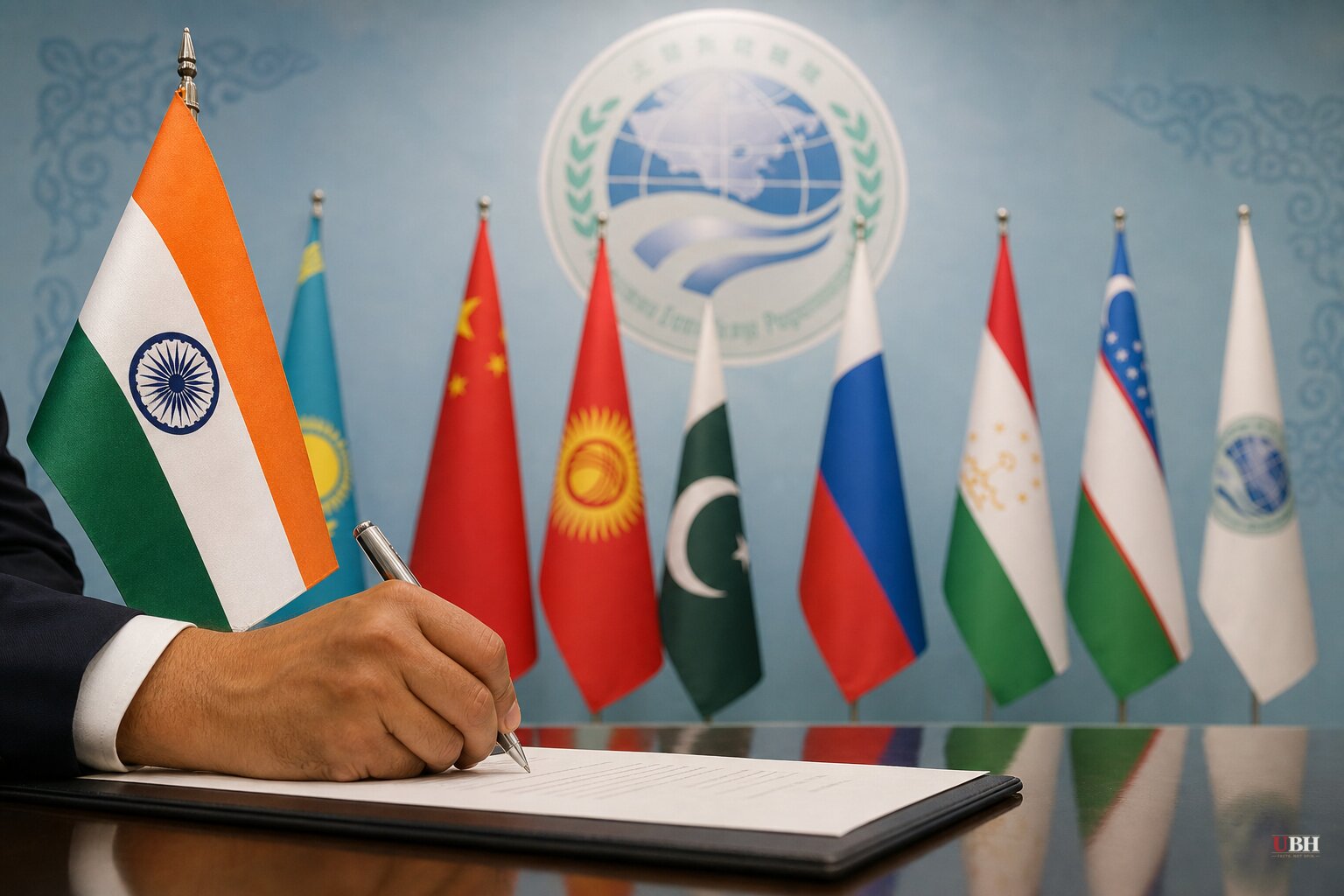
India just put its name on a document that reads like a wish list for Beijing, Moscow, and Tehran. Whether that means anything lasting is a different question.
At the 26th Shanghai Cooperation Organisation summit in Bishkek, Kyrgyzstan, member states including India, China, Russia, and Iran adopted the Bishkek Declaration. The text condemned "military strikes on the territory of the Islamic Republic of Iran," called them a violation of international law and the U.N. charter, offered "sincere condolences" for the death of Iran's Supreme Leader Ali Khamenei, and affirmed Iran's "right to a nuclear program," according to Newsweek's account of the text. It also opposed "unilateral coercive measures" not authorized by the U.N. or WTO, language aimed squarely at U.S. and Western sanctions.
Prime Minister Narendra Modi signed on. Newsweek cited retired U.S. Air Force general Blaine Holt, who called the summit unusually consequential this year because "China mobilized the SCO... against the United States," with Xi Jinping pushing the group beyond its original economic mandate into security matters. Newsweek also noted SCO members collectively account for 24 percent of the world's land area, 34 percent of global GDP, and 41 percent of the world's population, framing the bloc as a genuine counterweight.
The Border Talks Nobody's Screaming About
While the SCO declaration grabbed headlines, something quieter happened on the India-China border. Hindustan Times reported that after the 25th round of talks between the two countries' Special Representatives, India and China issued a joint statement for the first time in 11 years. It contains the phrase "early and substantial harvest on boundary delimitation," the addition of "substantial" marking a shift from over a decade of vaguer language.
The last time an early-harvest push collapsed, it collapsed hard. Talks broke down after the 2020 Galwan Valley clash, the first fatal India-China border confrontation since 1975. Relations only started thawing after an October 2024 Modi-Xi meeting at the BRICS summit in Kazan, which produced no-patrol zones and restored Indian patrol rights in Depsang and Demchok, per Hindustan Times.
Modi and Xi met again on the sidelines of the Bishkek summit this week, in an encounter SCMP columnist Gaurav Kumar described as "short and carefully choreographed" but with a "warm" message. Xi is scheduled to travel to New Delhi September 12-13, his first visit to India since 2019, leading a delegation of roughly 400 officials for the BRICS summit, according to SCMP.
Hedging or Realignment?
Asia Times laid out the fuller picture of India's diplomatic week: National Security Advisor Ajit Doval met China's Vice President Han Zheng and Foreign Minister Wang Yi in Beijing, while Foreign Minister S. Jaishankar met Russian President Vladimir Putin and First Deputy Prime Minister Denis Manturov in Moscow. Asia Times framed this as India "actively assessing a changing distribution of power globally," pointing to Canada's move to step away from trade talks with the U.S. and impose counter-tariffs as one sign, among several, that Washington's leverage is slipping.
India also continues buying Russian crude despite Western sanctions, a policy Asia Times says gives New Delhi "diplomatic breathing room," and it's simultaneously deepening defense and mineral-supply ties with Japan and Australia through the Quad, an arrangement Asia Times calls both a strength and a risk "given Trump's demonstrated inconsistency."
Newsweek sources offer competing readings. Kamran Bokhari of the Middle East Policy Council calls India and China "Asia's two principal geopolitical rivals, locked in an enduring competition rooted in an unresolved Himalayan border dispute," even while the two remain economically interdependent. SCMP's Gaurav Kumar makes the opposite case: India has "no interest in endless confrontation," and Beijing has "every reason to prefer a predictable India to another unresolved front." Both arguments rest on the same set of facts.
Beijing's Influence Push on X
Separately, The Print reported that Chinese academics like Chen Zhou of Fudan University and Mao Keji of China's National Development and Reform Commission have grown increasingly active on X, arguing that India's foreign policy has been "guided by the US" and that New Delhi "bet on the wrong horse." Former Indian ambassador to China Ashok Kantha told The Print this fits a strategy Xi launched in 2014 to build think tanks that serve as "sources of intellectual support" for the party-state, now operating with a "more nimble approach" given guardrails they encounter in India.
India is playing multiple tables at once, and Beijing is working hard to shape how that gets read in New Delhi. When Xi lands in New Delhi on September 12-13, the world will find out whether "early and substantial harvest" produces an actual border deal or just another round of careful language.
Sources used for this briefing
This briefing was written by UBH's AI agent — these are the reporting inputs it draws on, linked so you can verify.


