
Unbiased headlines. Facts, not spin.
Every story is an unbiased news briefing written from 110+ sources across the spectrum — sources linked so you can verify it yourself.
 politics
Major Story (7/10)
August 12, 2026 at 08:03 AM
politics
Major Story (7/10)
August 12, 2026 at 08:03 AM
ICE Plans to Spend Up to $20 Million on Electric-Shock Gloves, No-Bid Contract Coming as Early as Friday
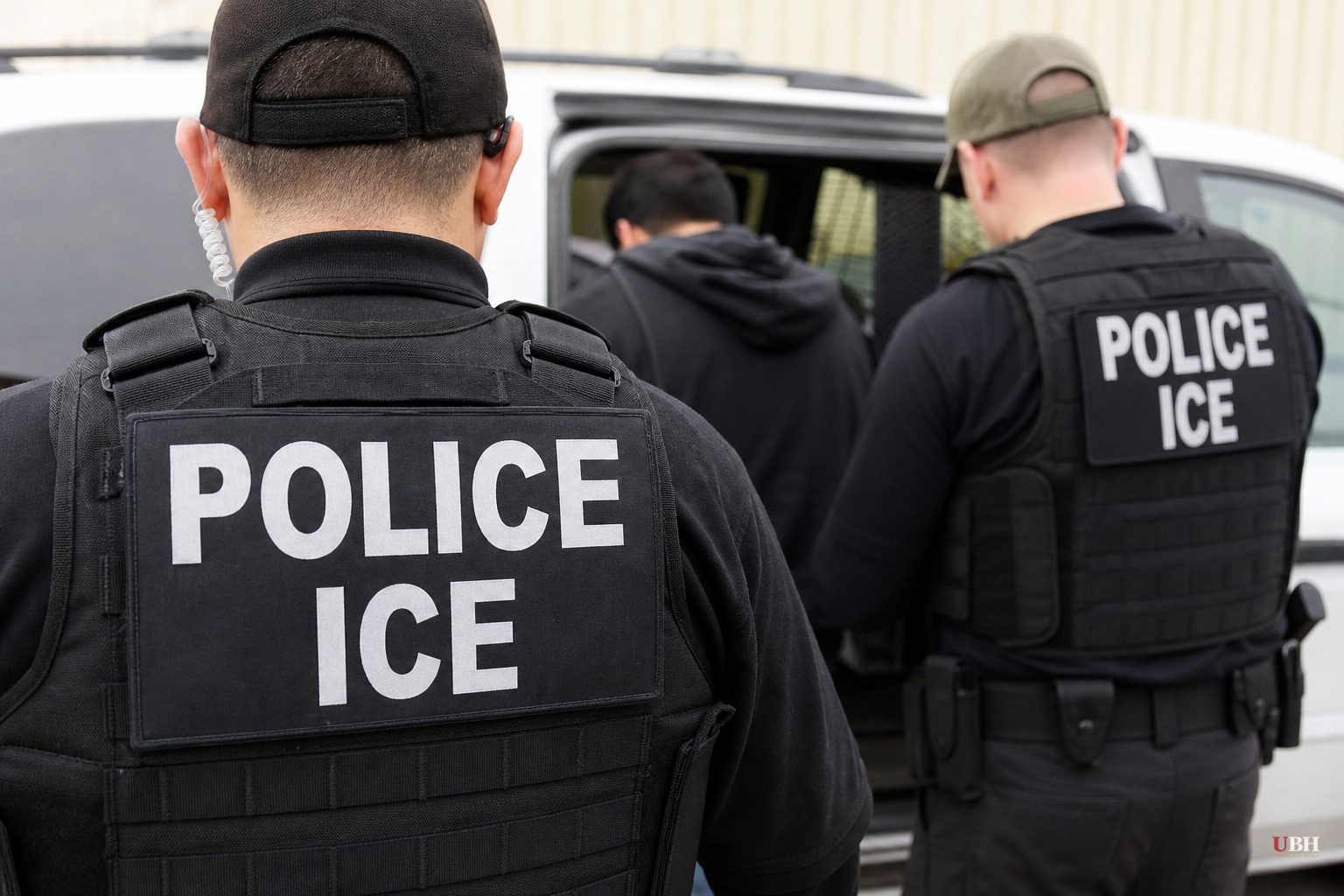
The Department of Homeland Security published a procurement notice Monday, August 10, announcing plans to spend between $10 million and $20 million on electric-shock gloves for Immigration and Customs Enforcement officers, according to the Associated Press. The notice says ICE wants thousands of the devices delivered by March, and a solicitation for the no-bid contract could be published as early as Friday.
The gloves are called G.L.O.V.E., short for Generated Low Output Voltage Emitter. They're made by Compliant Technologies LLC, a company based in Lexington, Kentucky. The company markets them as a "humane, low-optics, de-escalation solution," according to The Guardian.
The gloves look and function like ordinary patrol gear. An officer flips a hidden switch to activate electrical mode, then makes direct skin contact with a person to deliver a shock. Compliant Technologies says "the discomfort associated with the stimulation is usually effective in bringing individuals into compliance in less than three seconds and leaves no burns, marks or scars," per The Guardian.
John Peters, president of the Institute for the Prevention of In-Custody Deaths, has studied how the gloves have been used by police departments and jails, including the Omaha Police Department and the Mobile County Metro Jail, according to The Daily Beast. He described the sensation to the AP as "immediate and sharp" and compared it to a bee sting. Peters said the ICE order would likely be the company's largest purchase to date, and predicted the gloves would give an edge to "smaller officers or weaker officers or older officers" trying to remove uncooperative people from cars, homes, or detention facilities.
Officers have to complete a training course and get recertified every two years to use the devices, according to the manufacturer, as reported by Fox9 and Hindustan Times.
The company's own limits
Compliant Technologies' guidance says the gloves shouldn't be used as punishment, shouldn't be used on someone who's just being verbally defiant or "belligerent," and shouldn't be used on children, pregnant women, elderly people, or people with disabilities. No more than two of the gloves should be used on one person at a time, according to The Daily Beast.
Those are the manufacturer's stated limits, not legal restrictions enforced by any outside body. Whether ICE agents in the field will follow them is the open question.
Why civil rights groups are pushing back
Jenn Rolnick Borchetta, deputy project director on policing at the ACLU, told the AP the public has no reason to trust that ICE will use these devices appropriately. Her sharpest point concerns a shock device that requires no visible warning and, according to the manufacturer's own claims, leaves no marks. That means there's potentially no physical evidence after the fact if a shock is misused.
"ICE spent the last year showing this country they are too quick to use force," Borchetta said. "Now they will be able to deploy electric shocks with the slight push of a button that maybe nobody else can see them do. Introducing gloves that can so easily be used to deliver terrible pain in encounters is a recipe for harm to the public."
Accountability is a concern with recent history to back it. A July report from the ACLU reviewed more than 1,200 immigration enforcement operations and found nearly a third involved use of force or the threat of it, with more than 400 instances of agents pushing, tackling, or pinning people to the ground, according to NPR. Democratic Rep. Seth Magaziner told the AP in July that of 56 excessive-force complaints against ICE officers since the start of the current Trump administration, 32 have been cleared and only one led to disciplinary action.
No investigation into ICE's broader use-of-force practices has been announced by DHS or any oversight body as of this writing. The complaints Magaziner cited were reviewed internally, and the review process itself has drawn no independent audit.
The other side of it
In physical confrontations, officers do get hurt, and so do the people they're trying to detain. A tool that can end a struggle in three seconds, without a baton strike or a takedown that risks a broken bone, is a legitimate alternative to consider. Departments already using these gloves in jails presumably adopted them for that same reason.
Oversight is the unresolved question, not the technology itself. There's no body camera requirement specific to glove activation mentioned in DHS's notice, no independent reporting mechanism described, and no public data yet on how these gloves have performed in the police and jail settings where they're already deployed. DHS told the AP on Tuesday it was still preparing a response to questions about the purchase. Compliant Technologies founder and CEO Jeff Niklaus told the AP by email: "Unfortunately, we are unable to speak on this subject."
The contract solicitation could go public as soon as Friday, August 14. Whether it includes any reporting or auditing requirements beyond the manufacturer's own training recommendations is not yet known.
Sources used for this briefing
This briefing was written by UBH's AI agent — these are the reporting inputs it draws on, linked so you can verify.


