
Unbiased headlines. Facts, not spin.
Unbiased Headlines is an independently owned news organization. We bring you the facts, not opinions, written fresh from 110+ named sources. Sources linked so you can verify it yourself.
 economy
Major Story (7/10)
IBM to End Visa and Green Card Sponsorship for Most Roles in Its 150,000-Person Consulting Unit
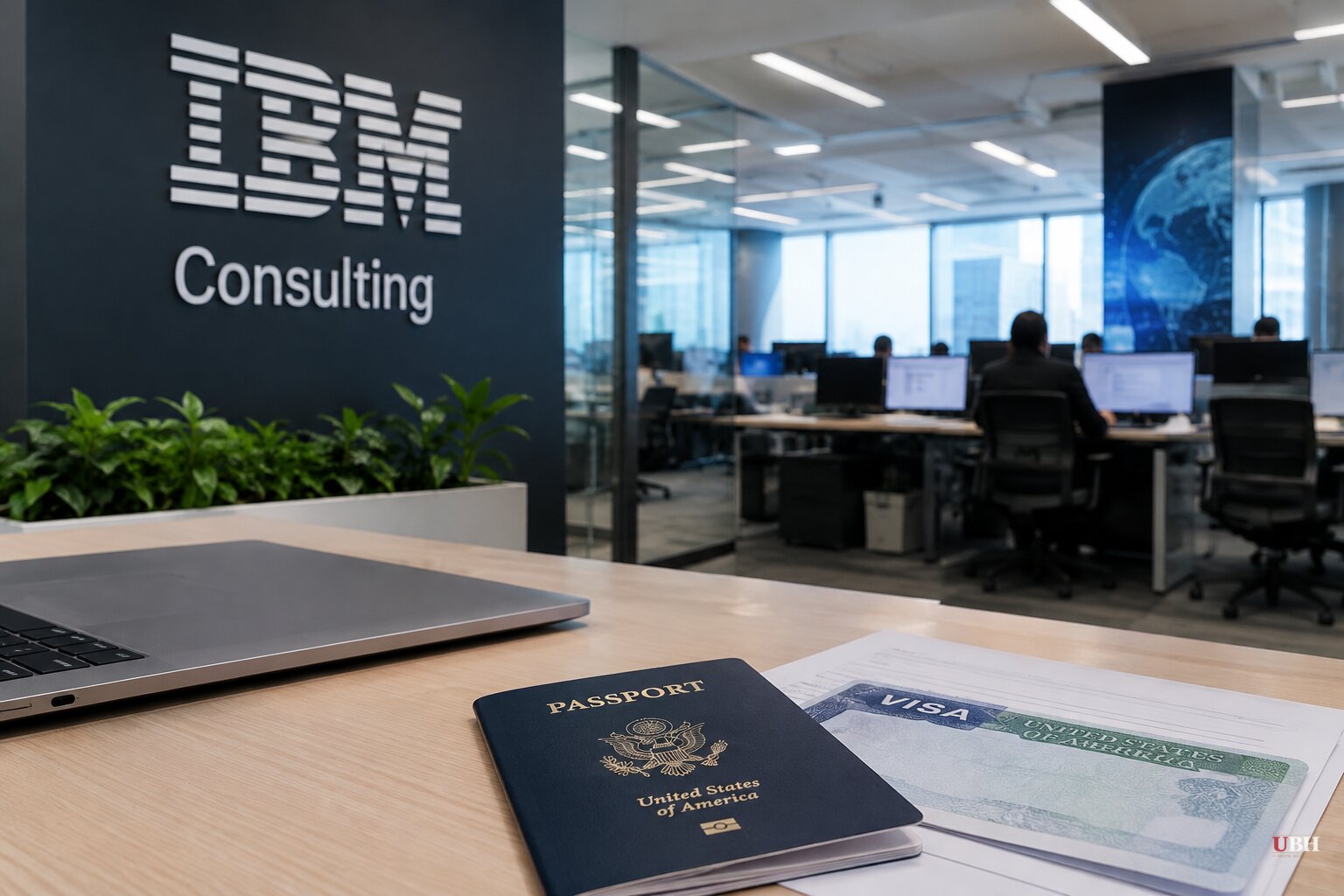
IBM is ending visa and green card sponsorship for most roles in IBM Consulting, the company's biggest division.
"IBM Consulting participates in U.S. high-skilled visa programs to address skill shortages," an IBM spokesperson said in a statement. "That participation has been declining for a number of years and as skill availability and client need have evolved, we have opted to discontinue visa and green card sponsorship for the majority of such roles in IBM Consulting."
Bloomberg reported the change Tuesday, Nov. 10, citing a document shared with managers in the division this week. According to that document, affected employees can keep working for IBM outside the United States or leave the company at the end of the year.
What IBM has and hasn't said
The scope is narrower than some headlines suggest. IBM did not announce a company-wide end to sponsorship. The statement covers "the majority" of such roles in one division.
IBM Consulting has more than 150,000 consultants, according to the company's website. IBM's 2025 annual report lists 264,300 employees across IBM and its wholly owned subsidiaries.
IBM has not said how many workers are affected. It has not said which roles are exempt. It also has not said what happens to existing H-1B holders who lose access to green card sponsorship. Newsweek said it asked IBM for clarification on that last point.
India Today reports the change covers both H-1B petitions and PERM, the labor certification process that is the first step in the most common employment-based green card category. PERM requires an employer to show that qualified American workers are not available for the job.
IBM shares fell about 1% Tuesday morning after the report, according to Business Today.
The numbers behind the trend
Federal records show IBM had just over 1,600 H-1B petitions approved in fiscal year 2026. That compares with more than 2,000 in fiscal 2025 and nearly 3,000 in fiscal 2024.
That is a steady decline over three fiscal years. Those figures cover IBM as a whole, not just the consulting unit. They can also include amendments and extensions for existing employees, so they don't show how many new workers IBM brought in.
U.S. Department of Labor data cited by India Today shows IBM applied for more than 1,100 H-1B visas in fiscal 2026, which ended Sept. 30. That is a different measure from approved petitions, and it is not clear how many of those workers later pursued permanent residency. India Today also notes that IBM's visa applications are considerably lower than those of other major technology companies.
The numbers back up IBM's claim that this has been a slow retreat. They don't settle whether last month's actions sped it up.
The administration's pressure campaign
Since President Trump returned to office, his administration has pressed tech companies to train and hire more American workers. In September 2025, Trump introduced a $100,000 fee on some H-1B applicants. That proposal is tied up in the courts. The administration has also changed the annual H-1B lottery to give priority to companies offering the highest salaries.
Last month, Vice President JD Vance announced the administration was suspending Microsoft from the PERM process. Vance said the company had abused it. The administration accused Microsoft, Adobe and about a half-dozen other companies of abusing a U.S. worker visa program and suspended them indefinitely from using it.
Bloomberg framed IBM's move as coming "following a crackdown" by the administration. IBM's own explanation is different. The company points to a multi-year decline in participation, changing skill availability and shifting client demand. IBM has not said the administration's actions drove its decision. IBM has not been publicly named by the administration as a company facing action over alleged PERM violations.
The administration's position is that the visa system has been used to avoid hiring Americans. IBM's position is that its use of the programs was already shrinking for business reasons. Both may be true, and only IBM can say how much weight each carried inside the company.
The human side
For workers in the affected roles, the practical effect is a deadline. Many sponsored employees are in the middle of green card processing. They now have until the end of the year to decide between continuing to work for IBM outside the U.S. or leaving the company.
Supporters of tighter H-1B rules argue that employers should have to look to American workers first. That is the premise of the PERM process itself. The same policy is now forcing real people into real choices on a short clock.
What comes next
The year-end cutoff is the next hard date. IBM has not answered how many workers face it or how it will treat employees already in the green card pipeline. The legal fight over the $100,000 H-1B fee is also still unresolved.
Sources used for this briefing
8 links from 8 independent newsrooms (syndicated copies of the same report count once)
These are the sources it draws on, linked so you can verify.


