
Unbiased headlines. Facts, not spin.
Unbiased Headlines is an independently owned news organization. We bring you the facts, not opinions, written fresh from 110+ named sources. Sources linked so you can verify it yourself.
 economy
Notable (6/10)
Average New Car Price Hits Record $51,109 as Credit Card Balances Reach $1.29 Trillion
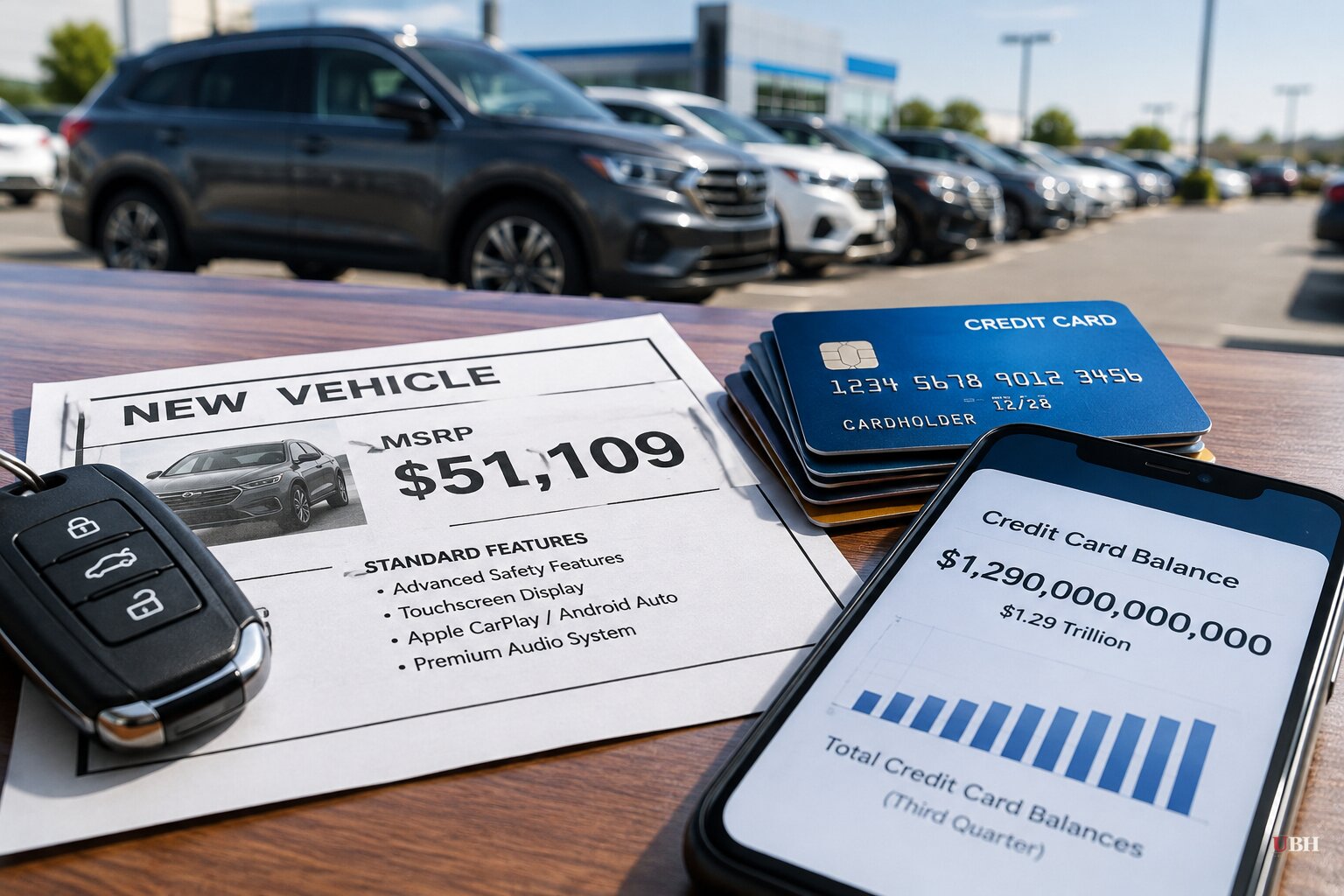
The average transaction price for a new vehicle in the U.S. has reached $51,109, a record, according to a new Kelley Blue Book report from Cox Automotive. It sits about $500 above the previous high, set in December 2025.
The figure reflects what buyers actually paid: sticker price plus add-ons, minus dealer discounts and incentives. It covers SUVs, pickups, EVs and everything in between, from Toyota to Tesla to Mercedes-Benz.
The price curve is flattening, not falling
The record comes with a caveat. The $51,109 average is up just 2.1% from a year ago.
"A 2.1% year-over-year increase is actually below inflation," said Erin Keating, an executive analyst at Cox Automotive who co-authored the report. From 2012 through 2021, new cars got 3.4% more expensive each year on average, she said.
So prices are still climbing. They are just climbing more slowly than the broader cost of living.
Why cars cost this much
Car prices have been stubbornly high since the pandemic. Supply chain problems, including a semiconductor shortage, meant fewer vehicles were built. Carmakers chose to prioritize their most profitable models.
More recently, tariffs have added to the cost, and buyers have flocked to larger, fancier vehicles that automakers are happy to build. Tariffs are a tax paid on imports, and the buyer ends up covering some of it at the dealership.
The pandemic-era production choices also thinned the used market. Fewer used cars reached lots in the early 2020s, so there is less inventory today.
Used cars are rising faster
Used cars normally make up about two-thirds of total sales, and they are not in the Kelley Blue Book average. Ivan Drury, director of industry insights at Edmunds, ran those numbers too.
"No matter what you're looking at, the price is up," Drury said.
The average used car now costs close to $27,000, up 6% from last year, according to Cox Automotive. That is a faster annual increase than new cars. Drury said vehicles priced below that level are now a "sliver" of the industry.
Borrowing makes it worse
The sticker price is only part of the cost. Edmunds puts auto loan rates at about 11% for used vehicles and over 7% for new ones. The Federal Reserve has kept interest rates high for years to push down inflation.
Keating said buyers feel the difference in their monthly bills. "We are seeing a true shift in the percentage of your monthly payment that's going towards interest versus towards principal," she said.
That is money that buys nothing. It is the cost of borrowing to cover a purchase most households make only every several years, which Keating said is part of why the numbers produce sticker shock.
Household debt tells the same story
The New York Fed reported that Americans' credit card balances reached a record $1.29 trillion in the third quarter. Balances rose $22 billion in the quarter, or 1.7%, and are $52 billion higher than a year earlier.
There is some good news in the data. Fewer card balances are becoming seriously delinquent, so national delinquency rates are improving.
The strain is uneven, though. A separate New York Fed report released Tuesday found that people in lower-income neighborhoods are having a harder time keeping up with card payments than people in wealthier ones. TransUnion's third-quarter report puts the average balance per borrower at $6,678.
The political problem
Democrats won the midterms promising to lower prices. Neither data set makes that easy. New car prices are growing slower than inflation, but they are still setting records. Card debt is at its highest level ever.
The tariffs that have contributed to car prices are a choice made in Washington. So are the high interest rates the Fed has held in place. Voters who want relief on the monthly car payment or the credit card bill will be watching for what Congress and the White House do about either.
The open question is whether any of that relief shows up in household budgets, and how soon. The next test is the next Cox Automotive and New York Fed releases.
Sources used for this briefing
8 links from 4 independent newsrooms (syndicated copies of the same report count once)
These are the sources it draws on, linked so you can verify.


