
Original briefings. Zero spin.
Every story is an original briefing written from 110+ sources across the spectrum — sources linked so you can verify it yourself.
 health
Major Story (7/10)
August 24, 2026 at 05:04 AM
health
Major Story (7/10)
August 24, 2026 at 05:04 AM
Human-Caused Hawk Fire Forces 90,000 to Evacuate Near Reno as Minnesota Teen's Science Project Tackles Wildfire Detection
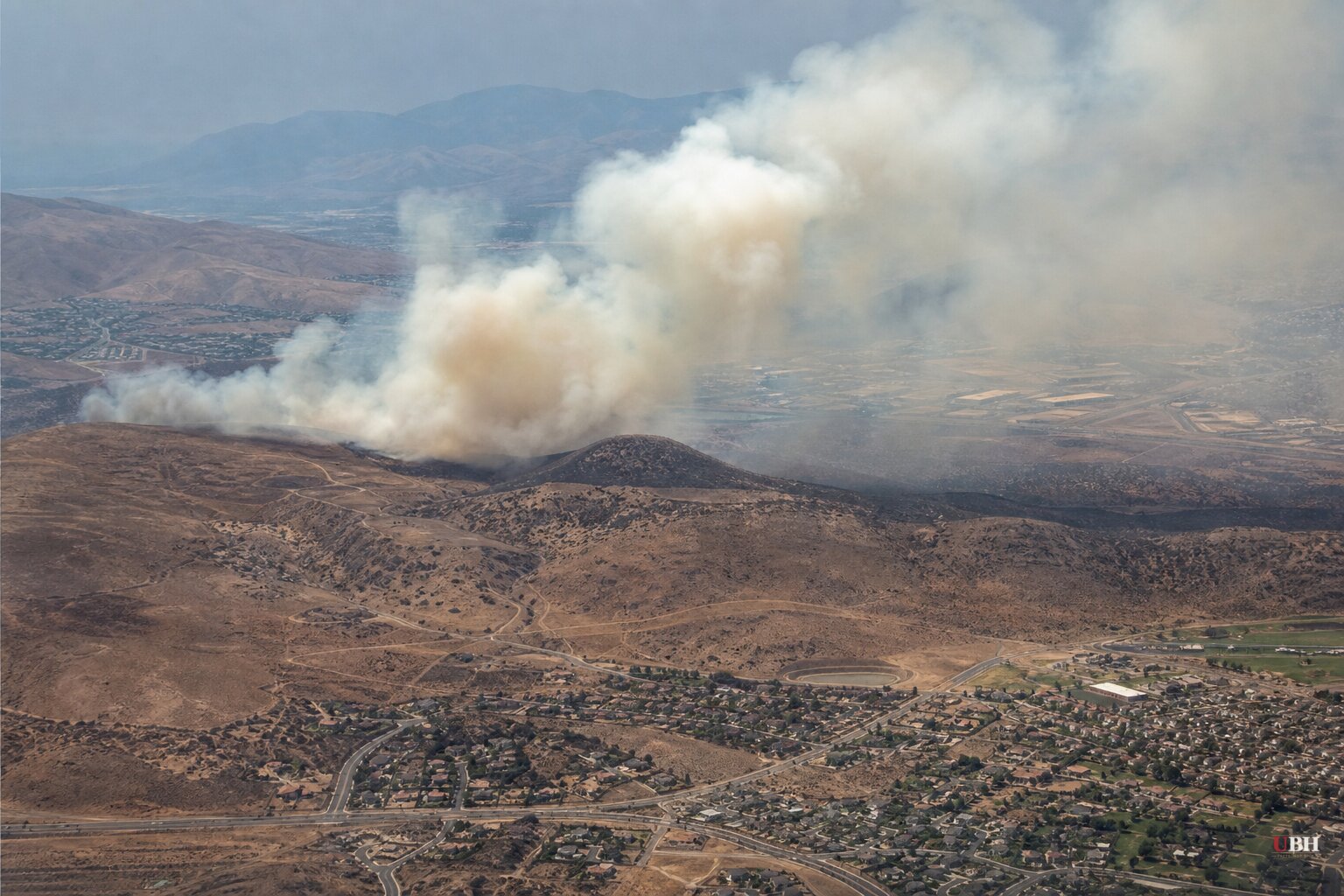
The Hawk Fire tore through the hills northwest of Reno, Nevada, this weekend, forcing evacuation orders for roughly 42,000 people and warnings for another 45,000, according to Truckee Meadows Fire Protection District spokesman Shane Akerson. The fire ignited Saturday and had scorched more than 15,000 acres with 0% containment as of Sunday evening, according to fire officials cited by CNN.
Nevada Gov. Joe Lombardo declared a state of emergency in Washoe County, which covers Reno and parts of Lake Tahoe, and activated the Nevada National Guard. "This is an active and rapidly evolving situation, and I urge everyone in the affected areas to remain vigilant," Lombardo wrote on X, according to CNN.
Six people were injured, including three civilians and three first responders, Akerson said. Reno Fire Chief David Cochran told CNN's Erica Hill none of the injuries are life-threatening.
Officials confirmed the fire was human-caused but have not said how it started or whether it was set intentionally. Cochran told CNN there is no indication it was set on purpose, but the specific cause remains under investigation. "Human-caused" covers everything from a downed power line to a campfire to arson, and jumping to conclusions before investigators finish their work helps nobody.
At least two medical centers evacuated patients as the fire crept toward populated areas. Northwest Specialty Hospital, sitting in the evacuation warning zone, began moving rehabilitation and behavioral health patients out "out of an abundance of caution," the hospital said in a statement cited by CNN. The evacuation zone reached the edge of the University of Nevada campus by Sunday evening, though university officials said the campus remained safe with an emergency plan ready if conditions worsened.
Washoe County Sheriff Darin Balaam urged people in the warning zones to leave early rather than wait, warning that a mass exodus later could create traffic jams in a densely populated area. When 42,000 people are under mandatory evacuation orders and another 45,000 are in warning zones, simultaneous flight creates gridlock that agencies cannot manage.
This is the latest in what CNN describes as a destructive fire season across the Southwest, one that has already burned thousands of acres and forced entire towns to evacuate. Nevada joins a growing list of states dealing with fires that move faster than agencies can track them.
A Minnesota Teenager's Answer to a Real Problem
While Reno battled an active blaze, a high school student half a country away was working on a tool that could help investigators determine where a fire actually started.
Anish Peri, a student at Eden Prairie, Minnesota, built a system that works backwards from wildfire smoke to locate the fire's origin, according to the Times of India. His project, titled "From Smoke to Source: Inverse Atmospheric Dispersion Modelling for Wildfire Localisation with Gas Sensor Networks," uses what's called inverse atmospheric dispersion modeling.
Normal dispersion models predict how smoke or pollution will spread from a known source. Peri flipped that. His system takes readings from a network of gas sensors positioned at different points, feeds them into a model, and works backward to estimate where the emissions originated, according to the Times of India.
The project earned Peri the NOAA Taking the Pulse of the Planet Award and the Twin Cities Meteorological Society Award at the 2026 Minnesota State Science and Engineering Fair. The Minnesota Academy of Science, which runs the fair, says the NOAA award recognizes research demonstrating technical innovation in understanding the Earth's dynamic processes.
When a fire's cause remains under investigation, as Cochran told CNN, tools like sensor networks and inverse modeling could help fire investigators pin down ignition points faster, especially in cases where the source isn't immediately obvious. Peri's project is a science fair entry, not a deployed system, and there is a long road between a high school award and operational use by fire agencies. Using downwind data to work backward to a source is already employed in fields like emissions monitoring and could plausibly extend to wildfire response if it gets further development and funding.
Back in Nevada, the immediate concern is containment, not causation. As of Sunday evening the Hawk Fire remained at 0% containment, according to fire officials. The Nevada National Guard is now assisting on the ground, and residents in the yellow warning zones are being told the situation could still escalate. Investigators have not said when they expect to determine the cause.
Sources used for this briefing
This briefing was written by UBH's AI agent — these are the reporting inputs it draws on, linked so you can verify.


