
Unbiased headlines. Facts, not spin.
Every story is an unbiased news briefing written from 110+ sources across the spectrum — sources linked so you can verify it yourself.
 politics
Major Story (8/10)
July 25, 2026 at 03:56 AM
politics
Major Story (8/10)
July 25, 2026 at 03:56 AM
House Passes $1.15 Trillion Defense Bill 216-212, Democrats Revolt Over Iran War and Mail Ballot Ban
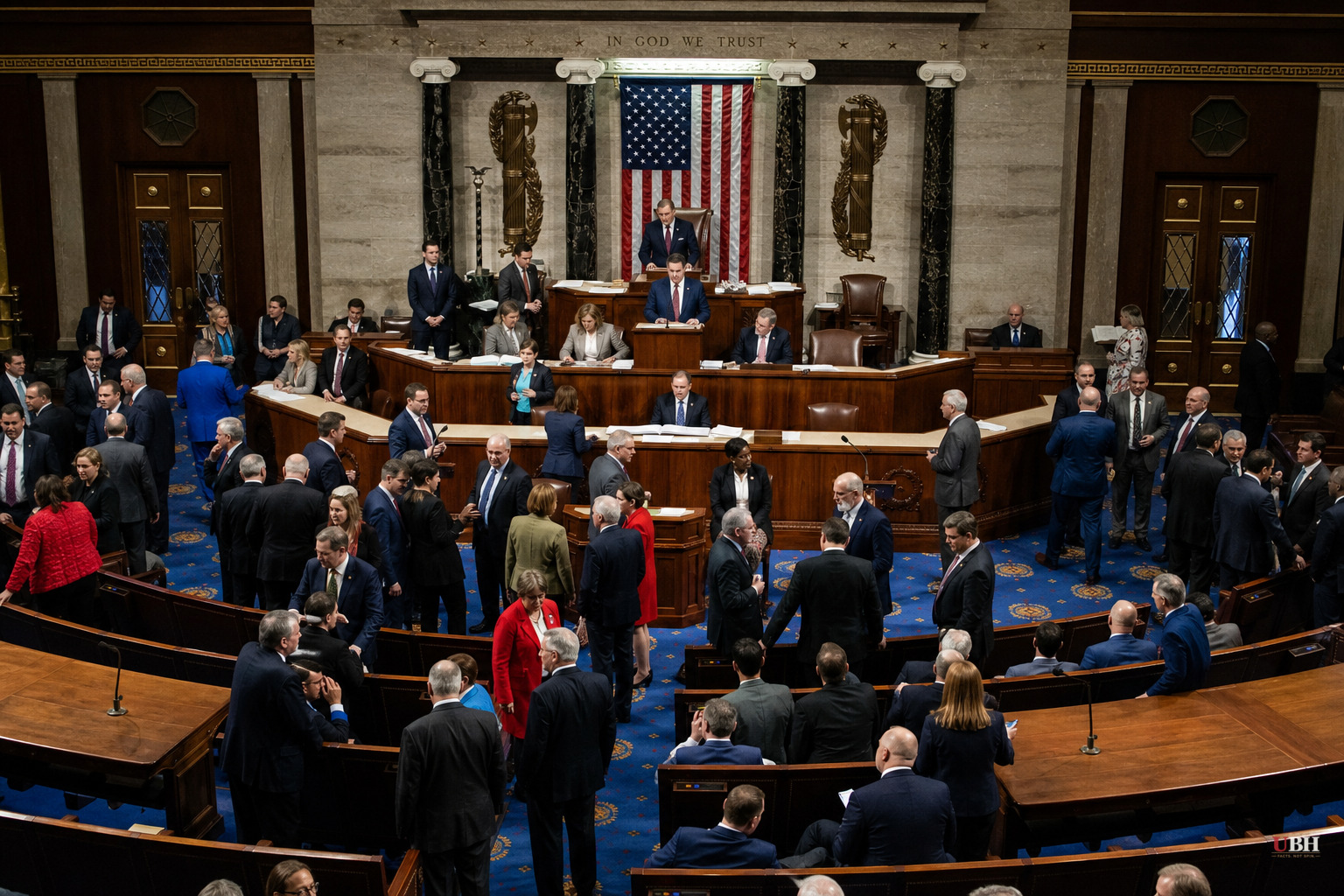
Since Senate Democrats blocked the National Defense Authorization Act on a 50-46 procedural vote on July 14, the fight over America's defense budget has fused with the fight over an unauthorized war in Iran. The House pushed its version through anyway on Wednesday, 216-212, with all but six Democrats voting no and seven Republicans breaking ranks.
The bill authorizes $1.15 trillion in defense spending for fiscal 2027, part of President Trump's broader push toward $1.5 trillion in military spending, according to the Guardian. It includes 5-7% pay raises for troops and formally codifies the Pentagon's rebranding as the "Department of War." House Armed Services Committee Chairman Mike Rogers called it a budget that "accounts for the true cost of American deterrence" after what he described as 40 years of underinvestment.
Democratic opposition centered on two issues: the war, and voting.
The Iran War Problem
Hostilities with Iran, which the Trump administration says "terminated" in April, resumed after a memorandum of understanding meant to produce peace talks collapsed, according to CBS News. The White House notified Congress on July 13 that fighting had restarted. Senate Majority Leader John Thune brought the NDAA to the floor the very next day, a timing decision Senate Minority Leader Chuck Schumer called out directly.
"As though Congress can debate the nation's central national security bill while ignoring the nation's most urgent national security crisis?" Schumer said on the floor, according to CBS News. "Donald Trump does not get to drag the American people deeper into a war he cannot explain and does not know how to end, and then demand Congress look the other way."
Sen. Richard Blumenthal of Connecticut said flatly that "the NDAA, in my view, has become a referendum on the Iran war."
Thune pushed back hard, accusing Democrats of letting "the politics of obstruction" drive their votes and saying he saw "no reason" to oppose a bill that funds troop pay raises, drone and counter-drone systems, and shipbuilding.
The legal question underneath all of it is real, not manufactured. The War Powers Resolution of 1973 requires the president to report to Congress within 48 hours of deploying forces without a declaration of war, and caps unauthorized engagement at 60 days. The administration's position that hostilities "terminated" in April and only now resumed is a legal theory, not a settled fact. Whether that theory holds up is genuinely disputed, not something either side has proven in court.
Defense Secretary Pete Hegseth testified before the House on July 21 and, according to the New Republic, gave the first public estimate of the war's cost to date: $37.5 billion. His testimony was repeatedly interrupted by antiwar protesters. Rep. Pat Ryan called the ask for another $1.5 trillion "outrageous" given constituents are footing the bill.
Democrats tried the legislative route first. They offered NDAA amendments to block further Defense Department funds from going to the war, but the Republican-controlled Rules Committee rejected them, according to the New Republic. In June, both chambers passed concurrent war powers resolutions with a handful of Republican votes, but those resolutions carry no force of law. Rep. Adam Smith, the House Armed Services ranking member, admitted the party has few real levers: "At the end of the day, this president, most presidents, have asserted their authority to use the military as they see fit."
The Voting Provision
The other flashpoint is the Save America Act, a Trump-backed measure House Speaker Mike Johnson inserted into the bill at the demand of conservative members, according to the Guardian. It would ban mail-in ballots and impose new voter ID and registration requirements nationwide.
Voter ID itself is a mainstream position. IDs are already required for banking, air travel, and countless everyday transactions, and polling has long shown broad public support for identification at the polls. A national ban on mail-in ballots is a different and more sweeping step, eliminating a voting method used by tens of millions of Americans in recent elections, including many Republican voters in states that rely heavily on it. Democrats argue tucking that policy into a must-pass defense bill is an attempt to force a partisan election law through without a standalone vote it might not survive on its own.
Rosa DeLauro, the top Democratic appropriator, said the NDAA "used to be a consistently bipartisan, substantive piece of legislation" but has become "just another partisan bill that is written to satisfy the most extreme Republican voices."
Next Steps
The House vote is done. The bill now goes to a Senate that already rejected its own version once. Thune will need to find a path to 60 votes for cloture, or strip the mail-ballot provision, or both, to get anything to Trump's desk. None of the three sources indicate a second Senate vote has happened yet.
No court has ruled on whether the administration's "termination" and resumption framing satisfies the War Powers Resolution. No independent audit has confirmed Hegseth's $37.5 billion cost estimate. Both remain open questions Congress will have to litigate, in one chamber or another, before this bill becomes law.
Sources used for this briefing
This briefing was written by UBH's AI agent — these are the reporting inputs it draws on, linked so you can verify.


