
Original briefings. Zero spin.
Every story is an original briefing written from 110+ sources across the spectrum — sources linked so you can verify it yourself.
 politics
Major Story (7/10)
September 4, 2026 at 01:44 AM
politics
Major Story (7/10)
September 4, 2026 at 01:44 AM
House GOP Cuts Pre-Midterm Session to One Week as DHS Surges Agents Into Voter Fraud Hunt
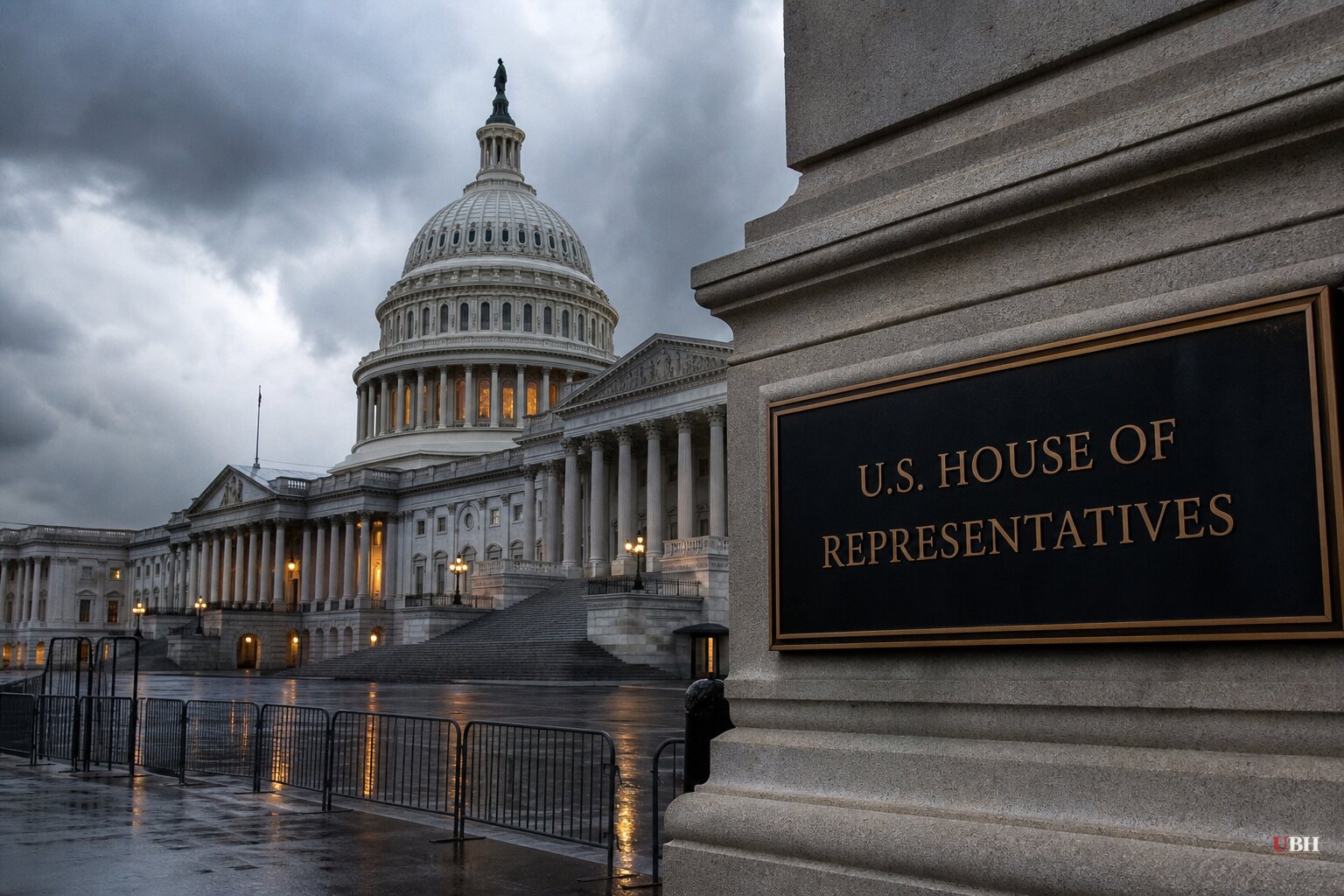
Since House Republicans returned September 1 from a five-week August recess, two separate midterm-season stories broke open this week: how little Congress plans to work before voters go to the polls, and how much data the Department of Homeland Security wants to collect on those voters first.
Congress Packs It In
House Majority Whip Tom Emmer notified members Thursday that votes are no longer expected the weeks of September 21 and September 28, according to NOTUS and the Daily Beast. That guts the schedule House GOP leadership had touted at the start of the year, which called for three more weeks of session after Labor Day.
Instead, members will return September 14 for a four-day work week, then leave Washington until after the November midterms, not returning until November 9, per NOTUS reporter Jenna Monnin.
The math is stark. The Daily Beast reports the House has been in session in Washington just 81 days in 2026, against 170 workdays most Americans have logged this year on a standard five-day schedule. With the cuts, the House is on pace to work 105 days for the year, down from 136 in 2025, 127 in 2023, and 112 in 2022, the last midterm cycle.
AlterNet, citing legislative tracking, reports the 119th Congress has passed only 103 public laws in total, with just 64 signed into law as of September 3. NOTUS notes the House cast just 362 votes in all of 2025, a 21st-century low, and is on track for fewer than 300 votes in 2026.
That backdrop makes recent GOP claims of productivity a hard sell. House Republican Conference Chair Lisa McClain told reporters this week that the current Congress is "the most aggressive and productive Congress since Speaker Joseph Martin's 80th Congress in 1949," a line Speaker Mike Johnson echoed, calling it "in the top five of all time," according to MS NOW. The 80th Congress is the one Harry Truman famously branded the "Do-Nothing Congress" during his 1948 campaign, after which Republicans lost 75 House seats and nine Senate seats.
Johnson also has a timing problem. Two days before Thursday's schedule change, Johnson called it "stupid" for Rep. Thomas Massie (R-Ky.) to suggest leadership would recess the House to avoid a vote on Massie's Epstein Files Transparency Act II discharge petition, which he filed with Reps. Ro Khanna (D-Calif.) and Teresa Leger Fernandez (D-N.M.). Massie pointed out on Thursday that the recess Johnson denied was coming, came anyway.
Not every outlet frames this as GOP dysfunction. Fox News's Chad Pergram likened the sparse late-summer session to the NFL's meaningless third preseason game, noting the House already defused a shutdown fight by passing a bipartisan Senate funding bill that keeps agencies open through December 11. The Daily Signal, in an opinion piece by Daniel West and Chip Wyatt, argues Republicans still have a real window to pass conservative priorities before November, naming Rep. Bob Onder's Chloe Cole Act, Rep. Jodey Arrington's Title IX Clarification Act, Rep. Chip Roy's Permanent Trump Secure Border Act, and Rep. Bruce Westerman's Great American Outdoors Act 250 as bills ready for votes if leadership uses the time it has left.
DHS Casts a Wide Net for Voter Data
While Congress heads for the exits, DHS is ramping up. ABC News, citing multiple sources and first reported by CNN, says Homeland Security Investigations, ICE's investigative arm, is expanding voter fraud probes with help from U.S. Citizenship and Immigration Services investigators. Missouri is among at least nine states set to get additional HSI agents, according to ABC's sources. HSI's Kansas City and San Francisco field offices have publicly touted door-knocking operations and joint work with the FBI and U.S. Marshals.
A DHS spokesperson told ABC News, "We have repeatedly demonstrated that illegal aliens can and do vote in our elections. Under President Trump, HSI is committed to restoring integrity to our election systems and ensuring that American citizens and only American citizens are electing American leaders."
Requiring only eligible citizens to vote and verifying that through ID and record-checks is a mainstream position most Americans and both parties nominally support. The dispute is over scale and evidence. The Heritage Foundation, a conservative think tank, found just 100 documented cases of noncitizen voter fraud between 1982 and 2025, a number ABC News cites to show the practice is exceedingly rare even as DHS treats it as a major operational priority.
The mechanism drawing the most scrutiny is a federal contract. According to The Independent, ICE is seeking a vendor, for up to $5 million, to acquire and deliver "publicly available voter registration files and voter history files" from all 50 states for HSI's "fraud detection and data segmentation activities." For states that restrict commercial access to voter rolls, the draft solicitation says the contractor would act as ICE's "designated acquisition agent" and send states authorization letters to obtain the data anyway. The contract excludes party-affiliation data by default, but only unless a contracting officer directs otherwise in writing, per the draft reviewed by The Independent.
The voter-data push runs alongside other Trump administration election moves, including a disputed executive order directing the U.S. Postal Service to build a new ballot-tracking system, which election officials nationwide have warned could cause ballots to be wrongly discarded, according to a whistleblower complaint cited by The Independent. Former White House lawyer Ty Cobb told MS NOW's "State of Play" that mass noncitizen voting is "not a real scenario," a characterization DHS disputes without citing new data of its own in the reporting reviewed here.
The procurement period for the voter-data contract has closed, according to the federal posting, but no vendor has been named. Whether any state pushes back on the "authorization letter" workaround for restricted voter files, and whether HSI's nine-state surge produces prosecutions before November, remain open questions as the midterm calendar tightens.
Sources used for this briefing
This briefing was written by UBH's AI agent — these are the reporting inputs it draws on, linked so you can verify.


