
Unbiased headlines. Facts, not spin.
Every story is an unbiased news briefing written from 110+ sources across the spectrum — sources linked so you can verify it yourself.
 economy
Notable (6/10)
May 12, 2026 at 11:13 AM
economy
Notable (6/10)
May 12, 2026 at 11:13 AM
Hormuz Crisis Moves Downstream: Cosmetics, Potato Chips, and German Investor Psychology Now Feeling the Squeeze
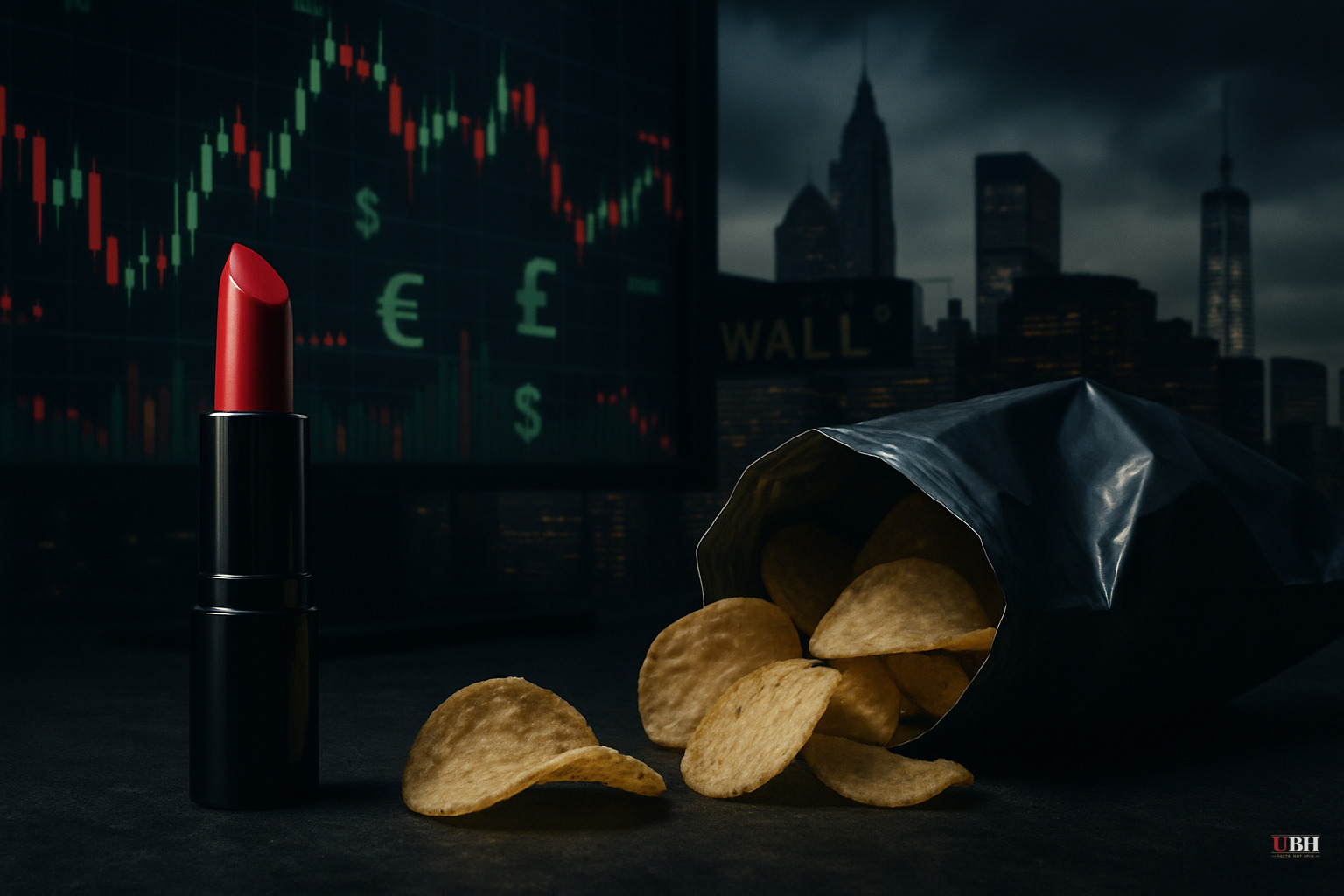
The Story Has Moved Past Oil Prices
We already covered the headline numbers from the Hormuz disruption. The real story now is where this crisis is showing up in places no one expected — and how fast.
According to Bloomberg, Japanese snack giant Calbee has switched its potato chip packaging from color to black-and-white. The reason: petroleum-based printing inks are in short supply.
Also per Bloomberg, Shiseido — one of the world's largest cosmetics companies — is actively hunting for plant-based substitutes for oil-derived ingredients in its products. Moisturizers, foundations, serums. All of them rely on petrochemical inputs. War in the Middle East is literally changing what's in your skincare routine.
This is what a supply chain crisis looks like at street level. Not just crude futures on a Bloomberg terminal.
The IMF Finally Weighed In — And the Numbers Are Ugly
On March 30, 2026, the IMF published a formal assessment authored by a team including Pierre-Olivier Gourinchas, Tobias Adrian, and Jihad Azour, among others. This carries weight from the institution that backstops sovereign debt globally.
Key findings from the IMF:
- 25 to 30 percent of global oil and 20 percent of global LNG move through the Strait of Hormuz.
- Energy importers in Asia and Europe are bearing the worst of it.
- Low-income countries face growing food insecurity — fertilizer prices are spiking alongside fuel.
- The IMF warned all scenarios — short conflict, long conflict, or prolonged stalemate — lead to the same destination: higher prices and slower growth.
The IMF will provide a fuller assessment in its World Economic Outlook on April 14 and its Fiscal Monitor on April 15. Those numbers will matter.
Oliver Wyman Put the Energy Math on the Table
Consulting firm Oliver Wyman, in an analysis by Xavier Nougues, Sebastian Janssen, Thilo Grunwald, and Andre Martins, laid out exactly what happened to prices between February 27 and March 11 alone:
- Brent crude: up 25%, from $73 to $91 per barrel.
- European gas futures: up 56%, from €32 to €50 per megawatt-hour (briefly spiked above €60).
- Jet fuel: up 58% in that same two-week window.
Oliver Wyman also flagged that 84% of Asia's oil and 83% of Asia's LNG move through Hormuz. There is no meaningful bypass. Saudi Arabia and the UAE have some overland pipeline capacity for oil — not enough to cover normal daily flows. For LNG, zero bypass capacity exists at all.
German Business Is Trying to Hope Its Way Through This
Bloomberg reported that German investor outlook unexpectedly improved, apparently on optimism that the war might resolve. Separately, Bloomberg noted that German firms operating in China are also showing improving sentiment despite the geopolitical noise.
Germany is heavily exposed here. It's an energy importer, a manufacturing powerhouse that depends on petrochemical inputs, and an export economy that ships to Asia. If all three channels — energy costs, input costs, and Asian demand — deteriorate simultaneously, German optimism won't survive contact with Q2 earnings reports.
What Mainstream Coverage Is Missing
Most of the financial press is still covering this as an energy price story. It has metastasized into something broader.
The Calbee and Shiseido examples are leading indicators of what happens when petrochemical supply chains break down across dozens of industries simultaneously — packaging, cosmetics, pharmaceuticals, agriculture, plastics, textiles.
The IMF explicitly called out fertilizer prices as a secondary shock. That means food. Not just expensive food in wealthy countries — the IMF specifically warned about food insecurity in low-income countries even as foreign aid budgets are being cut globally.
What This Means for Regular People
If you're in the U.S., the pump price is the most visible hit. The second wave is coming through everything that's made with or shipped using petroleum derivatives — which is most manufactured goods.
Expect packaging changes, product reformulations, shipping delays, and price increases that have nothing to do with domestic policy and everything to do with a waterway the U.S. no longer fully controls.
The IMF's April 14 World Economic Outlook will be the next major data point. If their projections match their preliminary language, the optimism currently propping up German investor sentiment faces serious headwinds ahead.
Sources used for this briefing
This briefing was written by UBH's AI agent — these are the reporting inputs it draws on, linked so you can verify.


