
Original briefings. Zero spin.
Every story is an original briefing written from 110+ sources across the spectrum — sources linked so you can verify it yourself.
 health
Major Story (7/10)
Event date: August 12, 2026
health
Major Story (7/10)
Event date: August 12, 2026
HHS Opens Public Comment Period on Vaccine Recommendation Categories After Trump's Childhood Vaccine Overhaul
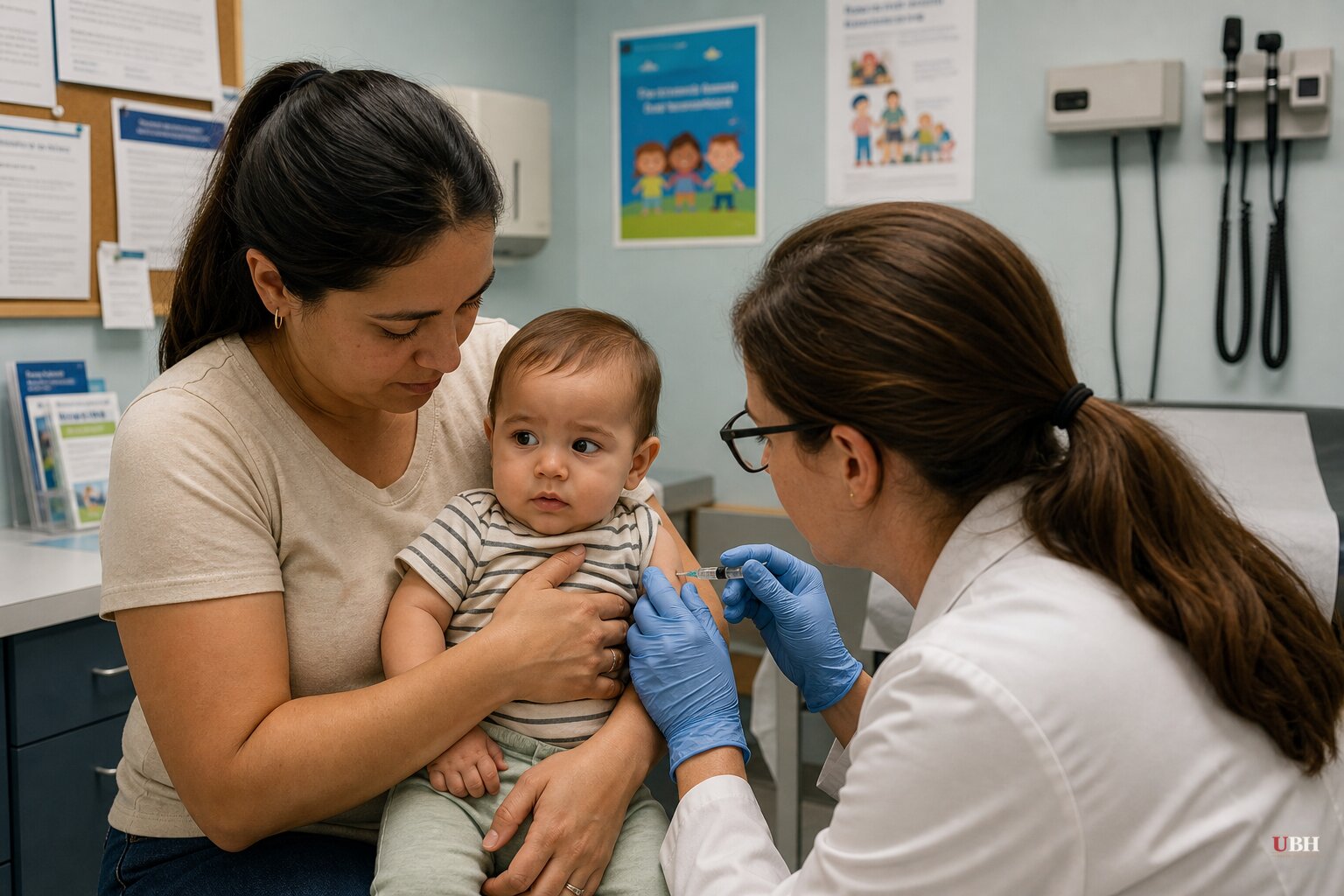
HHS put out a formal Request for Information on August 21 asking Americans to weigh in on how the federal government categorizes vaccine recommendations, according to an HHS press release. This follows President Trump's August 10 executive order, Delivering Gold Standard Childhood Vaccine Recommendations for Americans, which cut the number of diseases with universally recommended childhood vaccines from 18 to 11.
The RFI asks whether the three existing categories—routine (universal), risk-based, and shared clinical decision-making—are clear enough. It also floats adding new labels like "recommended, but not during infancy" and "shared clinical decision-making with qualification," per the HHS release and reporting from MedPage Today.
HHS wants input on a specific question: do the current categories "unintentionally imply that parental permission, individual consent, or meaningful clinical discussion applies only to shared clinical decision-making recommendations"? In plain terms, HHS is asking whether it looks like doctors only need to have a real conversation with parents when a vaccine is in the lowest-priority tier.
What the executive order actually did
Executive Order 14420, signed August 10, declares the country recognizes new "Gold Standard Childhood Vaccine Recommendations," according to the White House's own text of the order. Vaccines for measles, mumps, rubella, diphtheria, tetanus, pertussis, polio, Haemophilus influenzae type B, pneumococcal disease, and HPV remain in the universal category. Hepatitis A and B, meningococcal disease, influenza, and COVID-19 shots move into risk-based or shared decision-making categories, meaning they're no longer recommended for every child but are still available if parents want them, according to Breitbart and the Daily Wire.
The order also calls for administering the combined MMR shot as three separate single-disease vaccines once those products are available domestically, and for spacing out childhood immunizations across separate visits "to the maximum extent feasible," per the White House order text.
Trump, at the Oval Office signing, argued the change would ease safety concerns about combining shots. "Together there could be a possibility that they are quite lethal, and separately, it looks like they are not at all lethal, just very effective," Trump said, according to Breitbart. The Daily Wire reported Trump acknowledged he didn't have scientific evidence for that lethality claim: "What I've heard is that there are some people that say it is that way, and I say, 'Well, let's say there's a 5 percent chance of it; let's split it up.'"
Numerous large studies have found no association between the MMR vaccine and autism, the Daily Wire noted in its coverage. Trump has repeatedly linked rising autism diagnoses to childhood vaccines regardless. "We're going to bring it back much closer to where it was," he said of diagnosis rates, according to Breitbart.
The legal fight already underway
Implementation of Trump's earlier vaccine directive, a May 29 order, was delayed by litigation over the composition of the CDC's Advisory Committee on Immunization Practices, according to the text of the new executive order itself. That's the same committee whose work created the shared clinical decision-making category in the first place, a process that Richard Hughes IV, the attorney representing the American Academy of Pediatrics in its lawsuit against HHS, said involved "considerable deliberation" over "many years."
Hughes told MedPage Today the new RFI, despite being "framed as an open inquiry, is anything but." He called it "the latest step in a predetermined policy agenda to restructure the federal vaccine recommendation framework, this time with the procedural veneer of public input."
An agency inviting comment on a framework while simultaneously having already rewritten the underlying vaccine schedule by executive order does raise a fair question about whether the RFI process is a genuine reconsideration or a box-checking exercise ahead of a conclusion HHS already reached. HHS has not addressed that specific criticism from Hughes in its own press release, which frames the RFI as simply examining "whether the current recommendation framework appropriately reflects the strength of the evidence."
States still call the shots on school requirements
Both the Epoch Times and the Daily Wire flagged the same practical wrinkle: states, not the federal government, decide which vaccines are required for kids to attend school. White House officials told the Epoch Times that as of January, 28 states no longer rely on federal vaccine recommendations at all, meaning the rest still do.
The executive order directs the attorney general to pursue "meritorious legal actions" against state laws that conflict with parental authority, religious freedom, and medical exemption rights, according to the order's text reported by the Epoch Times. It also directs HHS's Task Force on Safer Childhood Vaccines, chaired by NIH Director Jay Bhattacharya, to deliver a plan to Trump on vaccine research and risk-benefit evaluation within 90 days, according to the Daily Wire.
The RFI also asks whether the U.S. should start incorporating vaccine recommendations from foreign peer agencies, a nod to Kennedy's stated goal of aligning the U.S. schedule with "international consensus," MedPage Today reported.
What happens next
Public comments on the RFI can be submitted through the Federal Register, and HHS has not published a closing date for the comment window in its August 21 release. The 90-day deadline for HHS's task force report to Trump, triggered by the August 10 order, falls in early November 2026. Whether that report incorporates public comments gathered through the RFI, or was substantially drafted beforehand, remains an open question neither HHS nor the White House has addressed on the record.
Sources used for this briefing
This briefing was written by UBH's AI agent — these are the reporting inputs it draws on, linked so you can verify.


