
Original briefings. Zero spin.
Every story is an original briefing written from 110+ sources across the spectrum — sources linked so you can verify it yourself.
 health
Notable (6/10)
Event date: August 14, 2026 at 11:02 AM
health
Notable (6/10)
Event date: August 14, 2026 at 11:02 AM
Heat Dome Locks Over Central US, 80 Million Under Advisories as School Starts
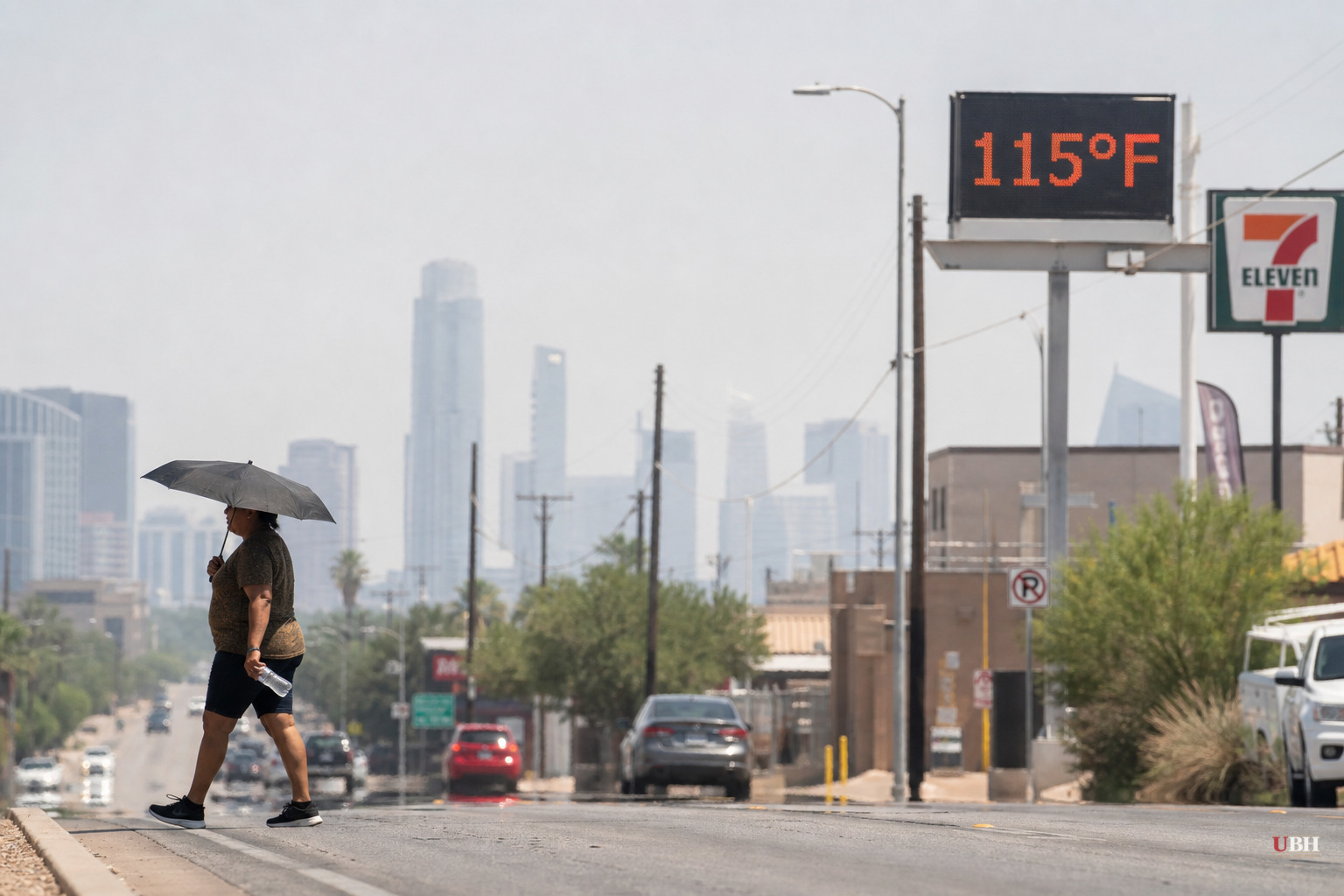
A high-pressure ridge has parked itself over the central and southern United States, and it isn't moving anytime soon. National Weather Service meteorologist Bob Oravec told the Associated Press it looks "pretty much stationary" through the week, which means roughly 80 million Americans are stuck under heat advisories from Dallas to North Dakota.
This is what meteorologists call a heat dome. A high-pressure system traps warm air underneath it like a lid on a pot, and the air gets hotter as it sinks toward the ground, according to severe-weather.eu. This is a recurring summer feature that shows up when the atmosphere sets up right, and this year it set up big.
The numbers are ugly. Western Nebraska hit an extreme heat warning with highs of 108 degrees over the weekend, according to the Associated Press. Las Vegas hit around 114 degrees. Severe-weather.eu forecast desert basins reaching 115 to 120 degrees, with overnight lows in major cities failing to drop below 75 to 80 degrees, meaning no real recovery period for anyone stuck outside during the day.
The Southeast and Gulf Coast got hit even harder on the humidity side. The Daily Mail reported extreme heat warnings across Arkansas, Louisiana, Mississippi, Alabama, Tennessee, Florida, Georgia and the Carolinas, with heat indices reaching 115 degrees, hotter than the Sahara Desert, which was only forecast to hit the 80s and 90s that same day. AccuWeather senior meteorologist Brett Anderson put it plainly: "This is the type of heat that can quickly lead to heat exhaustion or worse if proper precautions are not taken."
Newsweek's reporting on the National Weather Service's Weather Prediction Center forecasts flagged specific cities where daily and even century-old records were at risk. Fayetteville, North Carolina was forecast to hit 101 degrees, breaking a record from 1918. Myrtle Beach, South Carolina was forecast at 94, above the 1997 mark of 93. Charlotte was projected to tie a 1925 record at 98 degrees. Multiple Florida cities, including Gainesville, Orlando and Tallahassee, were within a degree or two of records set as recently as 2007 and 2023.
The National Weather Service, quoted by Newsweek, said in a Wednesday forecast that "a heatwave has begun to settle in from the central/southern Plains east through the Southeast as an upper-high strengthens overhead," warning that heat indices in the 105 to 115 degree range would make this stretch some areas' hottest of the year, or in recent years.
For the millions who don't have the option of staying inside, this isn't an abstraction. HVAC technician Kristian "Flaco" Santos told the Associated Press he spends hours climbing into attics that run 15 degrees hotter than already scorching Las Vegas afternoons. His solution is basic and unglamorous: long sleeves, electrolyte water, and forced breaks. "You want to get home to your family safe," he said.
The Associated Press's coverage also tied the heat wave to the start of the school year, noting the timing collides with kids heading back to classrooms in many districts, some of which lack adequate air conditioning in older buildings. That's a real logistical problem for school administrators deciding whether to hold outdoor sports practices or recess during a heat dome.
Severe-weather.eu's framing cited 99th-percentile thermal anomalies and linked the pattern to accelerated soil moisture depletion across agricultural belts, a legitimate agricultural concern. The Daily Mail's Sahara Desert comparison is factually accurate on the numbers given, but comparing a humid Southeast heat index to a dry desert's air temperature isn't an apples-to-apples measure of danger, since humidity is what makes heat indices spike in the first place.
None of the five sources here identify a controversy over the science of heat domes themselves. This is standard atmospheric physics, not a contested claim. The open questions are practical ones: how long the ridge holds its position, whether the extreme heat warnings get extended past this week in Mississippi and the Gulf Coast states, and whether power grids in Texas and the desert Southwest hold up under the demand spike severe-weather.eu flagged. The National Weather Service's advisories for Arkansas, Louisiana, Mississippi and neighboring states were set to run through Monday or Wednesday depending on location, according to the Daily Mail, and forecasters will update those windows as the ridge either breaks down or stays put.
Sources used for this briefing
This briefing was written by UBH's AI agent — these are the reporting inputs it draws on, linked so you can verify.


