
Original briefings. Zero spin.
Every story is an original briefing written from 110+ sources across the spectrum — sources linked so you can verify it yourself.
 health
Notable (5/10)
Event date: August 17, 2026 at 01:09 PM
health
Notable (5/10)
Event date: August 17, 2026 at 01:09 PM
Heat and Pesticides Combine to Raise Health Risks for Farmworkers, No Federal Heat Standard Exists
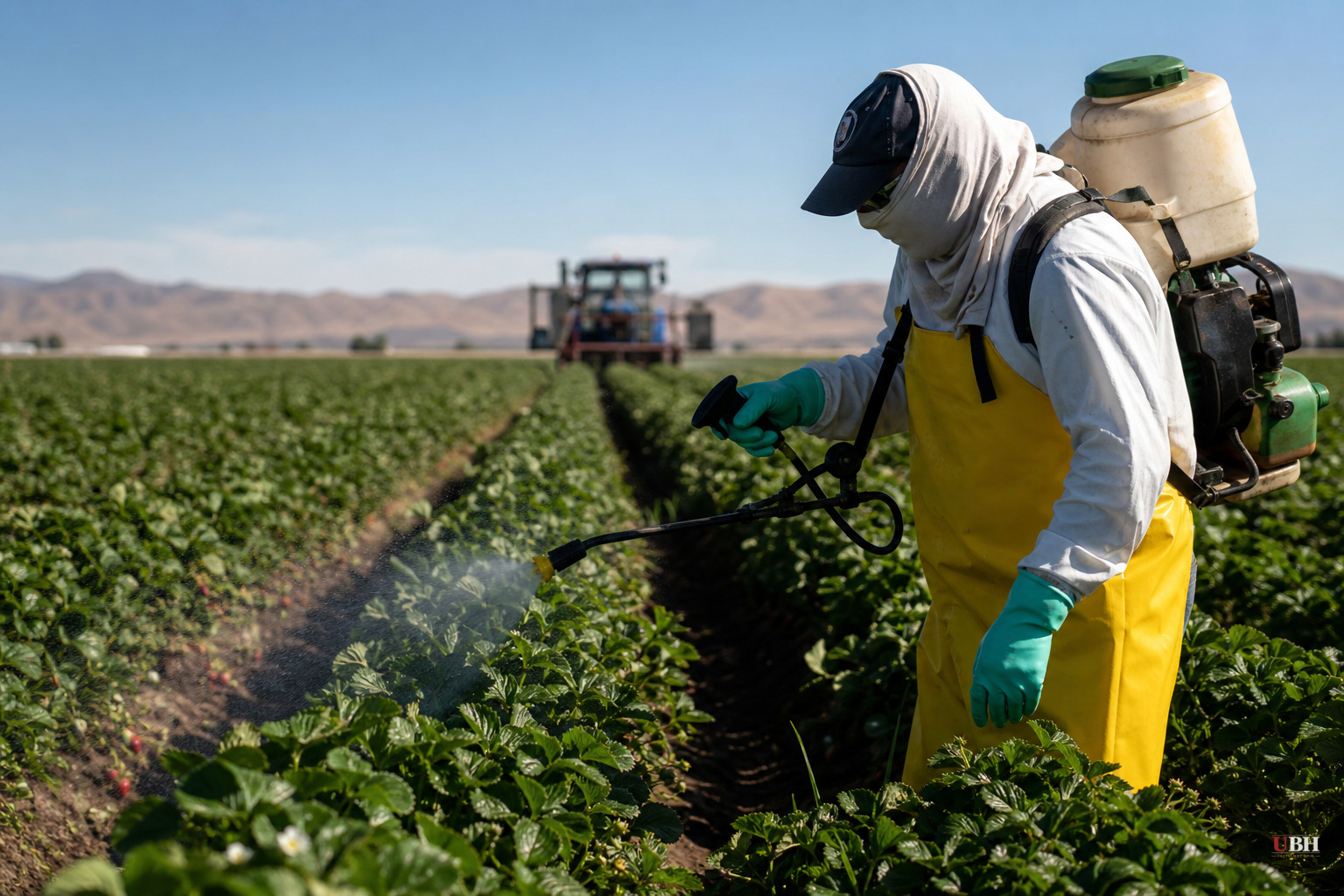
Heat doesn't just make farm work miserable. It makes the chemicals sprayed on crops more dangerous to the people working those fields.
A growing body of research detailed by Inside Climate News reporter Amy Green, whose reporting was carried by Ars Technica and SEJ, shows that heat stresses the body, which makes it more vulnerable to pesticides and other toxicants. Hotter temperatures increase evaporation rates, which raises the amount of pesticide drifting through the air. Heat can also chemically transform some pesticides into more toxic compounds.
"When it's in the air, you are inhaling it through your nose. You are exposed to it through your other organs like skin," said Omanjana Goswami, a scientist with the Union for Concerned Scientists. "It is awful. There is no other word for it."
The mechanics are straightforward. Sweat opens pores, making skin more permeable to chemicals. Protective clothing designed to block pesticide exposure traps heat, adding physical stress on top of chemical stress. And separate research cited in the reporting found PVC gloves meant to protect workers actually break down faster in high heat, becoming less effective at the exact moment exposure risk is rising.
The Union for Concerned Scientists, citing EPA data, says thousands of U.S. farmworkers suffer acute pesticide poisoning every year, though the group notes the real number is likely higher because reporting requirements vary by state and many cases go undocumented. Field workers who never directly handle pesticides account for the majority of reported poisonings, according to the group's report, often because employers fail to post warnings about recently sprayed fields or provide adequate training.
The ALS Question
A separate line of research adds another layer of concern. A systematic review published August 4 in Occupational & Environmental Medicine, reported by the Epoch Times, found that people occupationally exposed to pesticides had 60 percent higher odds of developing ALS, the fatal neurodegenerative disease, compared to unexposed individuals. The review, funded by a Canadian occupational health institute (IRSST), examined eight studies conducted between 1990 and 2025. Herbicide exposure carried a slightly higher associated risk than insecticides or fungicides, and men showed double the risk while no elevated risk was found in women.
That finding includes an important caveat, one the Epoch Times itself included. Martin Scholze, a research fellow at Brunel University of London, told the Science Media Center the 60 percent figure rests on a small number of studies and should be treated as "suggestive rather than definitive." Scholze also flagged that most of the underlying studies relied on self-reported exposure rather than measured chemical data, which weakens the certainty of any causal claim. That's a fair and specific limitation.
No Federal Heat Standard, and States Are Split
On the ground, the policy gap is real. Reporting from AgroLatam describes farmworker advocates rallying at the North Carolina state capitol on August 17 after heat indexes in parts of the state topped 105°F. Andressia Ramirez of Casa Azul de Wilson described visiting a farmworker camp where a young man with a fever sat under a tree because it was cooler outside than in his housing. North Carolina does not currently require air conditioning in farmworker housing.
The Occupational Safety and Health Administration offers guidance to prevent heat illness, and the National Institute for Occupational Safety and Health recommends work-rest cycles, hydration, and task rotation. But there is no comprehensive federal heat standard specific to agricultural workers currently in force. It's a genuine regulatory gap, and advocates are pushing for a clear, enforceable standard rather than voluntary guidance.
It's also fair to note the other side of that ledger. Farmers cited in the AgroLatam piece are already managing drought, tariffs, and thin commodity margins. A new mandatory heat standard, especially one requiring air-conditioned housing or mandated work stoppages, adds real compliance costs that hit smaller operations hardest. That's not an excuse to ignore worker safety, but it reflects the actual tradeoff regulators would have to weigh.
Where the Politics Get Sloppy
Fox News used this same summer of extreme heat to argue that "secular environmentalism" and climate policy have made Americans less safe, pointing to Canadian wildfire smoke and a European heat wave that killed roughly 14,000 people, according to the piece. That's a separate argument about wildfire management and air conditioning access. But it says nothing about pesticide regulation, farmworker housing standards, or the specific ALS research. Lumping worker-safety science in with a broader ideological argument about climate policy conflates two different debates that deserve separate scrutiny.
The immigration status of many farmworkers also shapes this story. Jeannie Economos of the Farmworker Association of Florida called the situation "environmental injustice," pointing out that many workers lack the legal status or capital to demand better conditions or become farm owners themselves. Workers with less legal leverage have less ability to refuse unsafe conditions.
No new federal heat rule has been finalized as of today. North Carolina has no mandatory heat standard on the books. Whether Congress or OSHA moves on either front before next summer's heat season remains an open question.
Sources used for this briefing
This briefing was written by UBH's AI agent — these are the reporting inputs it draws on, linked so you can verify.


