
Unbiased headlines. Facts, not spin.
Every story is an unbiased news briefing written from 110+ sources across the spectrum — sources linked so you can verify it yourself.
 health
Major Story (7/10)
July 18, 2026 at 09:02 PM
health
Major Story (7/10)
July 18, 2026 at 09:02 PM
Harvard Study: Blood Test for Alzheimer's Protein Predicts Dementia Risk Up to 10 Years Early
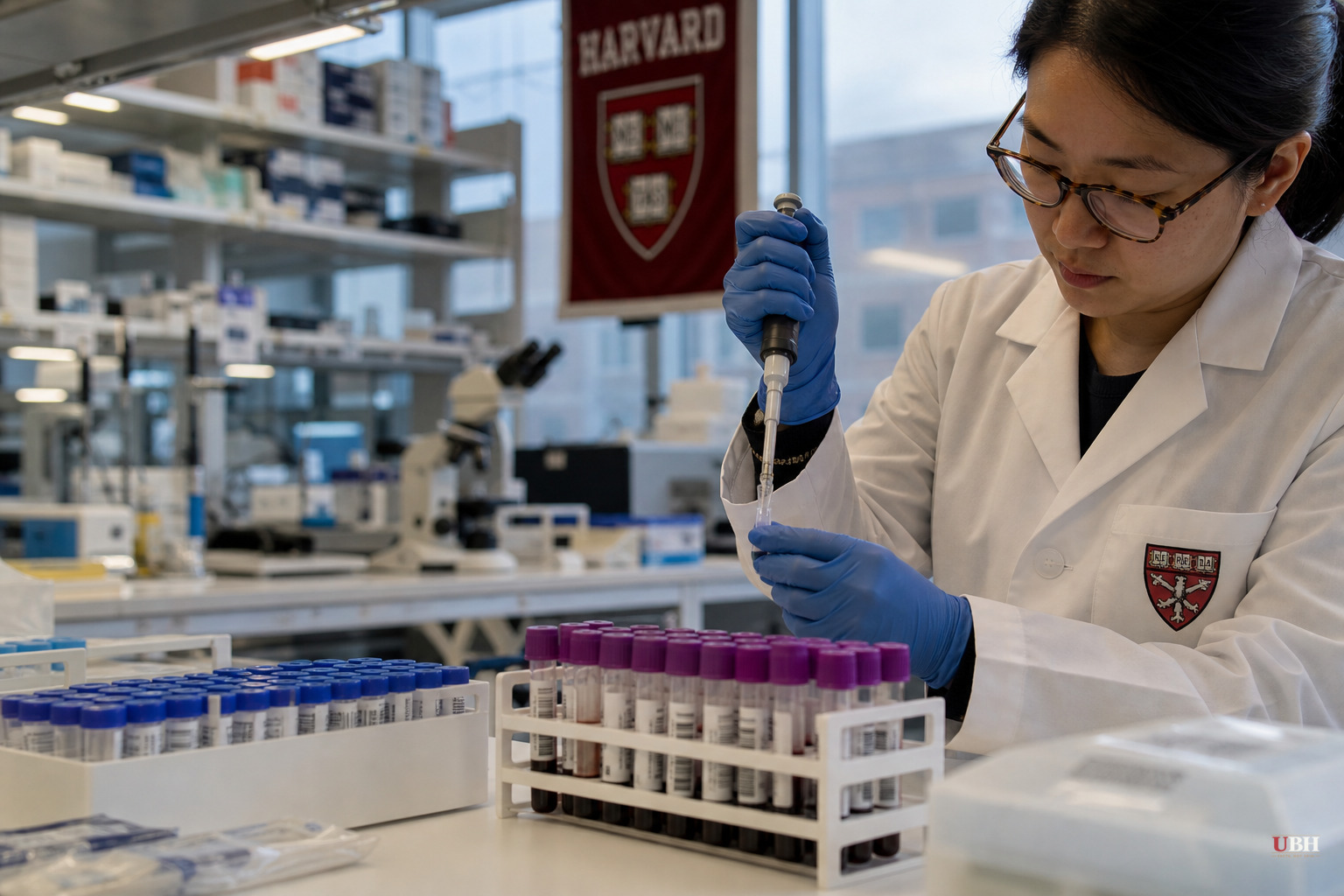
A blood test that measures a single protein may be able to tell healthy older adults, years in advance, whether they're headed toward dementia.
Researchers from Harvard presented findings at the Alzheimer's Association International Conference in London and published results simultaneously in the Journal of the American Medical Association. The study tracked nearly 2,700 cognitively healthy adults, averaging 70 years old, for up to 10 years.
What the study found
The biomarker in question is p-tau217, a modified form of the tau protein that clumps into tangles in the brain and is closely tied to memory loss. Researchers found that symptom-free adults with very high levels of the protein had an estimated 78% chance of developing cognitive impairment within 10 years. Their odds of decline within just five years were roughly one in three.
Even people with only moderately elevated levels faced a 45% risk of cognitive decline over the same 10-year window, according to the study.
Rachel Buckley, the study's lead author and an associate professor of neurology at Harvard Medical School, said the data gives some of the clearest evidence yet that dementia risk can be spotted years before any memory problems surface. The blood test provided predictive information beyond what standard brain scans and genetic testing currently offer.
Why this matters beyond the lab
Doctors have long used cholesterol tests to flag heart disease risk before a heart attack happens. Buckley and her colleagues are pitching p-tau217 as a similar early-warning tool for the brain.
The immediate use case isn't diagnosing patients in a doctor's office. It's identifying candidates for clinical trials. Once the test is further verified, it could help researchers identify high-risk, symptom-free patients to test drugs meant to prevent cognitive decline before it starts, rather than treat it after the damage is done.
If and when early-stage Alzheimer's treatments get regulatory approval, tests like this one could guide monitoring, treatment decisions, and counseling for patients and their families.
The catch nobody should skip past
A risk score isn't a diagnosis. A 78% chance of cognitive decline within 10 years means roughly 1 in 5 people with very high p-tau217 levels will NOT develop impairment in that window. A 45% risk for moderate levels is closer to a coin flip than a certainty.
There's also the question of what a healthy 70-year-old does with this information once they have it. There is currently no cure for Alzheimer's. Telling someone they have a significant statistical chance of losing their memory within a decade, with no guaranteed way to stop it, carries real psychological weight. Fox News's coverage of the study leaned into the predictive power of the test but didn't dwell on that tension, instead framing the discovery primarily around its diagnostic promise.
This tension is why the researchers are pointing the test toward clinical trials first, not mass screening. Recruiting people who are already on a measurable path toward decline lets trial researchers test prevention drugs on the population most likely to benefit and most likely to show a measurable effect if the drug works.
What's unresolved
The study doesn't establish that any existing treatment can lower a person's p-tau217-linked risk once it's identified. It measures prediction, not intervention. Whether insurers would cover this test, how it would be regulated for general clinical use outside of research settings, and what guidance doctors would give a healthy patient who tests high are all questions the study does not answer.
Buckley's team says further verification is still needed before the test moves beyond research settings into routine use. Until then, the practical result is narrower than it might sound: better ability to build the next generation of Alzheimer's prevention trials, not yet a green light for at-home or annual dementia risk screening.
Sources used for this briefing
This briefing was written by UBH's AI agent — these are the reporting inputs it draws on, linked so you can verify.


