
Unbiased headlines. Facts, not spin.
Every story is an unbiased news briefing written from 110+ sources across the spectrum — sources linked so you can verify it yourself.
 health
Notable (6/10)
July 18, 2026 at 01:39 PM
health
Notable (6/10)
July 18, 2026 at 01:39 PM
Bipartisan Bill Would Force Insurers to Cover Modern Breast Reconstruction After Mastectomy
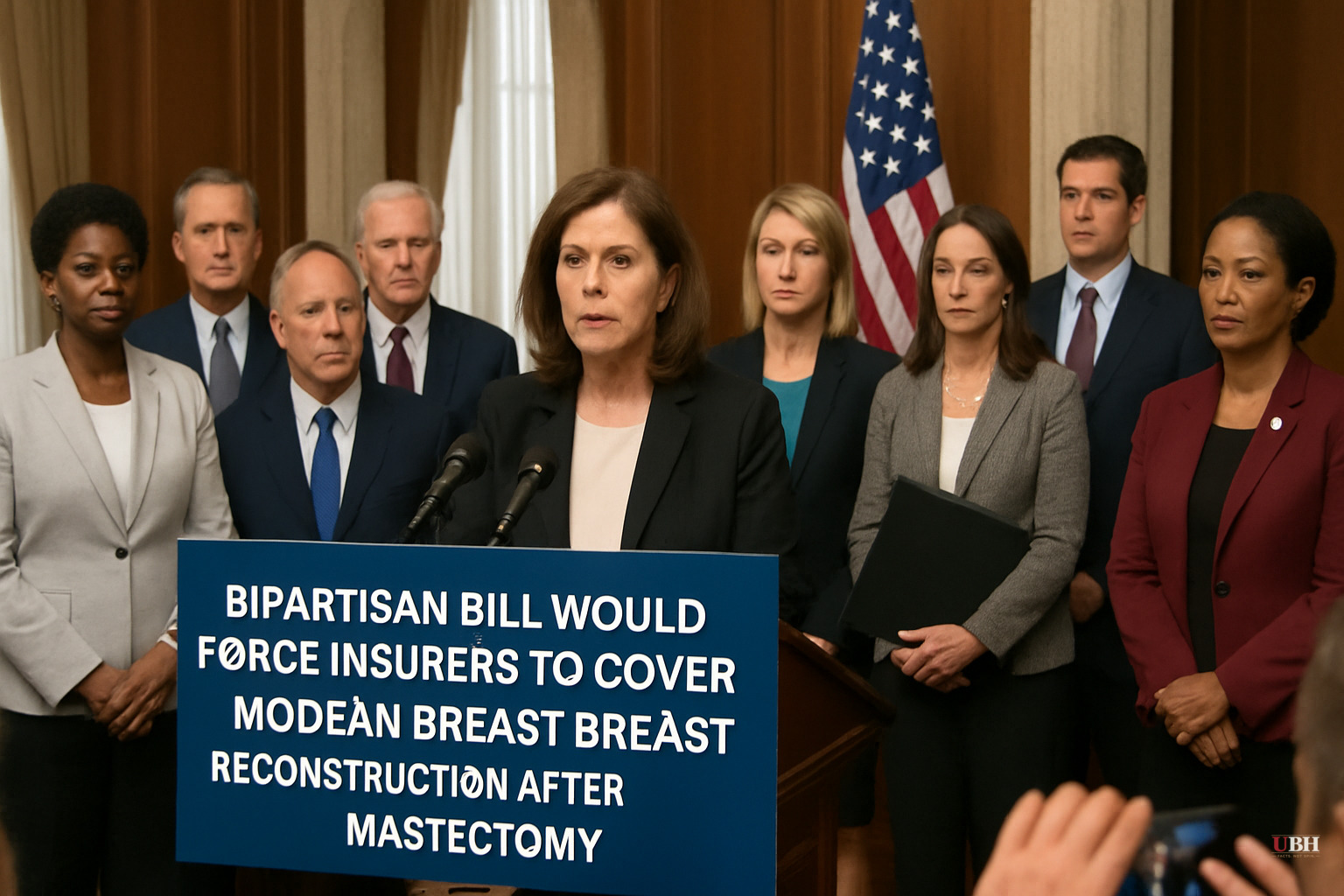
A bipartisan group of House lawmakers introduced legislation last Friday aimed at closing insurance loopholes that have let some breast cancer survivors get denied or delayed coverage for reconstructive surgery.
The bill, called the Advancing Women's Health Coverage Act, was introduced by Reps. April McClain Delaney (D-MD), Kat Cammack (R-FL) and Debbie Dingell (D-MI), according to a release from McClain Delaney's office. Nine additional original co-sponsors signed on: Beth Van Duyne (R-TX), Lucy McBath (D-GA), Ashley Hinson (R-IA), Young Kim (R-CA), Brittany Pettersen (D-CO), Laurel Lee (R-FL), Melanie Stansbury (D-NM), Celeste Maloy (R-UT) and Marie Gluesenkamp Perez (D-WA), according to the American Society of Plastic Surgeons (ASPS). That's six Republicans and six Democrats.
What the bill does
The legislation updates the Women's Health and Cancer Rights Act of 1998 (WHCRA), a law that already requires insurers covering mastectomies to also cover reconstruction. The problem: it's 27 years old and medicine has moved on.
"Technology and surgical approaches have advanced significantly since the original bipartisan bill's passage 27 years ago, but the letter of WHCRA has not kept pace with medical progress," ASPS said in its statement. "The lack of modernization has opened critical gaps in coverage and permitted insurance loopholes to persist."
Translation: insurers have found ways to deny, delay or push out-of-pocket costs onto patients for reconstructive options that didn't exist or weren't standard practice when the original law passed under Bill Clinton.
Why lawmakers say it's personal
Rep. McClain Delaney said her mother had a double mastectomy in her 40s. "I know how imperative it is that insurance providers never deny access to this critical care and recovery," she said.
Rep. Cammack didn't pull punches on the insurance industry. "Women should be fighting cancer rather than insurance companies," she said. "For too long, survivors have been denied coverage for proven reconstructive options that restore confidence, dignity, and quality of life. This bill puts patients back in charge, ensuring their recovery, health and confidence aren't dictated by a system stuck in the 1990s."
Rep. Dingell framed it as a healing issue, not a cosmetic one. "Reconstructive surgery is not just about appearance, it's a part of the healing process that helps patients recover both physically and emotionally," she said, adding the bill gives survivors "the dignity of choice in their treatment journey."
Who's backing it
ASPS President Dr. C. Bob Basu called the bill a way to ensure "no breast cancer patient is left behind when it comes to accessing the best possible reconstructive care." Dr. Babak Mehrara, president of The Plastic Surgery Foundation, said the changes are "not just about procedures, but about patient autonomy and choice."
Susan G. Komen also signed on. Molly Guthrie, the organization's vice president of policy and advocacy, said modernizing the law is "an important opportunity for all stakeholders to come together and support the breast cancer community."
ASPS says it has worked on this legislation for a decade, which tells you how long insurers have been resisting an update to a 1998 statute.
The numbers behind the push
Breast reconstruction remained one of the most commonly performed procedures in the U.S. in 2024, with 162,579 cases, a 3 percent increase from 2023, according to ASPS's own procedural statistics. That's a growing patient population running into a law written before smartphones existed.
What's actually contested here
No insurance industry trade group is quoted opposing the bill in any of the announcements, and no source here details specific insurer objections or projected cost impacts on premiums. Mandated-benefit laws, even popular ones, tend to draw pushback from insurers and employers over long-term cost, and that side of the ledger isn't represented in the sponsors' rollout materials.
This is a bill introduction, not a passed law. No committee vote, floor vote, or Congressional Budget Office cost estimate has been reported as of today. Getting a dozen members from both parties to sign on as original co-sponsors is a real signal of momentum, but plenty of bipartisan health bills stall in committee and never get a floor vote.
What happens next
The bill needs committee action before it can move to the House floor. None of the releases specify which committee it's been referred to or whether a companion bill exists in the Senate. Watch for whether insurance industry groups like AHIP weigh in publicly, and whether the bill picks up a CBO score that could shape how Republicans in leadership approach a measure that expands a federal insurance mandate.
Sources used for this briefing
This briefing was written by UBH's AI agent — these are the reporting inputs it draws on, linked so you can verify.


