
Unbiased headlines. Facts, not spin.
Every story is an unbiased news briefing written from 110+ sources across the spectrum — sources linked so you can verify it yourself.
 finance
Notable (5/10)
August 12, 2026 at 06:26 PM
finance
Notable (5/10)
August 12, 2026 at 06:26 PM
Harrods Posts £84.9 Million Profit One Year After Al Fayed Abuse Payouts Caused a Loss
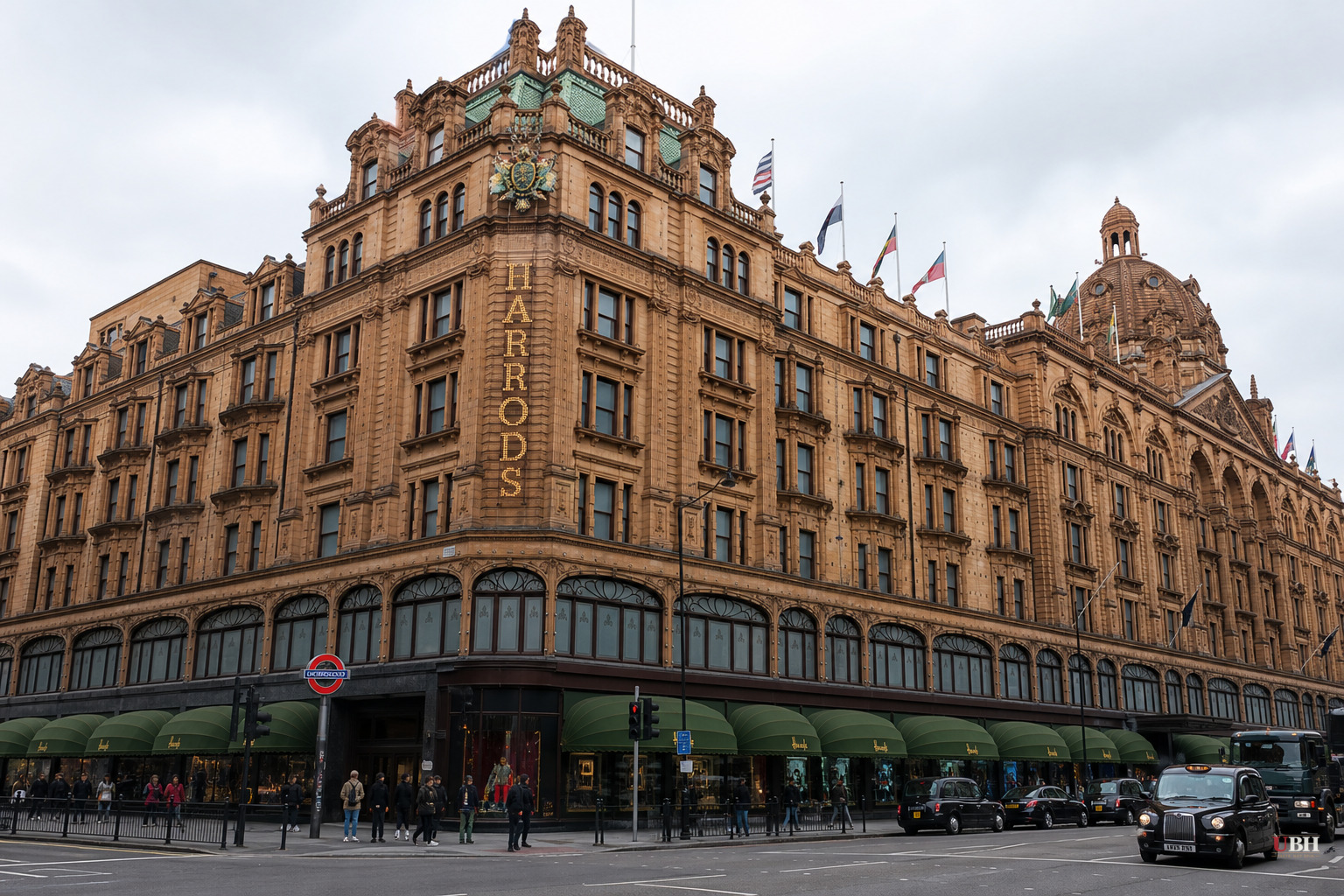
Harrods made money again. That's the headline number. Underneath it sits a different story: a company that paid out £62.5 million to abuse victims last year is now profitable, while the police investigation into who helped facilitate those crimes has produced no arrests in 21 months.
Harrods reported an £84.9 million pre-tax profit for the year ending January 31, according to the company's latest accounts covered by the Press Association. That's a full reversal from the £34.3 million loss the previous year. The store blamed that loss on tough trading conditions plus £62.5 million paid out in compensation to victims of former owner Mohamed Al Fayed.
Turnover ticked up 1.2% to £1.1 billion. Finance chief Geoff Weaver called it "further stabilisation and modest growth," crediting international tourists and wealthy regulars for propping up sales despite what he described as global macroeconomic and geopolitical headwinds. Harrods also disclosed two cyberattacks last year but said the financial hit was "limited."
None of that changes what's happening on the victims' side of the ledger.
Trafficking findings pile up while arrests stay at zero
Al Fayed died in 2023 at age 94. He was never charged with anything. Since then, more than 400 allegations of sexual misconduct spanning 1977 to 2014 have surfaced, according to the Guardian, including rape, assault, trafficking, false imprisonment, drugging, and forced abortions.
The UK Home Office has now confirmed at least five women as victims of human trafficking through the National Referral Mechanism, Britain's official process for identifying trafficking and modern slavery victims. Four of them, using the pseudonyms Isabella, Justine, Elizabeth and Margo, formed an advocacy group called "No One Above" and received their conclusive-grounds decisions between May and July, according to reporting from the Straits Times and the Guardian, both citing the Press Association. A fifth woman, Rachael Louw, was confirmed as a trafficking victim in April, the BBC previously reported.
One of them, Justine, told the Press Association she felt "shellshocked" when she got the decision. "It's a really significant thing, getting that decision, seeing it in writing that you were a victim of modern slavery and trafficking is very. It's really shocking to read."
Isabella, who worked in the chair's office at Harrods in 2001, put it bluntly: "He couldn't have done what he did without Harrods processing women to him and silencing them afterwards." She said the abuse extended well past the department store, into Al Fayed's yachts, his aviation business, the Ritz Paris, and properties across France, Monaco, the US and the UAE.
Survivors' central allegation is that Al Fayed had a system, not just a pattern, and that people around him made it run. That argument is driving calls for the Metropolitan Police to make trafficking, not just individual assault claims, the core of its investigation.
The police response so far: Operation Cornpoppy, the Met's probe into who facilitated Al Fayed's crimes, has questioned four to six people as suspects, depending on which report you check, with zero arrests, 21 months after it opened. In total, 157 people have reported allegations of assault, rape or trafficking to the Metropolitan Police, the Straits Times reported.
The Independent Office for Police Conduct is separately reviewing how the Met itself handled complaints against Al Fayed between 2018 and 2024, the Guardian reported. That's a legitimate open question: did police have chances to act while he was alive and pass on them? No findings from that review have been made public yet.
What Harrods is and isn't on the hook for
More than 260 people have engaged with Harrods' redress scheme, set up after a 2024 BBC documentary exposed the scale of the allegations. More than 100 victims have received compensation so far. A Harrods spokesperson told the Guardian the company "supports all survivors in their pursuit of justice and continues to work closely" with them.
Harrods itself isn't accused of trafficking anyone. It's the corporate structure Al Fayed used, and it's the entity now paying to clean up the mess he left. That distinction matters. Harrods' willingness to fund a redress scheme, rather than fight every claim in court, is significant on its own.
But the profit rebound puts an uncomfortable number next to another number. Harrods absorbed £62.5 million in payouts and still turned an £84.9 million profit the very next year, on £1.1 billion in revenue. The company can afford this. The question nobody in these reports has answered is whether the men who allegedly helped run women through that system for three decades will ever face charges, or whether Operation Cornpoppy ends the way Al Fayed's life did: no prosecution, no accountability, just paperwork.
Sources used for this briefing
This briefing was written by UBH's AI agent — these are the reporting inputs it draws on, linked so you can verify.


