
Original briefings. Zero spin.
Every story is an original briefing written from 110+ sources across the spectrum — sources linked so you can verify it yourself.
 health
Major Story (7/10)
August 5, 2026 at 11:58 PM
health
Major Story (7/10)
August 5, 2026 at 11:58 PM
Half of 8th Graders Say Trying Fentanyl Once Is Not a Big Risk, National Survey Finds
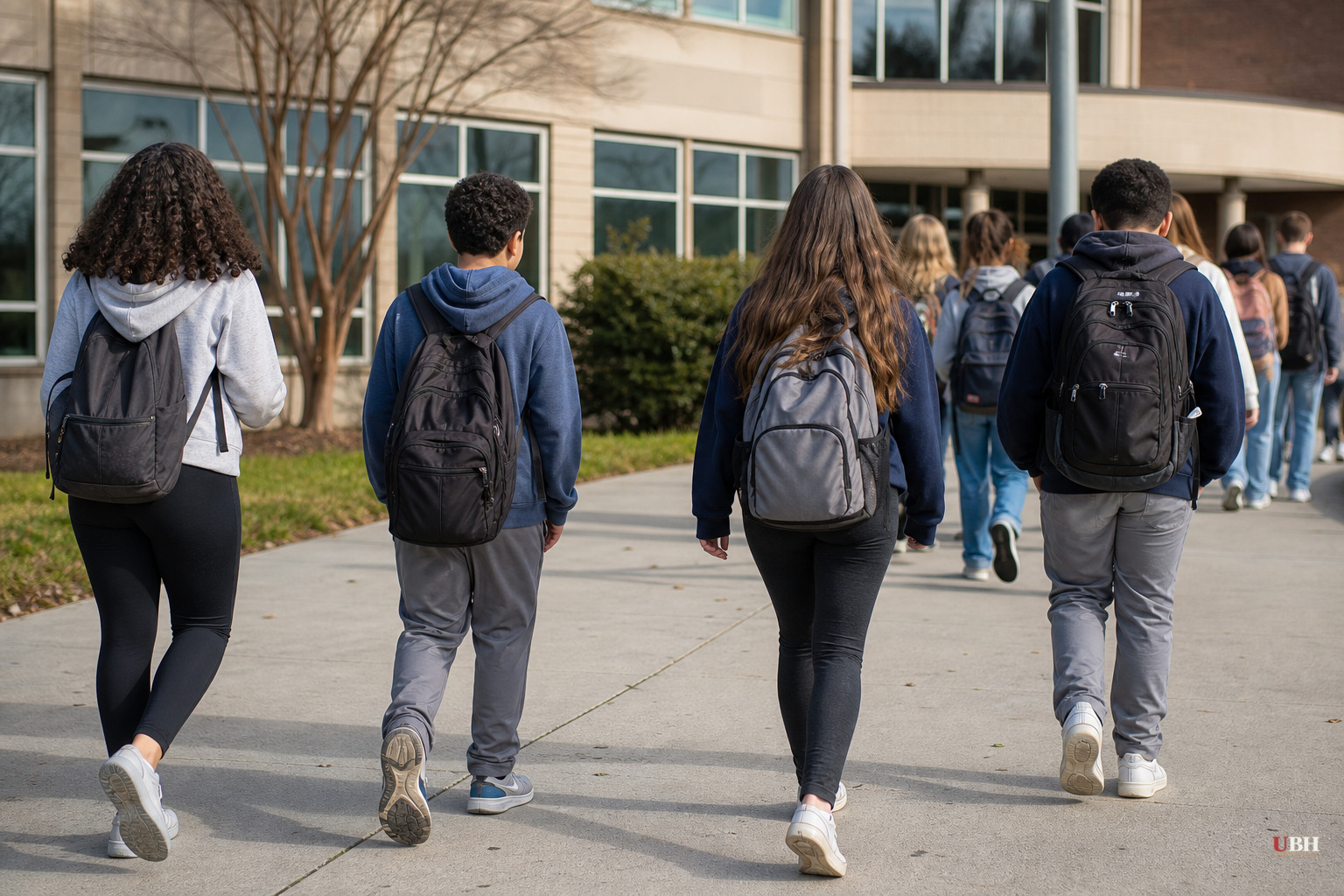
Fentanyl is killing American teenagers at a rate of roughly 21 a week. Ask an 8th grader if that's dangerous, and there's better than even odds they'll shrug.
A study published July 7 in JAMA Network Open, led by Richard Miech of the University of Michigan, found that just 47.8% of 8th graders believe trying fentanyl once or twice carries a great risk to their health. The rest called it a slight or moderate risk, or admitted they had no idea what fentanyl even is.
The numbers come from the 2025 Monitoring the Future survey, a nationally representative, in-school questionnaire filled out by 3,820 students across 8th, 10th, and 12th grade. Researchers crunched the data between January and May 2026.
Drug overdoses are now the third leading cause of death among U.S. youth, according to the study, and fentanyl is involved in roughly 75% of adolescent overdose deaths. That works out to about 21 high-school-age deaths a week in 2023, the equivalent of one full classroom wiped out every seven days.
The Numbers Get Better With Age, But Not By Much
Awareness climbs as kids get older, but the gap never really closes. Among 10th graders, 63.6% said trying fentanyl once or twice posed a great risk. By 12th grade, that number rose to 69.8%.
Run the math the other way, and nearly 3 in 10 high school seniors still don't think trying fentanyl once is a serious danger. About 9.9% of 12th graders told researchers they'd never even heard of the drug, barely down from 16.6% of 8th graders who said the same.
Risk perception did rise with frequency of use across every grade. Regular fentanyl use was seen as far more dangerous than a single try. Among 8th graders, 66.5% rated regular use as a great risk, compared with 47.8% for trying it once or twice. That gap matters because fentanyl doesn't require repeated exposure to kill. A single dose, especially one a user didn't know they were taking, can be fatal.
Race, Geography, and Parents' Education All Played a Role
The study found stark demographic splits. Non-Hispanic White students were the most likely across every grade to view fentanyl as dangerous. Hispanic students had the lowest perceived risk in 8th grade, while non-Hispanic Black students had the lowest levels in 10th and 12th grade, according to the study's authors, who flagged the pattern as concerning because those same groups also reported the highest rates of never having heard of fentanyl at all.
Rural students, somewhat surprisingly, showed higher risk perception than their urban and suburban peers in 8th and 10th grade. This runs counter to common assumptions about where opioid awareness campaigns are most effective.
The study's authors, writing in JAMA Network Open, put the responsibility on multiple fronts: "Clinicians, parents, schools, and public education programs all have important roles in communicating the potentially life-threatening risks of fentanyl misuse to adolescents."
Why the Confusion Is So Dangerous
Part of the problem is that fentanyl rarely shows up labeled as fentanyl. Dealers cut it into other drugs, including counterfeit pills, to stretch product and cut costs. Buyers often have no idea what they're taking.
That means a teenager experimenting with what they think is a Percocet or a Xanax can be ingesting a lethal dose of a synthetic opioid roughly 50 times more potent than heroin. Fentanyl has killed people far outside the stereotype of a street addict, including musician Mac Miller and Robert De Niro's grandson, Leandro De Niro Rodriguez.
New York State alone recorded 5,300 opioid deaths in 2023, the most recent year with full data, with fentanyl involved in 93% of them, according to state figures cited alongside the JAMA findings.
The survey didn't ask students where they get their information about drugs, so it can't tell us whether the gap is a failure of school curricula, parental conversations, social media misinformation, or all three. What it does show is a clear, measurable hole in risk perception at exactly the age when experimentation often begins. The Monitoring the Future survey is conducted annually, meaning researchers will have another data point to see whether that hole narrows, or widens, when next year's cohort of 8th graders gets asked the same questions.
Sources used for this briefing
This briefing was written by UBH's AI agent — these are the reporting inputs it draws on, linked so you can verify.


