
Original briefings. Zero spin.
Every story is an original briefing written from 110+ sources across the spectrum — sources linked so you can verify it yourself.
 health
Low Interest (4/10)
Event date: July 4, 2026
health
Low Interest (4/10)
Event date: July 4, 2026
Guinea-Bissau's First Mpox Outbreak Hits Children Hardest, UNICEF Says Half of 46 Suspected Cases Are Kids
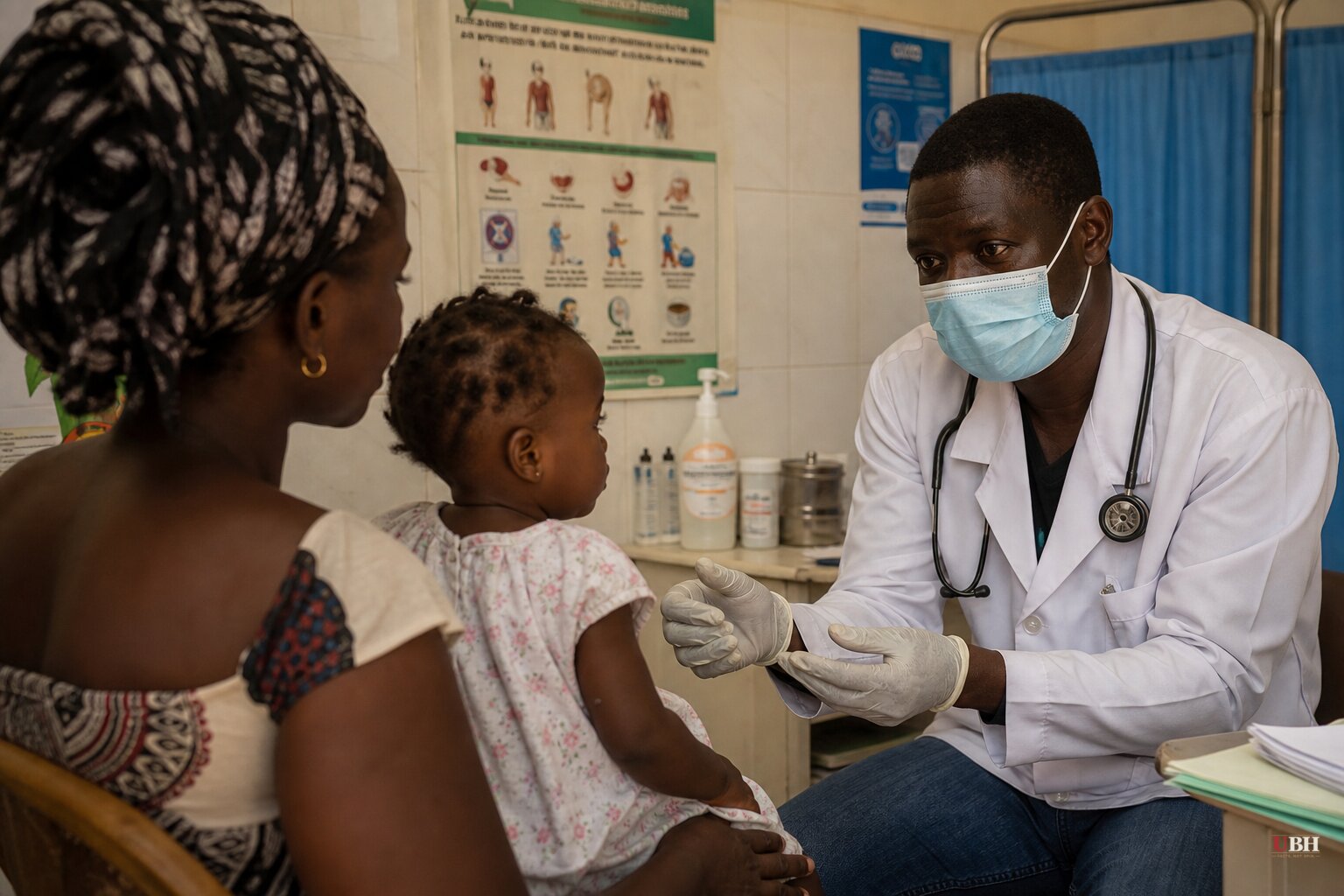
Guinea-Bissau is dealing with something it has never faced before: an mpox outbreak. The government declared it on July 4, 2026, after a 27-year-old woman became the country's first confirmed case, according to the Guardian.
As of August 17, the tally stands at seven confirmed cases, all adults, and 46 suspected cases, according to AllAfrica and UN News. No deaths have been reported. Six of the confirmed cases are in the Bissau autonomous sector, home to the capital, and one is in the nearby Biombo region.
The alarm stems from this: 23 of the 46 suspected cases are children under 15, and 16 of those are under age four, according to UNICEF. That's roughly half the suspected caseload in a virus known to hit young children harder than adults.
A fragile system trying to catch up
Sandra Martins, UNICEF's deputy representative in Guinea-Bissau, called even this small outbreak "a major public health event" precisely because it's the first time mpox has shown up in the country at all, according to UN News and Africanews.
Martins didn't sugarcoat the country's readiness. "While the country's surveillance system remains extremely fragile, we face the risk that cases are going undetected, particularly among children who are the most vulnerable to severe complications," she said, according to AllAfrica.
AllAfrica's reporting adds a detail other outlets skip past: the confirmed cases "do not appear connected to each other," which suggests transmission chains nobody has traced yet and more infections could be circulating unnoticed. Dr. Magda Robalo, a former health minister who led the country's Covid-19 response, told the Guardian that new cases have kept appearing intermittently over several weeks, meaning "transmission is ongoing."
Robalo, now co-founder of the Institute for Global Health and Development and a former WHO director of communicable diseases, said the biggest gap right now is surveillance and frontline capacity. That's not a small ask in a country the Guardian notes is also dealing with a military-led government since the suspension of last November's presidential election, and where Bissau went without electricity for a full day last week due to fuel shortages.
Why September matters
Primary schools across Guinea-Bissau are scheduled to reopen in September. UNICEF and multiple outlets, including the Hindustan Times and Africanews, flag that as a real risk multiplier, since mpox spreads through skin-to-skin contact and contact with contaminated items like clothing or utensils, and packed classrooms create more opportunities for exactly that kind of exposure.
Community health workers have already started door-to-door awareness campaigns using megaphones and translated leaflets, backed by the health ministry and international agencies, according to the Guardian. UNICEF says it's working with the Ministry of Public Health and the World Health Organization to strengthen contact tracing, shore up infection control and water/sanitation measures in health facilities, and get accurate information to families. The agency says it needs more than $150,000 in flexible emergency funding to run those efforts.
Context worth having
This isn't the global mpox emergency of 2022, which mostly affected adults with new or multiple sexual partners, including men who have sex with men, and which the Africa Centres for Disease Control and Prevention declared over back in January, according to the Hindustan Times, which noted the virus "remains endemic in several settings" even after that declaration. Guinea-Bissau's outbreak looks different. Nearly a quarter of its suspected cases are toddlers, and mpox rarely kills but hits young children and people with underlying conditions hardest, a pattern UN News says also showed up in the 2022 outbreak's fatal cases.
Health workers cited by the Guardian say the clade variants circulating in Guinea-Bissau match those in neighboring countries, meaning cross-border spread in West Africa is a live risk, not a hypothetical one.
None of the seven outlets covering this story diverge much on the core numbers. They all trace back to the same UNICEF statement issued Thursday, August 20, and the government's confirmed count as of August 17. The real gap isn't in what's being reported but in what isn't being tested yet: how many of those 46 suspected cases will actually get confirmed, and how many more are out there that nobody has found.
Guinea-Bissau's health ministry has not announced a timeline for expanding testing capacity, and it remains unclear whether the $150,000 UNICEF is seeking will be fully funded before schools reopen next month.
Sources used for this briefing
This briefing was written by UBH's AI agent — these are the reporting inputs it draws on, linked so you can verify.


