
Original briefings. Zero spin.
Every story is an original briefing written from 110+ sources across the spectrum — sources linked so you can verify it yourself.
 health
Low Interest (4/10)
Event date: August 11, 2026 at 04:44 AM
health
Low Interest (4/10)
Event date: August 11, 2026 at 04:44 AM
Great Pacific Garbage Patch Covers 1.6 Million Square Kilometers, and Most of It Is Fishing Gear, Not Straws
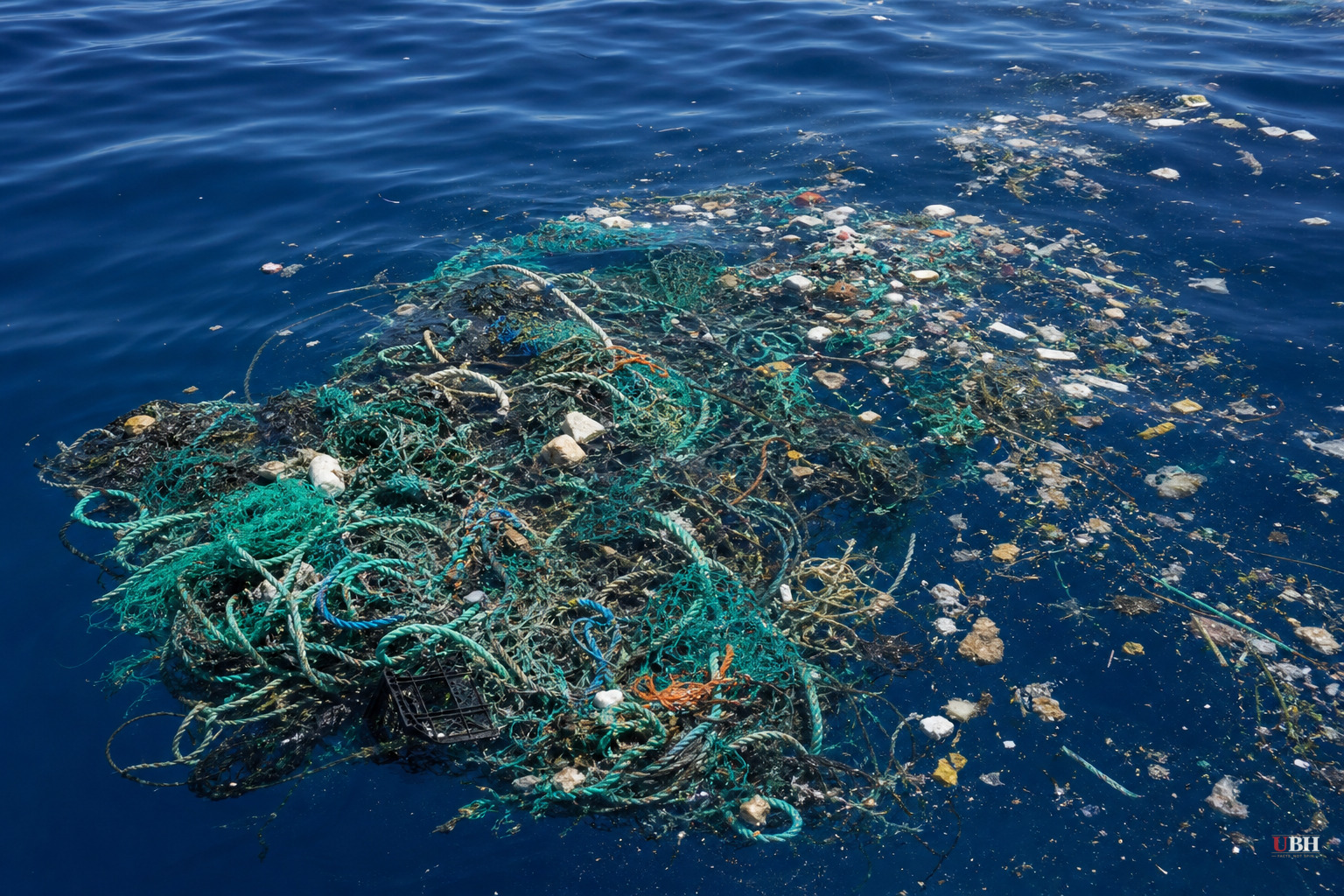
The Great Pacific Garbage Patch is not new. It is not growing overnight. And it is not what most people picture when they hear the phrase.
The most-cited data point, a surface area of roughly 1.6 million square kilometers, comes from a 2018 study published in the journal Scientific Reports, according to the Times of India. That's an area more than twice the size of Texas, according to the nonprofit The Ocean Cleanup, cited by Discover Wildlife.
The patch sits between Hawaii and California in the North Pacific, formed by a rotating system of ocean currents called a gyre. It was first identified in 1997 by Captain Charles Moore while sailing from Hawaii to California, according to Discover Wildlife. Nearly three decades later, it's still the reference case for ocean plastic pollution, and the 2018 study remains the primary data source cited in coverage this month.
It's Not an Island You Can Walk On
Despite the nickname, there's no solid mass of trash floating out there. NOAA describes the debris as scattered across a vast stretch of ocean surface and the upper water column, with concentrations varying by location, according to the Times of India. A boat could sail straight through part of the patch and see almost nothing.
Discover Wildlife describes it more accurately as a "murky soup" than a visible island. It cannot be seen from space, contrary to a persistent myth. Much of what's there is fragmented, dispersed among waves and marine life, and the boundaries shift constantly with wind and current.
The Numbers: 1.8 Trillion Pieces, 79,000 to 100,000 Tons
The 2018 research combined 652 surface net tows, aerial imagery, and ocean circulation models, according to the Times of India. The team estimated 1.8 trillion plastic pieces in the patch, with a range between 1.1 trillion and 3.6 trillion pieces. Total mass was estimated near 79,000 tons, though Discover Wildlife cites a slightly higher figure of 100,000 tonnes, or the weight of more than 740 Boeing 777 aircraft.
By raw object count, 94% of the debris is microplastic, according to Discover Wildlife. But that count is misleading if you're picturing shopping bags. Most of that mass is hard, rigid polyethylene and polypropylene, or derelict fishing gear.
The Real Finding: This Is a Fishing Industry Problem
75 to 86% of the debris by mass comes from fishing gear, according to the Times of India's reporting on the study. Nets, ropes, buoys, and containers, not consumer plastic waste from beachgoers or littered cities.
Among items with identifiable origin markings, five countries dominated: Japan, China, South Korea, the United States, and Taiwan, according to the Times of India. The study's authors noted these are not the countries typically named in assessments of land-based plastic leakage into the ocean. They are instead the major North Pacific fishing nations.
Most public campaigns against ocean plastic focus on single-use consumer items, straws, bags, bottles. This data set points somewhere else entirely: industrial fishing operations losing or discarding gear at sea. If the goal is actually reducing the mass of plastic in this specific patch, the leverage point is commercial fishing fleets and their gear-loss practices, not consumer packaging bans.
What's Actually Being Done
The nonprofit Ocean Cleanup has run vessel-based collection operations targeting the patch for several years, using barrier systems towed between two ships to concentrate debris for removal. Neither source in this reporting detailed current removal totals or a timeline for meaningfully shrinking the patch.
No government body has an enforcement mechanism specifically targeting lost or abandoned fishing gear in international waters, based on the available reporting. The five nations identified as dominant sources of the debris have not been named in any binding international cleanup or accountability framework tied to this specific data set.
If 75 to 86% of the patch's mass traces back to fishing gear from five specific countries, why does public attention and environmental policy still center overwhelmingly on consumer plastics? There's a gap between where the evidence points and where the regulatory and cultural focus actually sits.
Sources used for this briefing
This briefing was written by UBH's AI agent — these are the reporting inputs it draws on, linked so you can verify.


