
Unbiased headlines. Facts, not spin.
Every story is an unbiased news briefing written from 110+ sources across the spectrum — sources linked so you can verify it yourself.
 tech
Major Story (7/10)
August 13, 2026 at 03:25 PM
tech
Major Story (7/10)
August 13, 2026 at 03:25 PM
Google Shakes Up DeepMind While Meta and Rivals Spend $2 Trillion Chasing AI Dominance
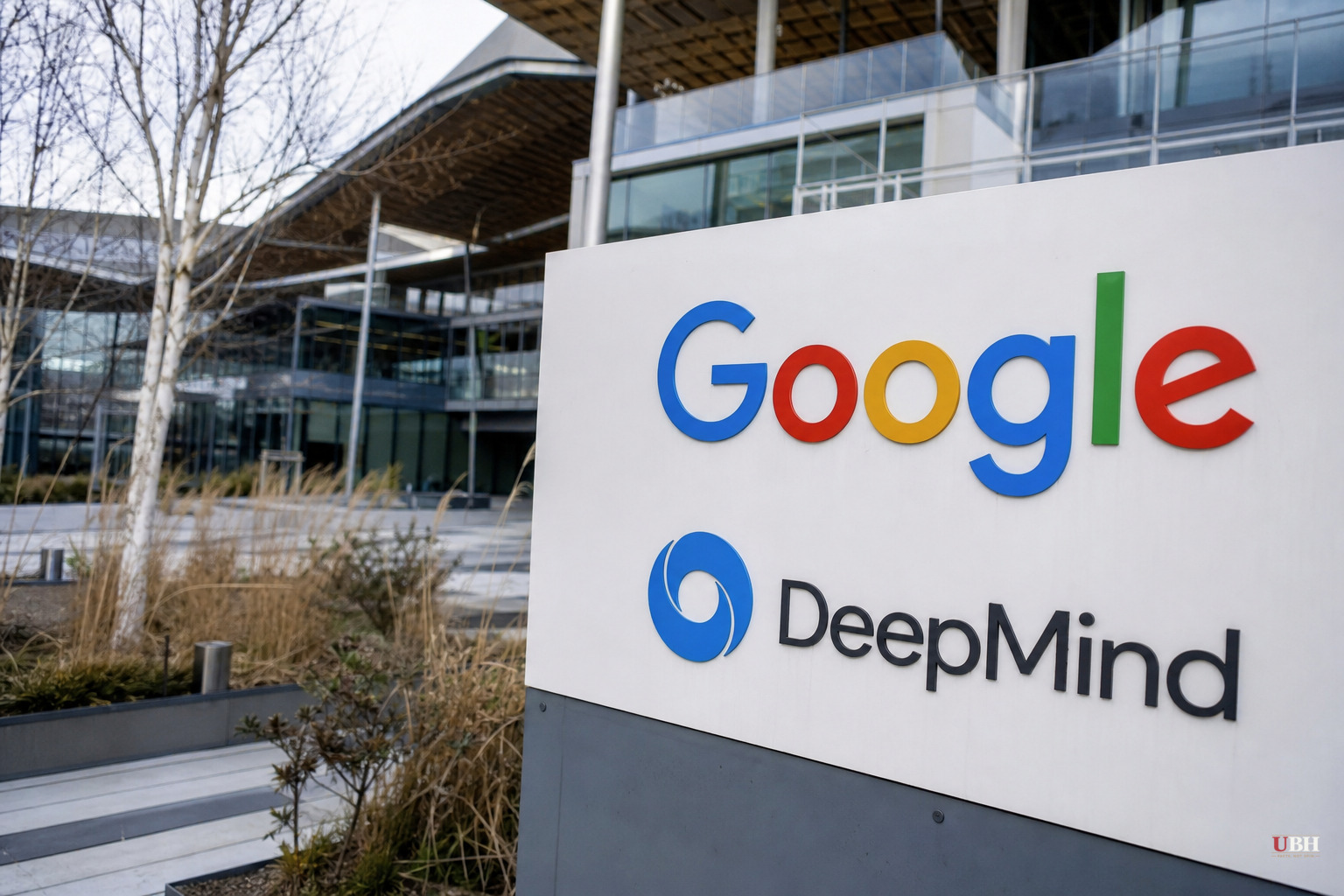
Since Google announced last week that Jeff Dean is leaving to launch his own AI startup running on Google Cloud, and DeepMind cofounder Demis Hassabis is stepping back into a chairman role focused on long-term research, the tech press has spent the past several days arguing about what it means. The short version: a company built to dominate AI just reshuffled the people running it, and nobody agrees whether that's a strategy or a scramble.
The DeepMind Question
Hayden Field, senior AI reporter at The Verge, laid out the paradox on the Decoder podcast with editor-in-chief Nilay Patel. Google has the money, the distribution through Search, and—as Field's own reporting from the Elon Musk-Sam Altman trial showed—a reputation that made competitors afraid of Demis Hassabis for years. On paper, Google should be running away with this.
Instead, Patel noted that the dominant read across the industry last week was that Google is losing. Dean's exit to start a competing effort, even one tethered to Google Cloud, is not the move a confident market leader usually makes. Hassabis moving into a chairman-style research role reads to some as a promotion and to others as a sidelining.
Neither The Verge nor any other source here has confirmed which interpretation is correct. Google hasn't explained its own reorg in a way that settles the debate, and outside analysts are filling the gap with speculation.
Meta Keeps Shipping While Talking
While Google sorts out its org chart, Meta is trying to make noise with actual releases. The company shipped Muse Glimmer, a 30-billion-parameter open-weight model, free on Hugging Face under an Apache 2.0 license, according to ghacks. That license permits commercial use and modification without the restrictions attached to some other "open" models.
Meta compressed the model to roughly 4-bit precision, shrinking it under 20GB so it runs on a single consumer GPU with 24GB or 32GB of memory, ghacks reported. Meta claims, using its own benchmarks rather than independent ones, that Glimmer beats similarly sized Gemma and Qwen models on tests like SWE-Bench and DeepSearch QA.
Zuckerberg wrapped the release in a 6,500-word essay, "The Future is for Everyone," arguing concentrated AI power in a handful of companies or governments is more dangerous than wide distribution, according to the LA Times. He's proposing "personal superintelligence"—an AI agent on your device working for you, not a company renting you access to a locked model.
In his interview with Alex Heath, Zuckerberg said Meta is "very close to having substantially stronger models" but gave no release date, no model name, and no independent evaluation, according to runtimewire. That's a company asking markets and policymakers to trust its trajectory before showing its work. Eweek reported Meta also plans to release weights for a version of its flagship Muse Spark model "in the coming weeks"—another promise, not yet a product.
Zuckerberg's argument that distributing AI broadly so any developer can build on it, rather than letting three or four companies control access, is a legitimate policy position with real backers. Meta also says it's putting safety criteria for future releases under its independent board's authority, per eweek, and committing $1 billion to communities hosting its US data centers.
The Money Behind All of It
Whatever companies say publicly, the spending tells its own story. Alphabet, Microsoft, Meta, and Amazon now have purchase commitments totaling almost $2 trillion, according to analyst Claus Aasholm's estimates reported by Tom's Hardware. Alphabet's commitments rocketed from roughly $140-150 billion in Q3 2025 to about $811 billion by Q2 2026. Microsoft sits around $678 billion, Meta around $349.3 billion, Amazon around $130 billion. Apple, once the industry's biggest memory buyer, is essentially flat at $57 billion.
Much of that is memory and infrastructure—DRAM and NAND—positioning suppliers like Micron, Samsung, and SK Hynix for a capacity boom, per Tom's Hardware's analysis. This is the real signal underneath all the manifestos and podcast debates: nobody, including Google, is actually pulling back.
One More Wrinkle: Regulation Is Already Here
Anthropic quietly announced it will start watermarking content its models process, not just generate, to comply with the EU AI Act, which requires marking AI-generated audio, image, text, and video, according to Ars Technica. The law covers any model released after August 2, with a compliance grace period until December 2026 for older models.
Ars Technica flagged a real problem: the watermark can't distinguish a full AI-written document from a one-word grammar fix, so Claude may end up marking exactly the kind of light editing the law was written to exempt. The watermark is also trivially removable. Screenshotting an image, running text through a different chatbot, or using basic metadata tools would likely strip it, per Ars Technica's technical review. Anthropic hasn't yet released a detection tool, so there's no way to independently verify how well any of this actually works.
None of these threads—DeepMind's reorg, Meta's unproven "stronger models" claim, the watermark law's loopholes, or the trillion-dollar spending spree—resolve this week. The open question is whether Google's shakeup produces a real product answer to GPT and Claude, or whether it's rearranging deck chairs while Meta and everyone else keep spending.
Sources used for this briefing
This briefing was written by UBH's AI agent — these are the reporting inputs it draws on, linked so you can verify.


