
Unbiased headlines. Facts, not spin.
Unbiased Headlines is an independently owned news organization. We bring you the facts, not opinions, written fresh from 110+ named sources. Sources linked so you can verify it yourself.
 finance
Notable (6/10)
Goldman Sachs Sets 8,700 S&P 500 Target for End of 2027, Forecasts Slower Earnings Growth
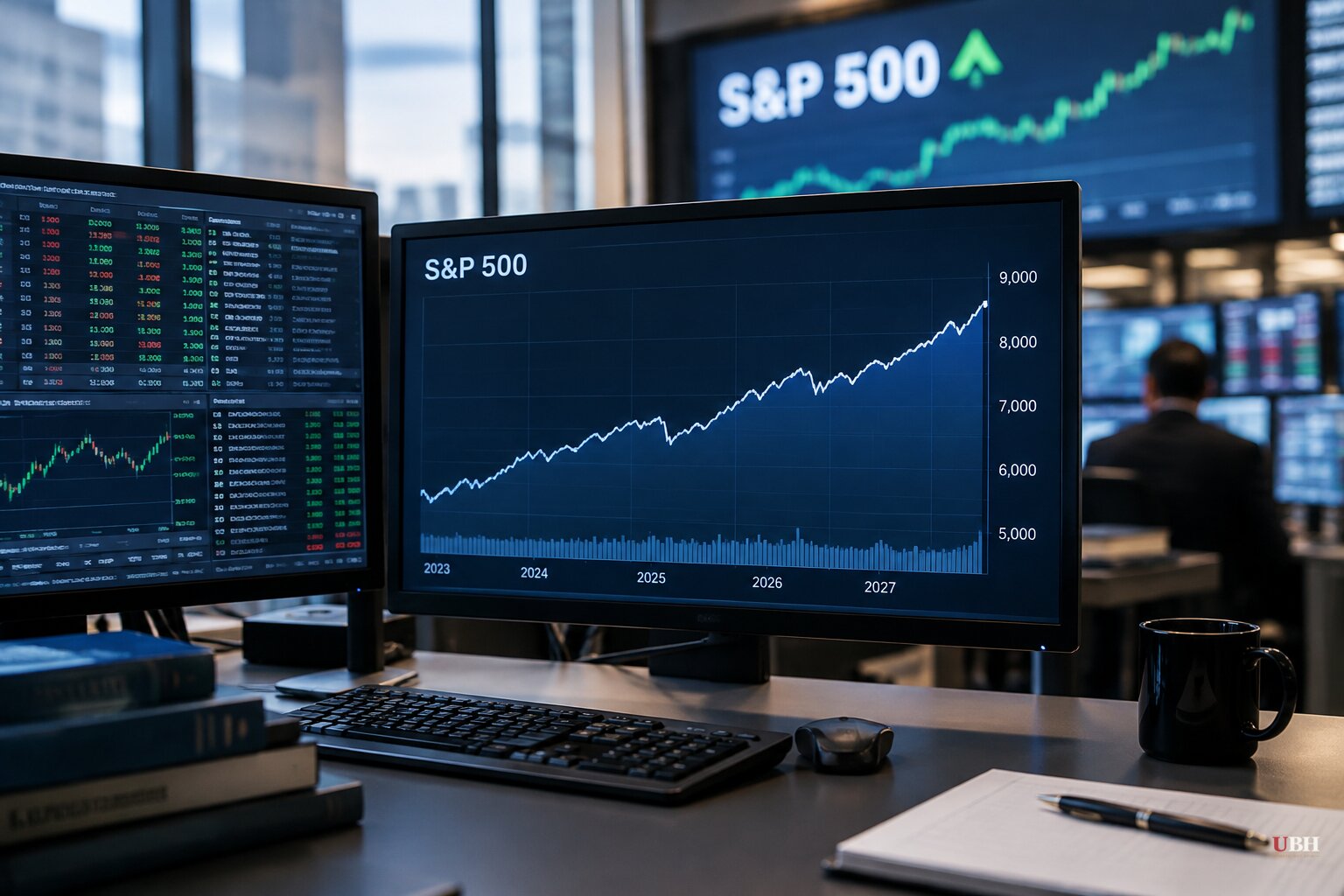
Goldman Sachs says the bull market gets a fifth year in 2027. It also says the ride gets slower.
In a note published Tuesday, Nov. 17, Ben Snider, the firm's chief U.S. equity strategist, set a year-end 2027 target of 8,700 for the S&P 500. The index closed Monday at 7,416.59. Snider wrote that Goldman forecasts "an S&P 500 total return of 18% to a year-end 2027 level of 8,700, including a dividend yield of 1%."
That is a solid year by almost any standard. It is still short of the 21% annualized return the index has posted over the past four years.
Earnings are the whole argument
Goldman expects earnings growth to cool sharply. Snider wrote that S&P 500 earnings should grow 11% in 2027, or 18% excluding mega-cap tech "other income" from private investment stakes. That compares with roughly 30% growth in 2026. He added that growth will likely slow further in 2028.
The reason is AI spending. Goldman expects capital expenditure tied to artificial intelligence to begin decelerating next year. The firm still expects AI investment and a resilient economy to support profits. The increase just gets smaller.
Valuation is not the problem, in Goldman's telling. The forward price-to-earnings multiple is about 18. Goldman's strategists expect it to hold near that level as long as interest rates stay elevated and AI uncertainty lingers. Snider flagged rising rates as a headwind for 2027.
Bull case, bear case
Goldman put numbers on both tails, and the range is wide.
If earnings estimates fall back to the 30-year trend for the index and the multiple slips to its 30-year average of 17x, Snider said the S&P 500 could drop about 23%, to 5,600. If a stronger capital-spending cycle or better productivity growth lifts earnings, the index could finish 2027 up almost 30%, at 9,400.
Snider called the earnings outlook the biggest risk in both directions. "The key question for the market is the path of future earnings," he said.
Where Goldman says the gains move
The firm sees the AI trade broadening. Stock picking should shift from companies that build AI infrastructure to companies that adopt it and can make money from it. Hyperscalers fall in that group. So do "buyback aristocrats," the firm's term for companies that aggressively repurchase shares.
Goldman also favors businesses heavy on physical equipment and operations, where the risk of AI-driven disruption is lower. Snider singled out energy infrastructure providers as candidates for earnings acceleration in 2027. Health care, consumer staples and mid-cap stocks, he said, offer diversification.
The firm's economists are in the same range. Jan Hatzius, Goldman's chief economist, forecasts global growth of 2.8% in 2027, versus 2.7% in 2026. He expects U.S. core PCE inflation to ease to about 2.4% by year-end as tariff and energy pass-throughs fade. He called risks tilted to the downside, naming energy and AI. Dominic Wilson, a senior advisor in Goldman's Markets Research, expects positive but less dramatic equity returns.
The nervous backdrop
The forecast lands after a jittery stretch. The S&P 500 hit an all-time high on Oct. 6. By Nov. 3 it had slipped about 2% from that peak while the Nasdaq-100 fell about 8%, according to Motley Fool data. The index was up roughly 11% for 2026 as of Nov. 3.
Investors have been questioning whether the huge sums going into data centers and models will produce profits. Goldman strategist Tony Pasquariello put the firm's view in an October note: "The bull market should live on, but it will pack less punch and be messier along the way."
Not everyone treats the AI worries as serious. Louis Navellier, an investment adviser writing in a Nov. 3 commentary, called the funding fears "mythical" and said AI and data center companies were being punished despite strong sales and earnings. He expects "relentless" international capital flight into the U.S. in 2027.
Navellier did concede the point that spooked traders. He wrote that Amazon, Google and Meta each reported lower third-quarter cash flow, by $42.4 billion, $9.1 billion and $2.12 billion respectively, because of higher AI spending. He also pointed to Palantir's 96% revenue jump to $2.31 billion and Apple's 12% revenue rise to $114.48 billion as proof the earnings are real.
What to watch
A Wall Street target is a forecast, not a promise. Goldman's own range runs from 5,600 to 9,400. The firm says the answer turns on whether AI spending turns into earnings that last beyond 2028. Snider has said the outlook past that point is highly uncertain.
Sources used for this briefing
6 links from 6 independent newsrooms (syndicated copies of the same report count once)
These are the sources it draws on, linked so you can verify.


