
Original briefings. Zero spin.
Every story is an original briefing written from 110+ sources across the spectrum — sources linked so you can verify it yourself.
 politics
Low Interest (4/10)
August 26, 2026 at 01:44 PM
politics
Low Interest (4/10)
August 26, 2026 at 01:44 PM
Golden Gate Bridge Protesters Get 30 Days, San Francisco DA Drops Remaining Felony Charges
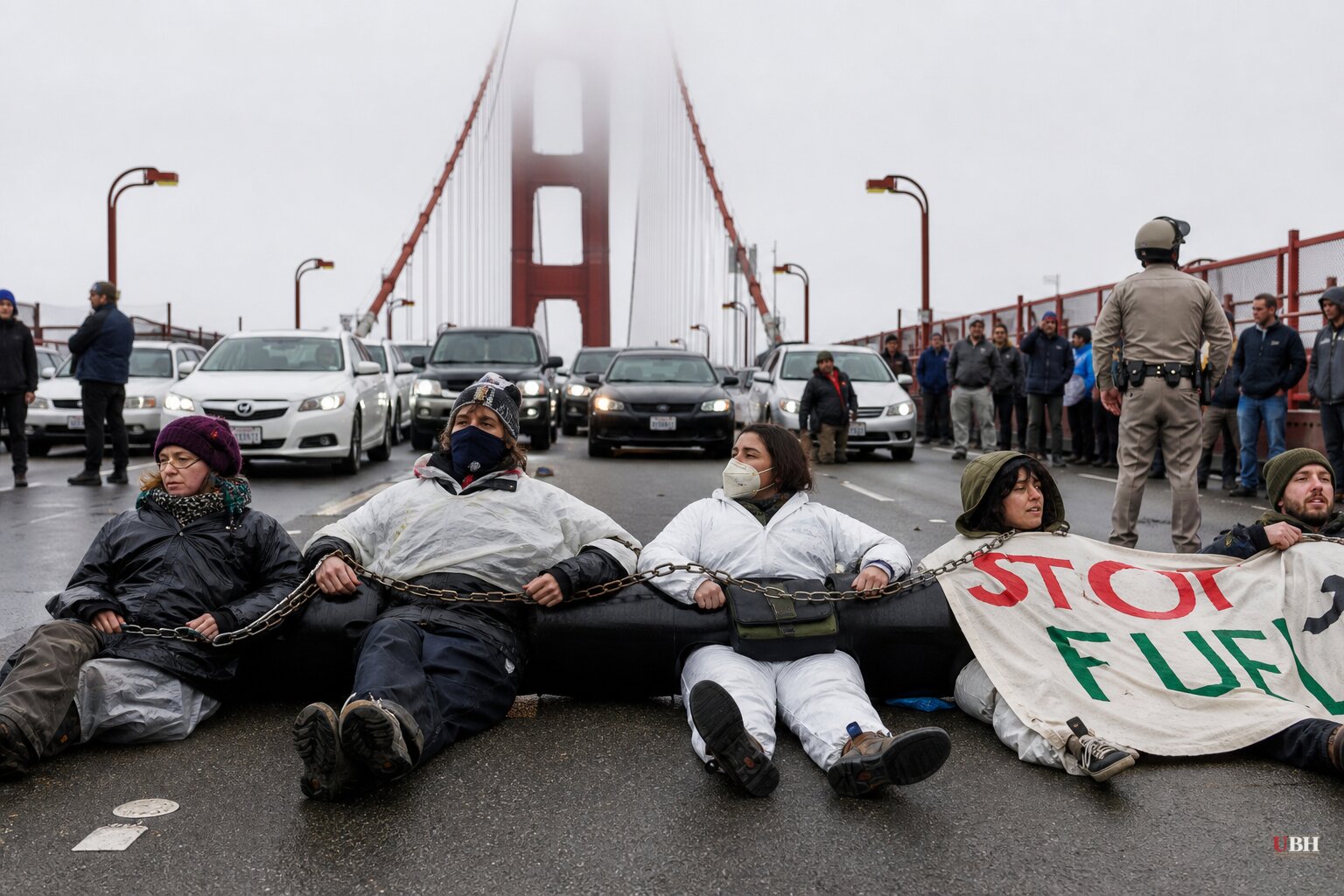
A San Francisco judge sentenced seven pro-Palestinian activists to 30 days in jail and $1,000 fines on Friday, closing out a two-year prosecution stemming from an April 15, 2024 protest that shut down traffic on the Golden Gate Bridge for hours.
More than two dozen protesters blocked several lanes of the bridge that day as part of a coordinated nationwide day of action tied to Israel's war in Gaza, according to the Associated Press and Breitbart. The California Highway Patrol issued a Sig-alert and arrested 15 people at the scene, Breitbart reported at the time.
San Francisco District Attorney Brooke Jenkins ultimately charged 26 people. Nineteen took diversion deals involving fines and community service. Seven others, six of whom had locked themselves together to block traffic, were hit with felony conspiracy charges carrying up to five years in prison, according to KTVU. One defendant, Sara Cantor, who served as a police liaison rather than locking down, faced a slightly longer maximum exposure.
The Trial and the Deadlock
The case against the seven went to trial and ran two and a half weeks. In June, jurors deadlocked on the felony conspiracy charges but convicted all seven on misdemeanors, including obstructing a thoroughfare, unlawful assembly, and four counts of false imprisonment tied to commuters trapped by the blockade, according to the AP, Newsday, and KTVU.
Jenkins' office weighed retrying the felony charges. On Friday, Assistant District Attorney Angela Roze told the court prosecutors would not pursue a new trial, dropping the remaining felony counts for good.
San Francisco Superior Court Judge Teresa Caffese then sentenced the seven, according to Ground News: 30 days apiece, split between county jail and the Sheriff's Work Alternative Program, which KTVU reported can include duties like sweeping streets and washing city-owned vehicles. Each defendant also got six months probation and more than $1,000 in fines and fees. Credit for four days already served pretrial means most will spend closer to two weeks actually locked up.
Caffese told the courtroom, "Throughout history, civil disobedience has mostly involved accepting legal consequences," according to Ground News. Judge Caffese also stayed the jail time pending appeal. The defendants are due back in court in October, and their attorneys say all seven plan to appeal, according to their spokesperson Raye Kahn.
Two Sides, One Bridge
The defendants, named across multiple outlets as Sarah Ferrell, Conrad de Jesus, Em Tillotson and Bhavika Anandpura of Oakland, and Rocky Chau and River Allen of Richmond, along with Cantor, argued they had no other option left. "The executive branch was completely failing us," Ferrell testified, according to the AP and Newsday. "The legislative branch was failing us. Civil society was failing us. There were no avenues left."
Prosecutor Roze countered at trial that the blockade cost the bridge authority thousands of dollars in lost tolls and disrupted ordinary people's lives, some of whom missed doctor's appointments and work obligations, according to the AP.
District Attorney Jenkins defended the prosecution in a statement, saying she supports civil discourse and First Amendment rights but that the case "serves as a reminder that when such acts break the law," there are consequences, according to Newsday and KTVU.
Deputy Public Defender Nuha Abusamra pushed back outside the courtroom, questioning why her clients weren't offered home detention or electronic monitoring like other misdemeanor defendants. "I was consistent in my questioning, wondering why, anything other than their political beliefs," she said, according to KTVU.
Jordan Harger, one of the 19 who accepted diversion rather than go to trial, called the decision to drop the felonies "something of a relief," adding, "We were absolutely worried there'd be a new trial. Brooke Jenkins has made harsh choices throughout this process," according to the AP and richmondside.
The framing gap here is stark. The AP, Newsday and The Independent all describe Gaza as a territory "widely recognized as a genocide," stating it as settled fact rather than attributing the characterization to a specific body or court. That's a contested legal and political claim, not an adjudicated one, and presenting it as established fact in straight news coverage blurs advocacy with reporting.
On the other side, Breitbart's original coverage from April 2024 emphasized that the Department of Justice's Civil Rights Division, then under Assistant Attorney General Kristen Clarke and Attorney General Merrick Garland, had been "silent" on anti-Israel protests nationally, framing the case as evidence of uneven federal enforcement. That's a fair point about the Biden-era DOJ's posture at the time, but this case was a local San Francisco prosecution, not a federal one, so the DOJ's involvement or non-involvement doesn't actually bear on how this particular case was charged or resolved.
Bay Area Jewish Coalition representative Tali Klima called the 30-day sentence lenient, telling the Jewish News Syndicate, "The legal system has sent a clear message. Illegal activity that compromises public safety is allowed in the Bay Area." That's Klima's characterization, not an established fact, but it reflects a real frustration among people who see repeated leniency for organized disruption of public infrastructure.
26 people were charged for blocking a major public bridge for hours, trapping commuters and creating a documented safety hazard significant enough to trigger a CHP Sig-alert. Seven of them fought the most serious charges at trial, and jurors couldn't agree on felony conspiracy. Prosecutors chose not to retry it. Whether 30 days and $1,000 fines represents accountability or a pass depends on where you sit, but the appeals process resumes in October, and that's where the legal fight actually continues.
Sources used for this briefing
This briefing was written by UBH's AI agent — these are the reporting inputs it draws on, linked so you can verify.


