
Unbiased headlines. Facts, not spin.
Every story is an unbiased news briefing written from 110+ sources across the spectrum — sources linked so you can verify it yourself.
 health
Notable (6/10)
August 10, 2026 at 10:57 AM
health
Notable (6/10)
August 10, 2026 at 10:57 AM
Global Ocean Temperatures Hit Record July High as El Niño Builds
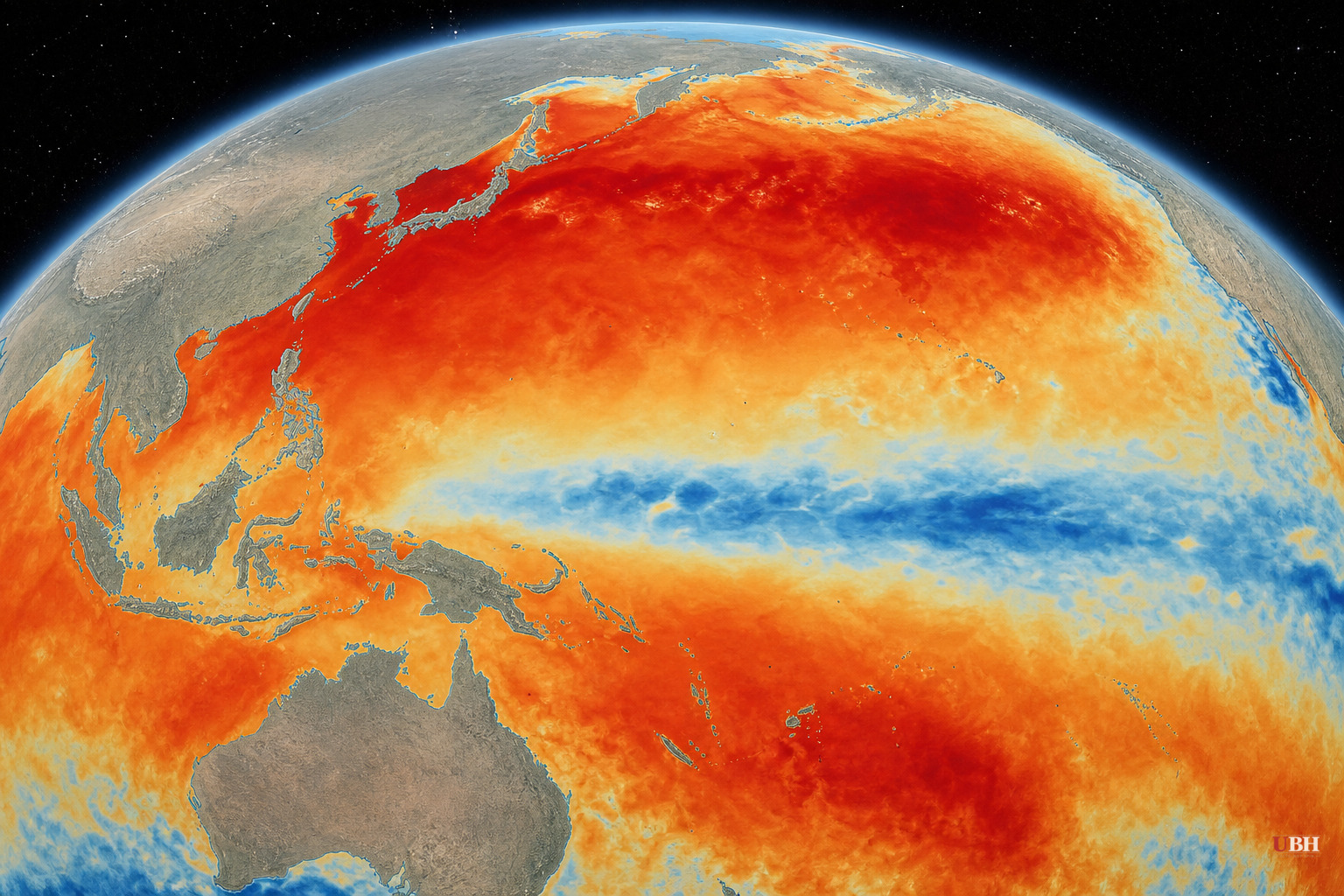
The world's oceans posted their hottest July on record, according to the EU's Copernicus Climate Change Service. Average sea surface temperature outside the polar regions, measured between 60 degrees north and 60 degrees south, hit 20.96C. That beats the previous July record of 20.89C set in 2023.
Copernicus says the spike is being driven in part by developing El Niño conditions in the Pacific. El Niño is a naturally occurring warming pattern in Pacific sea surface temperatures. It happens with or without human activity. But when it stacks on top of a warming baseline, it can push temperatures into record territory faster.
July 2026 came in as the joint second-warmest July globally on record, with temperatures 1.47C above the estimated pre-industrial average, Copernicus reported. Sea temperatures stayed unusually high across much of the tropical Pacific, where forecasters expect El Niño to strengthen further in coming months.
Europe got hit hard too. Sea surface temperatures along the Atlantic coast and in the western Mediterranean reached record highs in July, fueling widespread marine heatwaves that researchers classify as strong to severe.
On land, western Europe just recorded its hottest June and July on record. The average temperature across the region for those two months was 21.62C, which is 2.79C above the historical average and the highest ever logged for that period. Some areas are now facing their third or fourth heatwave since May.
"July 2026 was the third consecutive month of exceptional heat in western Europe," said Samantha Burgess, strategic lead for climate at the European Centre for Medium-Range Weather Forecasts. She attributed it to persistent high-pressure systems trapping heat over the region, combined with dry soils that reduced natural cooling. "This is a clear example of how climate change is intensifying heat extremes, with heat and drought increasingly reinforcing one another," Burgess said.
France, Spain, parts of Germany, and the UK all recorded exceptionally low rainfall and soil moisture during the period. The UK, separately, is bracing for its fifth heatwave of the year, with persistent dry conditions adding pressure on water supplies and raising the odds more regions get formally declared in drought.
Oceans aren't a side character in the climate system. They absorb the bulk of excess heat generated by greenhouse gas emissions and produce roughly half of Earth's oxygen. When they warm, the effects don't stay contained to the water.
Warmer oceans absorb less carbon dioxide. That leaves more CO2 in the atmosphere, which is the opposite of what you'd want if the goal is slowing warming. It's a feedback loop, not a one-off event.
Marine ecosystems take a direct hit too. Species migrate toward cooler waters when temperatures rise, which scrambles food chains that fisheries and coastal economies depend on. That's not speculation, it's a documented ecological response tracked by climate scientists for decades.
Anyone paying attention to the El Niño angle has a legitimate point worth stating plainly: El Niño is a natural, cyclical phenomenon that has driven temperature spikes for as long as records exist, long before industrial CO2 emissions became a factor. Attributing every record-breaking month solely to human-caused warming, without separating out the natural El Niño contribution, risks overstating the anthropogenic share of any single month's number.
Copernicus's own reporting acknowledges this directly, crediting the July record to El Niño conditions "partly" fueling the spike, not exclusively. The service isn't claiming July's number is purely man-made. It's saying two things are happening at once: a natural warming cycle and a rising baseline temperature underneath it, and the two are compounding.
What's harder to wave away is the multi-year pattern. July 2023 set the prior record. July 2026 broke it. Western Europe just logged three straight months of exceptional heat, not one anomalous month. A single hot month can be El Niño noise. Three consecutive record-setting seasons layered on a rising long-term baseline is a trend, not noise.
None of the data here settles the policy debate over what governments should do about it, how fast, or at what cost to energy prices and economic growth. Those are legitimate arguments people can have in good faith. But the measurement itself, 20.96C average sea surface temperature in July, a new record, comes from the EU's own climate monitoring service and is not in dispute.
Copernicus and the European Centre for Medium-Range Weather Forecasts say they expect El Niño to keep strengthening in the coming months. Whether the Pacific pattern peaks quickly and temperatures ease, or whether western Europe faces a fourth or fifth consecutive month of record heat, is the open question meteorologists are now watching heading into late summer.
Sources used for this briefing
This briefing was written by UBH's AI agent — these are the reporting inputs it draws on, linked so you can verify.


