
Original briefings. Zero spin.
Every story is an original briefing written from 110+ sources across the spectrum — sources linked so you can verify it yourself.
 health
Major Story (7/10)
August 29, 2026 at 04:01 AM
health
Major Story (7/10)
August 29, 2026 at 04:01 AM
Global Cardiology Groups Rewrite the Definition of a Heart Attack, Citing Decades of Missed Diagnoses in Women
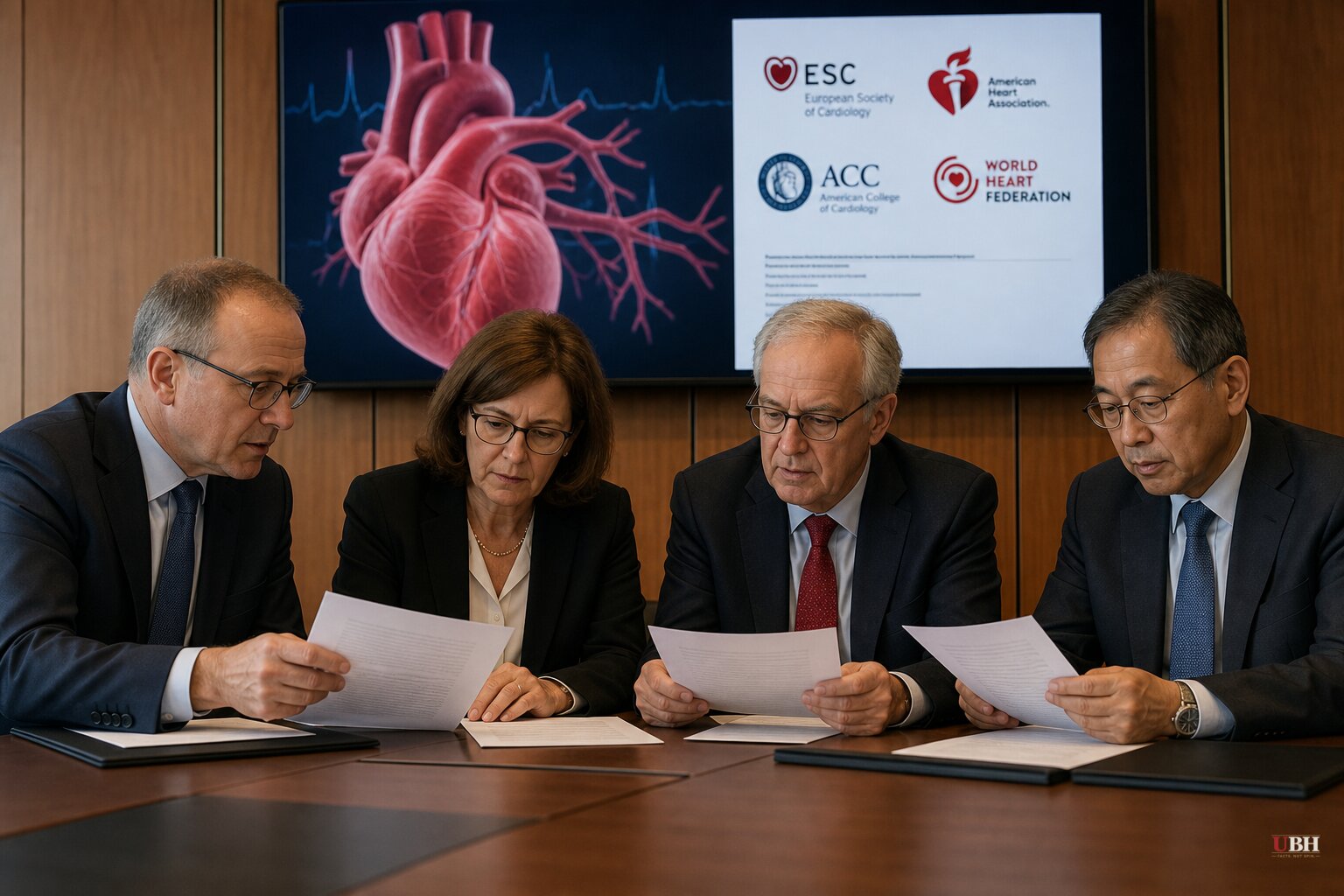
Four of the world's biggest cardiology organizations agreed on a new universal definition of a heart attack this week, the first overhaul of diagnostic standards in more than 20 years. The announcement came Friday, August 28, 2026, at the European Society of Cardiology's annual congress in Munich, according to The Guardian and the European Society of Cardiology (ESC) itself.
The new framework was built jointly by the ESC, the American College of Cardiology, the American Heart Association, and the World Heart Federation. It's called the Fifth Universal Definition of Myocardial Infarction, and it's set to be formally presented at the ESC Congress on August 30, 2026.
What actually changed
The old system sorted heart attacks into numbered types, like "type 1" or "type 2," a classification cardiologists say was confusing in practice and inconsistently applied. The new system scraps the numbers for three plain categories based on cause: primary MI, secondary MI, and procedure-related MI, according to escardio's own summary.
Primary MI covers the classic heart attack most people picture: a ruptured plaque or clot blocking a coronary artery. It also now includes coronary artery spasm and spontaneous coronary artery dissection (SCAD), a tear in the artery wall. Secondary MI covers cases where the heart muscle is starved of oxygen because of another condition entirely, like severe anemia, sepsis, or a dangerous heart rhythm. Procedure-related MI covers heart attacks tied to a cardiac procedure or surgery within the prior 30 days.
Professor Nicholas Mills, an Edinburgh University cardiologist who led the international taskforce behind the guidelines, told The Telegraph the goal was consistency: "It's the first time that we've had a truly global approach to aligning how we diagnose what is probably the most important diagnosis there is."
The sex-specific piece is the real headline
Research shows women are 50% more likely than men to get an incorrect initial heart attack diagnosis, according to The Daily Mirror. Coronary heart disease kills twice as many women in Britain as breast cancer and remains the single biggest killer of women worldwide, the Mirror reported, citing UK figures showing roughly 33,000 women are hospitalized for heart attacks annually, about one every 16 minutes.
Three conditions that disproportionately affect women—SCAD, coronary artery spasm, and coronary embolism—were previously grouped under the less-urgent "type 2" label. SCAD alone occurs in women at least 80% of the time and is often linked to pregnancy or the period shortly after childbirth, per The Telegraph. Coronary spasm can be triggered by emotional stress, extreme cold, or exercise. These conditions are up to 10 times more common in women than in men, according to The Guardian.
Under the old numerical system, these causes were treated as secondary concerns rather than the emergency they actually are. Mills told The Telegraph there had been "unintended systematic bias against women," partly because the standard troponin blood test, used to detect heart muscle damage, was calibrated to a single threshold that reliably caught heart attacks in men but missed some in women. The new guidance lowers that threshold specifically for women.
Professor Bryan Williams, chief scientific and medical officer of the British Heart Foundation, called it "a landmark moment, a radical shift in how we define and diagnose heart attacks worldwide." He added: "For decades, women have missed out on accurate diagnoses and treatment."
What this doesn't settle
This is a clinical reclassification, not a courtroom verdict on anyone's malpractice. No source here alleges that individual doctors intentionally shortchanged female patients. The claim, made by Mills and Williams and consistent across every outlet reviewed, is that the diagnostic tools and category system itself were built around a male-typical presentation of heart attacks and didn't adapt well to the different mechanisms more common in women. That's a system-design critique, not an accusation of bad faith by individual clinicians, and the sources are careful to frame it that way.
Upday's coverage frames the story around a broader UK political news roundup, burying the cardiology news under unrelated items about Falklands defense spending and a Cleveland Police gang crackdown. This suggests the story is being distributed through a general news aggregator rather than treated as a dedicated health story. That's a distribution quirk, not a factual problem with upday's reporting on the guidelines themselves.
The guidelines were published in the European Heart Journal, according to upday, and are expected to be adopted by Britain's NHS, per The Telegraph. Individual hospital systems on either side of the Atlantic have not yet established a timeline for adopting the new troponin thresholds and three-category system or retraining emergency room staff. That implementation gap is the next thing to watch.
Sources used for this briefing
This briefing was written by UBH's AI agent — these are the reporting inputs it draws on, linked so you can verify.


