
Original briefings. Zero spin.
Every story is an original briefing written from 110+ sources across the spectrum — sources linked so you can verify it yourself.
 politics
Notable (5/10)
August 23, 2026 at 11:50 PM
politics
Notable (5/10)
August 23, 2026 at 11:50 PM
Georgia Skips New EU Sanctions on Iran, Says Only Its Own Interests Matter
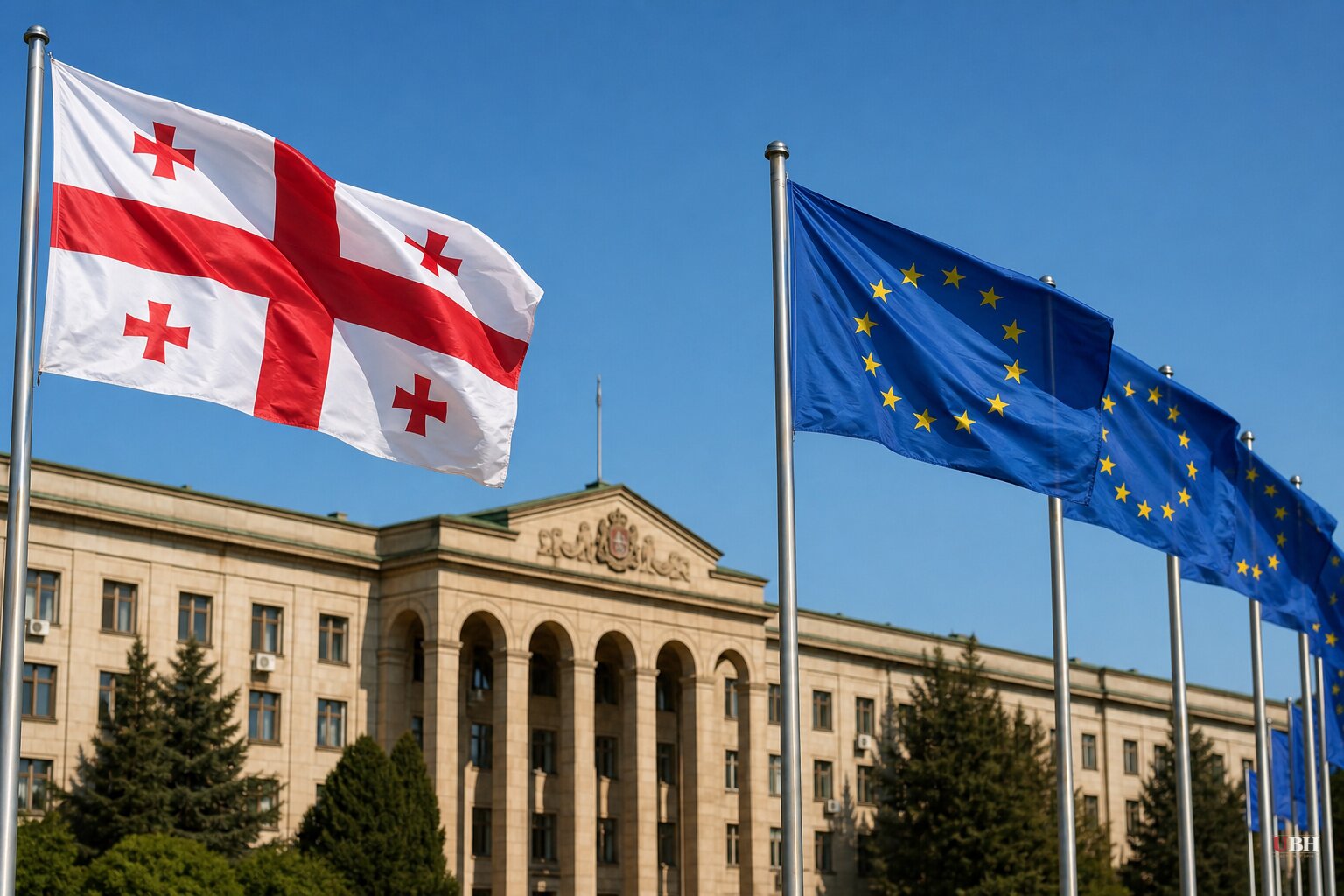
Georgia is not joining the European Union's newest round of sanctions on Iran, and a member of the ruling Georgian Dream party made no apologies about it.
Tengiz Sharmanashvili, an MP for Georgian Dream, told Interpressnews that Tbilisi's foreign policy runs on one rule. "Whether Georgia joins any resolution or takes steps related to international politics is determined by only one criterion: whether it is in Georgia's interests at that moment or not," he said, according to reporting picked up by ZeroHedge and Kayhan. "If a decision conflicts with Georgia's interests, it simply does not matter to us whose interests it serves."
A country that officially holds EU candidate status is supposed to be aligning its foreign policy with Brussels as part of the accession track.
What's actually in the sanctions package
EU foreign policy chief Kaja Kallas announced three separate decisions, according to both ZeroHedge and jam-news. The first updates the existing Iran sanctions list, adding and removing individuals and revising the listing for one organization. The second extends sanctions tied to Iranian military support for armed groups in Russia, the Middle East, and the Red Sea, while dropping four individuals from that list. The third adds six people to the sanctions list over alleged human rights violations in Iran.
Nine countries signed on alongside EU member states: European Economic Area members Iceland, Liechtenstein, and Norway, plus EU candidates Albania, Bosnia and Herzegovina, Moldova, Montenegro, North Macedonia, and Ukraine.
Georgia wasn't the only holdout. Sharmanashvili pointed out that Turkey and Serbia, both also EU candidates, stayed out too. Neither of those countries offered public statements in these sources explaining their reasoning, so it's fair to note that skipping EU sanctions isn't unique to Tbilisi.
A pattern, not a one-off
This isn't happening in a vacuum. The EU's own 2025 enlargement report found Georgia's alignment with the bloc's Common Foreign and Security Policy had dropped to 40% as of October 2025, down from 53% the year before, according to both ZeroHedge and jam-news. That's a measurable, documented slide, not speculation.
Georgia's opposition is using the sanctions snub as ammunition. Irakli Pavlenishvili, chairman of the United National Movement's governing board, said at a briefing covered by Interpressnews that the decision "clearly shows where Georgian Dream stands today." He argued Iran is "a regime that unequivocally stands on the side of the countries of the axis of evil" and accused the ruling party of consistently declining to join EU sanctions in recent years.
Georgia's Foreign Ministry has not responded to a request from Radio Free Europe/Radio Liberty asking why the country opted out, according to jam-news. Without an official government explanation beyond Sharmanashvili's general "national interest" framing, the specific calculation behind this decision remains unstated on the record.
The bigger picture: sanctions fatigue is spreading
Georgia's move lands amid what ZeroHedge described as broader resistance inside Europe itself to sanctions policy. Citing a July 19 Financial Times report, ZeroHedge noted that diplomatic backing for a recent round of Russia sanctions collapsed, with Greece, France, Italy, Germany, Austria, and Portugal demanding carve-outs or blocking the package to protect industries still doing business with Moscow. The reporting suggests sanctions unity is fraying well beyond Georgia's borders, among full EU members, not just candidate countries.
Iran's side of the wider standoff
Separately, and on a different track, Tehran is dealing with a US pressure campaign that has nothing directly to do with Georgia's decision. CNN reported that Mohsen Rezaei, secretary of Iran's Supreme National Security Council, vowed to "neutralize the economic war" with the United States and threatened to shut down Strait of Hormuz traffic entirely if any neighboring country joins Washington's economic measures. Iran has, however, been allowing some Iraqi oil tankers through the strait, per CNN.
Iranian Foreign Ministry spokesperson Esmaeil Baghaei separately called new US sanctions a "declaration of war" against governments worldwide, according to trendsmena, arguing that secondary sanctions on foreign banks and shippers violate the UN Charter's sovereign equality principle.
Kayhan, an outlet aligned with Iran's government, framed Georgia's sanctions refusal and Tehran's rhetoric as one connected story of "growing international resistance to Western economic coercion." That's an editorial framing from an Iranian state-linked outlet, not an established causal link. Georgia's MP gave no indication his country's decision was coordinated with or in response to US pressure on Iran. The two developments are happening in the same news cycle, not necessarily for the same reasons.
Georgia's Foreign Ministry still hasn't explained, on the record, what specific interest is served by staying out of these sanctions. Until it does, the only official reasoning on record is Sharmanashvili's one-line national-interest standard, and the opposition's read that it signals where Georgian Dream's loyalties lie.
Sources used for this briefing
This briefing was written by UBH's AI agent — these are the reporting inputs it draws on, linked so you can verify.


