
Original briefings. Zero spin.
Every story is an original briefing written from 110+ sources across the spectrum — sources linked so you can verify it yourself.
 health
Major Story (7/10)
September 9, 2026 at 07:19 PM
health
Major Story (7/10)
September 9, 2026 at 07:19 PM
Gaza Oxygen Shortage Deepens: Only 12 of 34 Generation Stations Still Running, Health Ministry Says
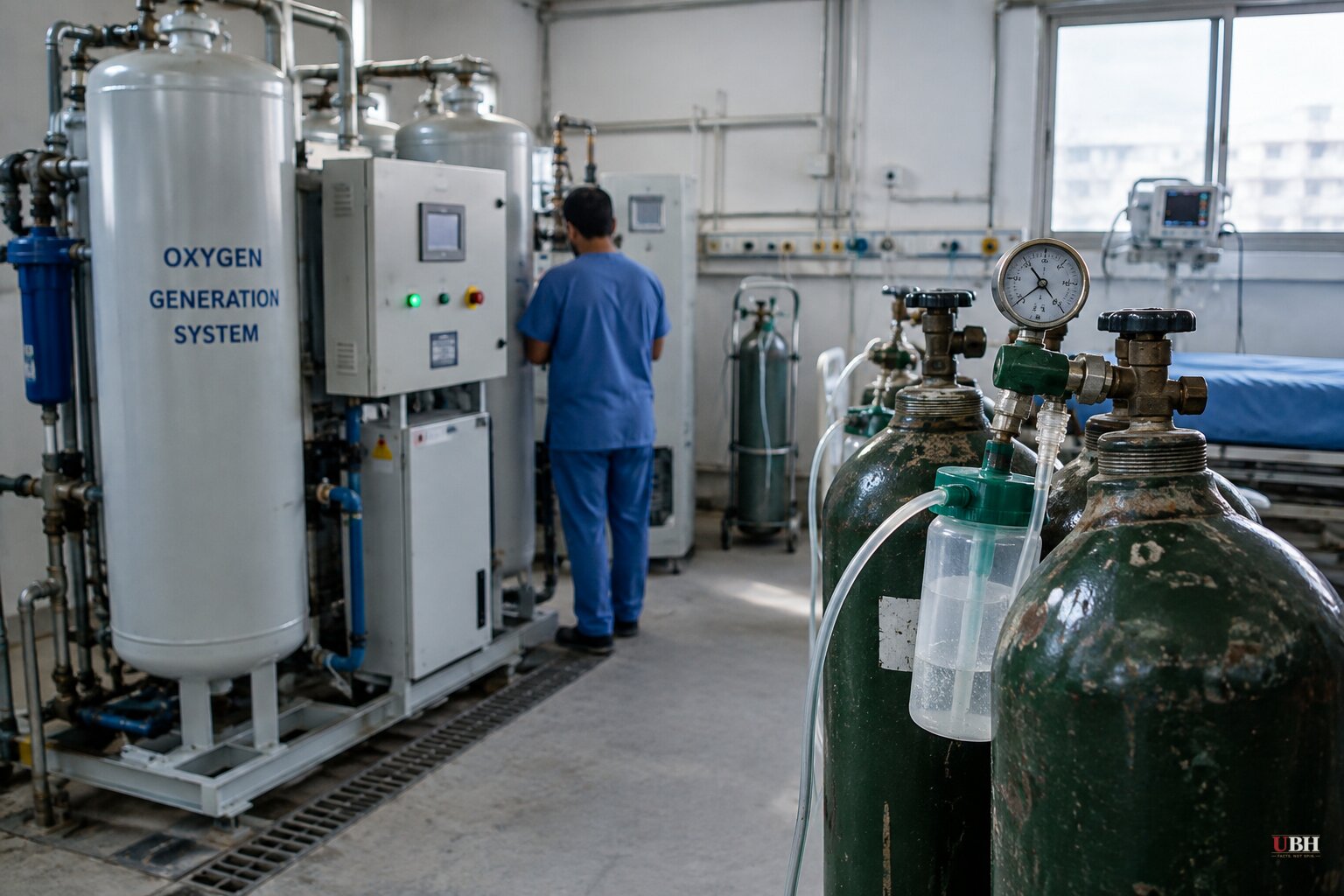
A 14-year-old boy with a congenital heart defect. A 63-year-old woman dying of pancreatic cancer. Both are gasping for oxygen that Gaza's health system increasingly cannot supply.
Ali Humaida watches the gauge on his family's oxygen cylinder drop each night in a tent in az-Zuwayda, central Gaza, according to Al Jazeera. His son Abdulaziz was born with a congenital heart defect, underdeveloped lungs, hydrocephalus treated with a surgically implanted shunt, and autism spectrum disorder. He depends on continuous supplemental oxygen. One night the family's cylinder ran dry before they could replace it. "We began fanning him with our hands and pieces of cardboard while watching his face turn blue," Ali told Al Jazeera.
At Al-Shifa Hospital in Gaza City, Fatma Al-Ajab held up her mother's nasal cannula, the tube unattached to any cylinder, according to Drop Site News. Hanan Al-Ajab, 63, is being treated for pancreatic cancer in the hospital's oncology department. "There is no oxygen cylinder," her daughter said. "Her blood levels drop, everything drops. All of her bodily functions deteriorate at once because there is no oxygen and she can't breathe."
The numbers behind the crisis
Gaza's Ministry of Health said on August 15 that only 12 of the strip's 34 oxygen-generation stations remain operational, and only 4 of 30 devices used to fill oxygen cylinders still work, according to Al Jazeera. The ministry said the surviving equipment is overworked and breaking down repeatedly.
Drop Site News reported that Gaza's Ministry of Health issued an urgent appeal the week before its report, warning that the few functional oxygen plants were being run past capacity. Drop Site's video from inside Al-Shifa showed patients in hallways wearing oxygen masks and cannulas, some connected to cylinders, others not.
The UN estimates 10,000 to 12,000 cancer patients in Gaza depend on specialized health care, according to Drop Site News, and shortages of chemotherapy agents and functioning medical equipment have left many, like Hanan Al-Ajab, without proper treatment.
A ceasefire, and a dispute over compliance
A ceasefire agreement took effect in Gaza on October 10, 2025. Drop Site News reported that Israel has continued to heavily restrict humanitarian aid and medical supplies, including spare parts for oxygen equipment, which the outlet characterized as a violation of that ceasefire agreement.
That is Drop Site's characterization, not an independently adjudicated finding. No Israeli government statement addressing the specific claim about restricted oxygen-equipment spare parts appears in the reporting reviewed for this article. Israel has generally defended its inspection and entry procedures for goods into Gaza as necessary security screening, though no source here lays out that rationale specifically for oxygen-generation equipment or its parts. Whether the equipment failures stem primarily from wartime damage, wear from over 22 months of continuous operation, blocked spare parts, or some combination, and whose responsibility that is, remains unresolved in the sourcing available.
What's actually failing
Oxygen-generation stations and cylinder-filling machines are mechanical systems that need regular maintenance and replacement parts, the same as any hospital equipment anywhere in the world. Gaza's Ministry of Health attributes the current breakdown rate to machines running well beyond their normal duty cycle without replacement parts, according to Al Jazeera's reporting on the ministry's August 15 statement.
For families like the Humaidas, the mechanics of the crisis matter less than the math. Ali Humaida described checking the cylinder gauge obsessively: "How much is left in the cylinder? Will it last until morning? And if it empties, where will I get another one?"
For hospital patients like Hanan Al-Ajab, the failure point isn't a home cylinder but the hospital's own filling stations. When those stations can't keep up, doctors face impossible triage decisions about who gets oxygen and who waits.
Neither Al Jazeera nor Drop Site News reported a resolution timeline. Gaza's Ministry of Health has not, according to these reports, indicated when additional generation stations or filling devices might return to service, or whether replacement parts have been cleared for entry since the August appeal. Whether that changes will depend on decisions made outside Gaza, at border crossings neither patient nor doctor controls.
Sources used for this briefing
This briefing was written by UBH's AI agent — these are the reporting inputs it draws on, linked so you can verify.


