
Unbiased headlines. Facts, not spin.
Every story is an unbiased news briefing written from 110+ sources across the spectrum — sources linked so you can verify it yourself.
 health
Major Story (8/10)
Event date: August 13, 2026
health
Major Story (8/10)
Event date: August 13, 2026
Gaza Cancer Patients Are Dying at Two to Three Times the Pre-War Rate, Doctors Say
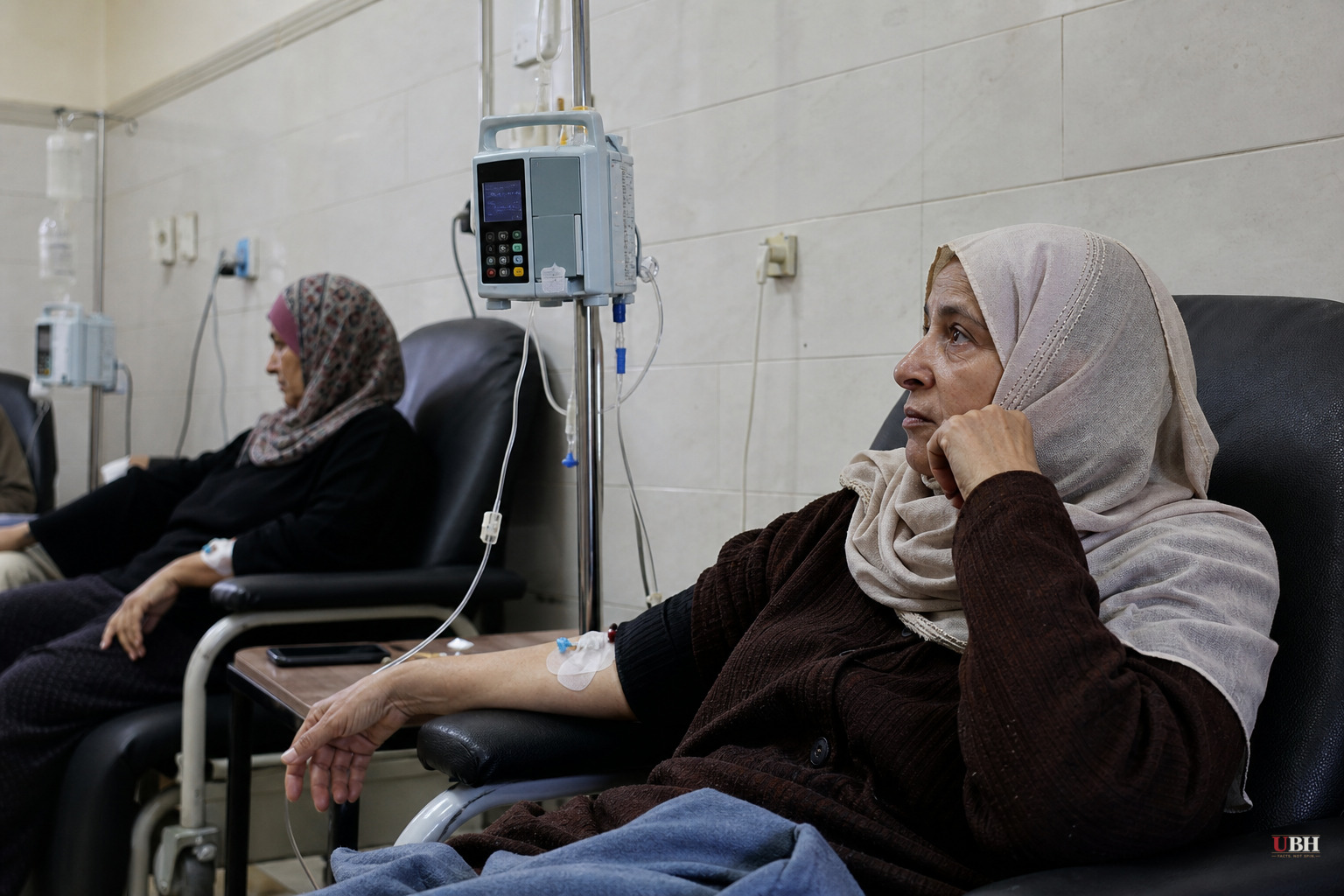
A 33-year-old university professor in southern Gaza, Kholoud Abu Sahmoud, has been trying to leave the territory for cancer treatment since October 2025. She told Middle East Eye her fingernails have fallen out from ineffective chemotherapy, her cancer has spread to her lungs and bones, and she is now living on painkillers. Her medical referral was approved months ago. She is still waiting.
She is not an isolated case. Doctors across Gaza's hospital system say cancer patients are now dying at two to three times the rate recorded before the war began in October 2023, according to CBC News and Common Dreams, both citing physicians on the ground and Reuters reporting from earlier this month.
What's driving the numbers
Three things are colliding, according to the sourcing: destroyed infrastructure, drug shortages, and a bottleneck on medical evacuations.
The Turkish-Palestinian Friendship Hospital, Gaza's only specialized adult cancer treatment facility, was destroyed by Israeli strikes, according to the Palestinian Centre for Human Rights (PCHR) and Gaza Herald. PCHR also says Israeli forces targeted the cancer center at Gaza European Hospital in Khan Younis and destroyed the oncology department at al-Rantisi Pediatric Hospital, converting both sites into military positions for extended periods. Gaza Herald puts the number of cancer patients left without a local specialized treatment option at roughly 17,000.
By March, around 46% of essential medicines and 66% of medical consumables in Gaza were completely out of stock, according to UN agencies and international organizations cited by Middle East Eye. This month, Gaza's Ministry of Health said chemotherapy protocols for breast, colorectal, and gastrointestinal cancers, along with head and neck tumors and sarcomas, have largely halted as oncology drug stocks hit critical lows.
Dr. Muhammed Abu Nada, director of the Gaza Centre for Cancer, told Middle East Eye his staff have been forced to administer expired medicines because nothing else was available, and that even those have now run out. "This is increasing the mortality rate," he said. He described doctors substituting single-drug therapy for standard multi-drug protocols, which reduces effectiveness and worsens outcomes.
At Al-Shifa Hospital, doctors reported three to five cancer deaths per day among patients unable to get chemotherapy, up from roughly one to two per day before the war, according to Gaza Herald. Dr. Hani Ayash at Al-Shifa told CBC News there are about 11,000 oncology patients in Gaza and pointed to staff shortages and patients' psychological state as additional factors in the rising death toll.
The evacuation bottleneck
Palestinian health officials say roughly 20,000 patients are registered for treatment abroad, including about 5,000 cancer patients, but remain unable to leave, according to Gaza Herald. PCHR and Middle East Eye both put the number of cancer patients specifically holding approved referrals and still waiting at around 4,000.
The October 2025 ceasefire between Israel and Hamas was supposed to allow freer movement in and out of Gaza, according to CBC News and Common Dreams. Nearly ten months later, according to Middle East Eye's reporting this month, that has not translated into faster exits for cancer patients.
COGAT, the Israeli military body that administers civilian access to Gaza, told Common Dreams that permission to travel is "wholly dependent on the receiving country's request" and denied deliberately blocking treatment. COGAT also says it coordinates medical evacuations with the World Health Organization, and that departing patients must pass a security screening, with approval withheld "if there are security reasons that prevent their passage," according to its evacuation procedures cited by Common Dreams.
That is a legitimate operational position. Any country managing an active security screening process at a border crossing during an ongoing conflict has a real interest in vetting who leaves, and Israel is not solely in control of how many receiving-country slots exist or how fast third countries process paperwork. Egypt also caps daily crossings at Rafah, according to CBC News, which reports the Israeli military imposes strict limits on crossings despite the ceasefire's free-movement provision.
But the gap between the stated process and the outcome is stark. Roughly 4,000 people hold approved referrals and are still stuck, by PCHR's and Middle East Eye's count. Reuters, cited by Common Dreams, reported that Israel has destroyed the strip's only specialized cancer hospital and is preventing Palestinians from seeking treatment elsewhere. Whether that reflects a deliberate policy or a slow, overwhelmed bureaucratic and security process is not something these sources resolve. No international investigation or tribunal finding establishing intent is cited in this reporting. PCHR's framing that this amounts to a deliberate Israeli "policy to undermine the right to health" is PCHR's characterization, not an adjudicated finding.
What's still unverified
Gaza Herald notes that Palestinian doctors have raised concerns about possible long-term cancer risks tied to exposure to explosive-weapon byproducts across the territory, but says any link "requires further investigation" and has not been established. Al Jazeera's reporting on rising breast cancer cases at Yafa Medical Hospital in Deir el-Balah describes a broken mammography machine and diagnostic delays, but does not present data showing an actual rise in breast cancer incidence versus a rise in late-stage diagnoses due to delayed screening, an important distinction the outlet does not draw.
The open question is what happens to the roughly 4,000 approved cancer referrals still waiting at Rafah. Salam Iskafi's 2-year-old son, Rashad, diagnosed with advanced liver cancer, had a transfer to Jordan cancelled for unspecified reasons the day before it was scheduled, according to CBC News. His doctor told her "every delay takes away from his life." No timeline for resolving the backlog has been announced by COGAT, the WHO, or Gaza's Ministry of Health.
Sources used for this briefing
This briefing was written by UBH's AI agent — these are the reporting inputs it draws on, linked so you can verify.


