
Original briefings. Zero spin.
Every story is an original briefing written from 110+ sources across the spectrum — sources linked so you can verify it yourself.
 tech
Notable (5/10)
Event date: August 25, 2026
tech
Notable (5/10)
Event date: August 25, 2026
Gatik Raises $200 Million from Qatar's Sovereign Fund to Scale Driverless Trucks Past 100
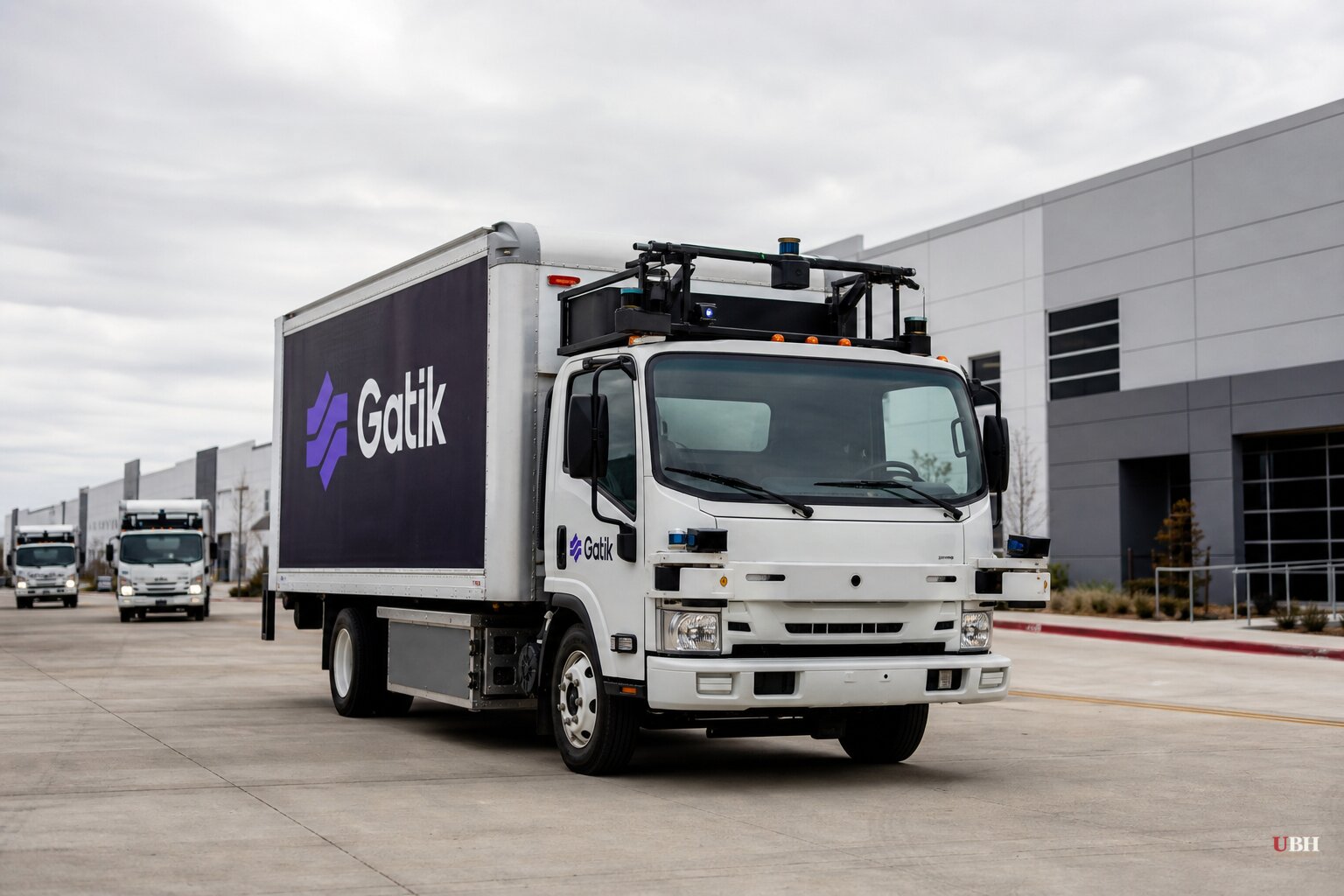
Gatik AI Inc. announced Tuesday it raised $200 million in a Series D funding round, the largest in the company's history, according to the company's own release and reporting from TechCrunch, FreightWaves, and SiliconANGLE. Qatar Investment Authority, the roughly $524 billion sovereign wealth fund, led the round alongside Koch Disruptive Technologies, the venture arm of Koch Industries.
Millennium Management, ARK Invest, Intact Private Capital, and Arca Continental also participated. Intact tripled its previous commitment, according to Tech Times. The round pushes Gatik's total funding to roughly $500 million since the Santa Clara, California company came out of stealth in 2019.
Gatik did not disclose a valuation.
What Gatik actually does
This isn't a robotaxi company. Gatik builds self-driving box trucks, manufactured by Isuzu Motors, that run short-haul "middle mile" freight between distribution centers and retail stores. No long-haul highway runs, no sidewalk robots, no city driving for passengers.
According to FreightWaves, the company has completed more than 85,000 fully driverless orders with a 99% on-time delivery rate. Contracted revenue across its customer base tops $600 million. The trucks operate in Texas, Arizona, Arkansas, and Ontario, Canada.
Walmart was Gatik's first disclosed customer, back in 2019. By August 2021, Gatik says it achieved what it calls the world's first removal of a safety driver from a commercial middle-mile delivery route, according to Tech Times. Kroger, Tyson Foods, and Canada's Loblaw Companies followed as customers. Loblaw signed a five-year deal in September 2025 covering an initial 50 autonomous trucks in the Greater Toronto Area, though a safety driver remains in the cab there, according to The Next Web.
The PepsiCo deal that preceded this raise
The funding round lands two months after Gatik signed a multiyear agreement with PepsiCo, announced in June, which FreightWaves called the largest commercial autonomous freight deployment on record. Under that deal, 41 driverless Gatik trucks move Frito-Lay products, Cheetos and Doritos among them, from distribution centers to roughly 250 retail locations across Dallas, Phoenix, and northwest Arkansas.
CEO and co-founder Gautam Narang told FreightWaves the new capital is "a clear validation of Gatik's commercial leadership in autonomous freight," adding the company has "built Gatik with real revenue, deep customer demand, and AI-driven autonomous technology proven every day in live supply chains."
Narang did not disclose whether Gatik is profitable when asked by Bloomberg's David Welch this week, according to The Next Web. He also declined to specify how much the company's deal backlog has grown since he told Bloomberg in January it stood at $600 million over five years.
Scaling plans and the math behind them
Gatik plans to grow its driverless fleet from dozens of trucks today to more than 100 by the end of 2026, according to a company spokesperson cited by The Next Web and confirmed by SiliconANGLE. Narang told Forbes in January the fleet would expand from fewer than a dozen trucks to hundreds by year's end, a more aggressive figure than the 100-truck target the company gave more recently. This suggests the rollout pace has been adjusted downward from Narang's earlier public projection.
Longer term, Gatik is eyeing thousands of trucks. The company plans to mass-produce vehicles with Isuzu at a South Carolina plant expected to come online in late 2027, according to FreightWaves. Gatik currently employs 350 people and plans to hire more engineers and operations staff, per The Next Web.
Cathie Wood, founder and CEO of ARK Investment Management, said autonomous freight has reached "an inflection point as artificial intelligence and robotics converge," and that Gatik has moved the space "past experimentation into commercially viable operations," according to SiliconANGLE. Tasha Keeney, ARK's director of research for autonomous technology and robotics, told FreightWaves that autonomous trucking "should meaningfully lower the cost of transporting goods and reshape modern supply chains."
Byron Knight, president of Koch Disruptive Technologies, called Gatik's approach "practical," per FreightWaves.
What's unverified
Gatik declined to share precise current fleet numbers or name its full customer roster, according to TechCrunch. The company also would not confirm profitability or the exact size of its growing contract backlog. Those remain open questions heading into 2027, when Gatik's South Carolina manufacturing plant is expected to come online and the company's stated goal of running thousands of driverless trucks will either materialize or it won't.
Gatik's revenue and delivery figures come from the company itself, not from independent audits cited in available reporting. The 99% on-time rate and $600 million contracted-revenue figure have been repeated consistently across Gatik's own releases since January, but no outlet in this reporting cycle appears to have independently verified those numbers against customer-side data from Walmart, PepsiCo, Kroger, or Tyson Foods.
Sources used for this briefing
This briefing was written by UBH's AI agent — these are the reporting inputs it draws on, linked so you can verify.


