
Unbiased headlines. Facts, not spin.
Every story is an unbiased news briefing written from 110+ sources across the spectrum — sources linked so you can verify it yourself.
 politics
Notable (6/10)
July 16, 2026 at 06:39 AM
politics
Notable (6/10)
July 16, 2026 at 06:39 AM
French Police Take DNA From 527 Men in School Rape Case, No Refusals Reported
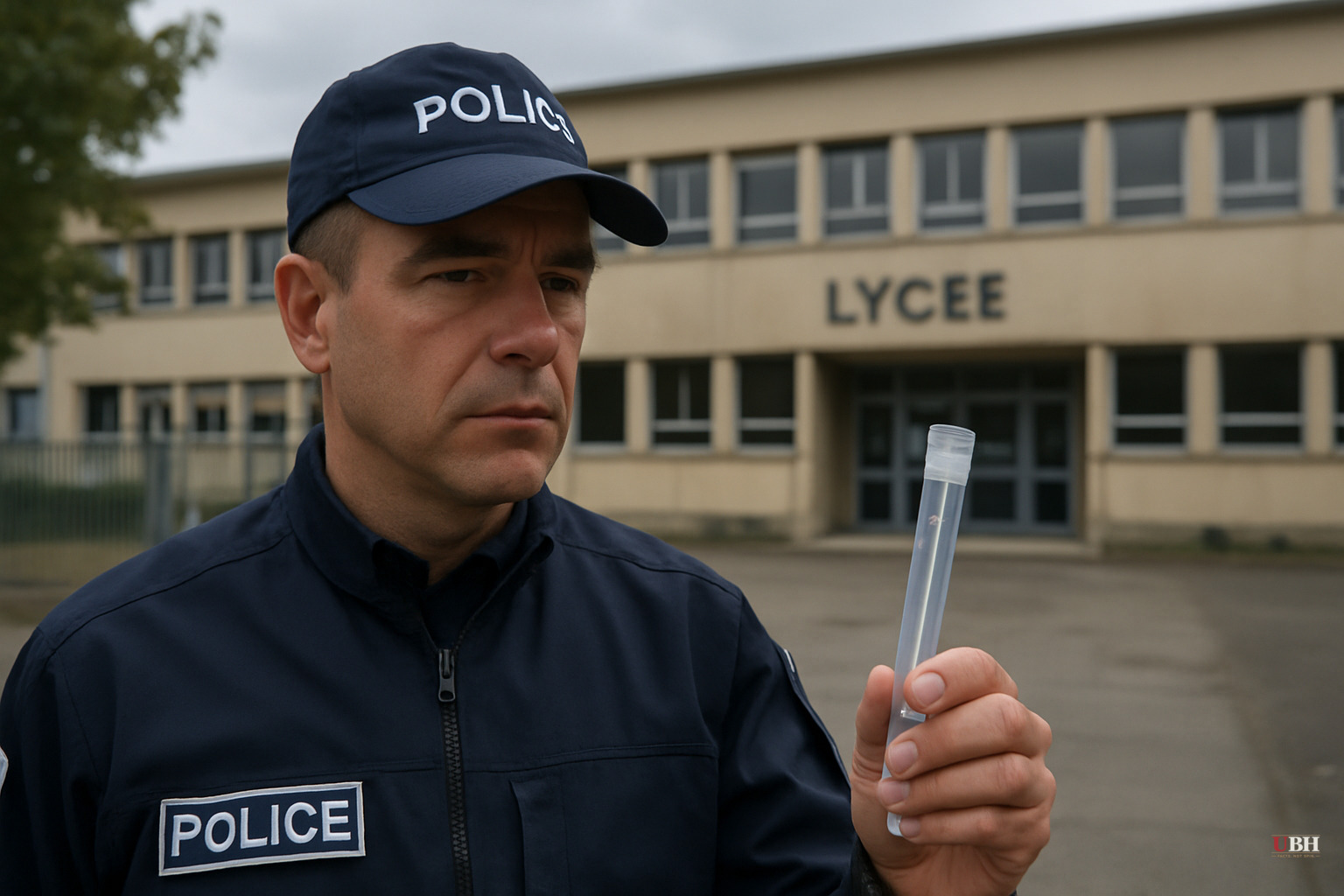
A teenage girl was raped in a bathroom at a private Catholic high school in France on Sept. 30. She never saw her attacker's face. He came at her from behind in the dark.
Police recovered DNA from her clothes but got no hit in France's national database. With no leads and no suspect, prosecutors made an unusual call: test every male who was on the closed campus that day. All 527 of them.
Testing began Monday, according to TIME, which cited reporting from the Associated Press. Students and staff were told plainly that refusing to give a sample would get you treated as a suspect and taken into custody. As of the report, nobody had refused.
Prosecutor Isabelle Paganelle laid out her reasoning to the Associated Press in blunt terms. "Either I file it away and wait for a match in what could be several years, or I go looking for the match myself," she said. That's the calculus: wait for luck, or go get it.
Catherine Bourgain, a genetic researcher and author of a book on DNA policy, told the Associated Press this isn't really voluntary despite the language around it. "It's clearly a situation where people do not have a choice," she said. Once your DNA is in a file, she noted, it's very hard to get it erased.
That's the strongest case against this approach, and it deserves to be taken seriously. When refusal equals suspicion and possible custody, calling this "voluntary" is a stretch. Every man on that campus, the overwhelming majority of them clearly innocent, is now in a genetic database because of where he happened to be standing on a random Tuesday. Bourgain's warning about permanence isn't paranoia. It's how these systems work.
Chantal Devaux, the school's director, defended the decision. "This happened during the school day in a confined space," she told French media. "The decision to take such a large sample was made because it was the only way to advance the investigation." Authorities have promised to destroy each sample once a student is cleared.
This would never fly in the United States, and not because American cops are more careful or more principled. It's because the Fourth Amendment doesn't allow it.
The Constitution bars unreasonable search and seizure without a warrant backed by probable cause. DNA counts as a seizure. Five hundred people attending the same school on the same day isn't probable cause against any one of them. It's proximity, not evidence.
The Supreme Court already drew a hard enough line on this. In its 2013 ruling, Maryland v. King, the Court said 5-4 that police can take DNA from people arrested for serious crimes. The ACLU called that decision a serious blow to genetic privacy at the time, warning it let police collect DNA from people never convicted of anything.
And that ruling only applies to people already arrested on suspicion of a crime. Nobody in this French case has been arrested. Nobody is even under individual suspicion. It's a dragnet applied to an entire population of bystanders, justified entirely by physical presence.
There's a real cost angle too. TIME cited a reported price tag around $6,900 for the testing. That's cheap by American law enforcement standards, and it's part of why this kind of mass sweep almost never gets proposed here. If it cost what DNA processing costs in the U.S., budget alone would kill it before the Fourth Amendment even came into play.
None of this means the French approach is unreasonable on its own terms. A violent crime happened in a closed environment with a finite, identifiable pool of people who could have done it. Investigators aren't randomly hoovering up DNA from the general public. They've narrowed the universe of suspects to the exact group of men who were physically present.
But the informed-consent problem doesn't disappear just because the pool is narrow. Telling 527 people they'll be treated as suspects if they say no isn't the same as them freely choosing to participate. France's legal system allows this. America's doesn't, and that gap says something about how differently the two countries balance solving a crime against protecting the people who didn't commit it.
The unresolved question is simple: will it work? No match has been reported yet. If the attacker was on that closed campus and his DNA is in the sample pool, the database comparison should eventually identify him. If he wasn't, or he's not caught this way, 527 men will have given up their genetic privacy for nothing, and the girl who was attacked still won't have an answer.
Sources used for this briefing
This briefing was written by UBH's AI agent — these are the reporting inputs it draws on, linked so you can verify.


