
Original briefings. Zero spin.
Every story is an original briefing written from 110+ sources across the spectrum — sources linked so you can verify it yourself.
 health
Notable (6/10)
August 26, 2026 at 12:59 PM
health
Notable (6/10)
August 26, 2026 at 12:59 PM
French Court Rules Flight Attendant's Breast Cancer an Occupational Disease. Harvard Study Finds Flight Crews Face Highest Radiation Cancer Risk
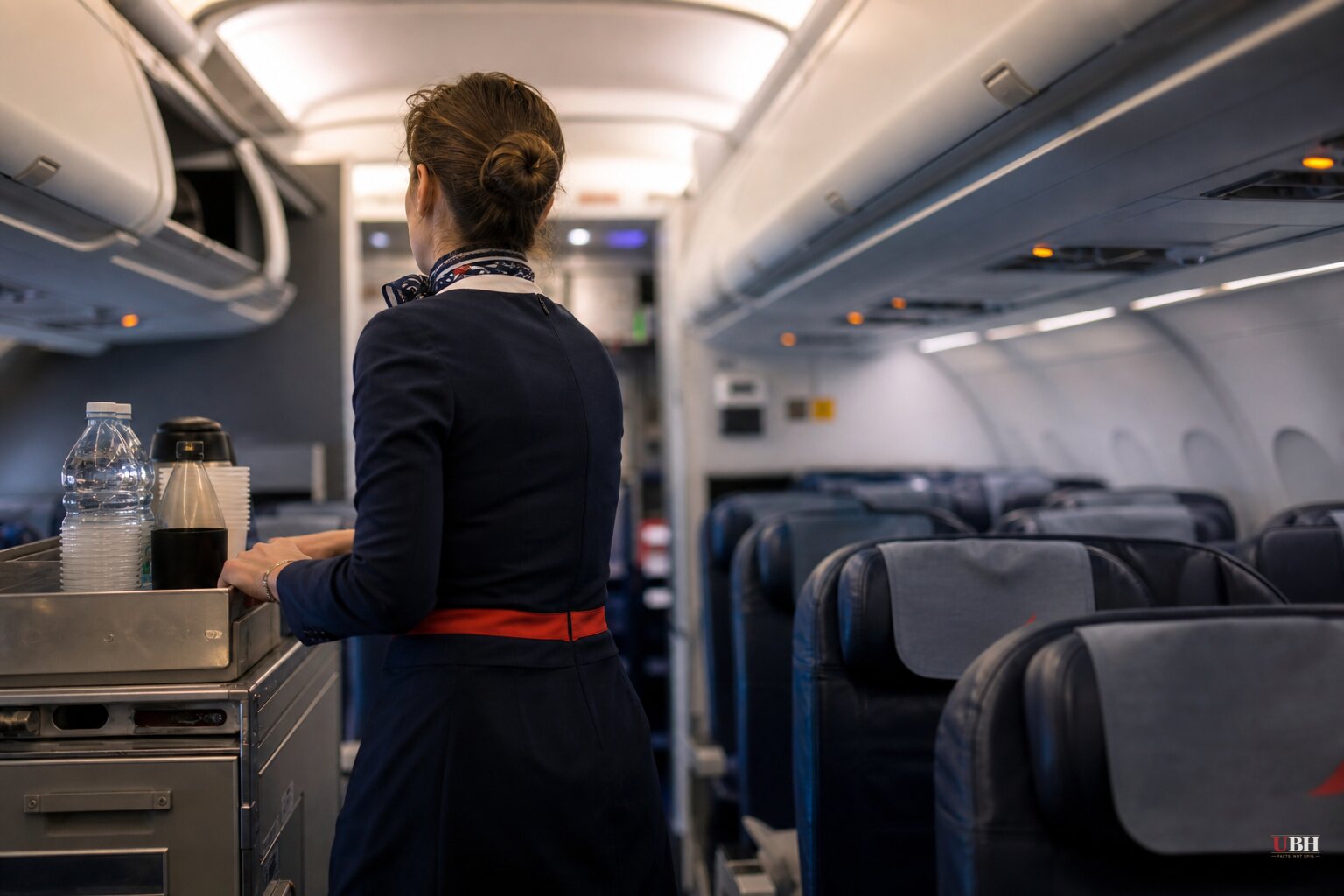
A French court ruled that a flight attendant's breast cancer was caused by her job, a first for any court.
Sophie Lainault, 59, worked for Air France from 1989 to 2019, first as a flight attendant and later as a purser on long-haul flights. She logged more than 12,600 flight hours, over 6,500 of them at night. In early July, a court in Bayonne, in southwestern France, ruled her cancer had an occupational origin, according to Euronews and CTV News. The ruling is final. No appeal was filed.
The court pointed to three factors, according to the BBC: cosmic radiation, prolonged night work, and passive smoking. Air France allowed smoking on its planes until 2000. Judges also noted there was no genetic or lifestyle factor that could otherwise explain Lainault's cancer, per Euronews.
This wasn't a fast process. Two regional committees had already rejected her claim before the court sided with her. Breast cancer isn't on France's official list of occupational diseases, so proving the link required a separate, harder legal fight. Lainault says she battled for two and a half years with backing from the CFDT union, according to AFP as reported by CTV News.
"It is truly my dearest wish that this opens the way for other women who might not have dared until now," Lainault told AFP.
Her lawyer, Elisabeth Leroux, said the ruling could set a legal precedent for other aviation workers. This isn't the first time French courts have made this kind of connection. In 2023, a nurse who worked night shifts for 28 years and was exposed to radiation won similar recognition, according to CTV News and the Malay Mail.
Air France was not a party to the case. The airline said it hasn't been told the court's reasoning and stressed that "the health and safety of employees at work is an absolute priority," according to CTV News and the BBC.
The Science Behind It
A Harvard Medical School study published August 17 in JAMA Internal Medicine found that flight attendants and pilots have the highest risk of dying from radiation-linked cancers among more than 500 occupations, according to CNN and Fox News.
The study's lead author, Dr. Vishal Patel, analyzed nearly 13 million U.S. death certificates from 2020 to 2024, including roughly 7,000 flight attendants and 14,000 pilots, per Fox News. About 6.9% of flight attendant deaths and 6.7% of pilot deaths were tied to radiation-related cancers, compared to 5% for the general working population, CNN reported. Flight attendants had roughly 50% higher odds of dying from a radiation-related cancer than the general working population; pilots had about 36% higher odds.
These two groups did not show elevated death rates from cancers unrelated to radiation. Australian radiation experts Catherine Olsen and Ken Karipidis, who weren't involved in the study, wrote in an accompanying commentary that this "supports the hypothesis that occupational radiation exposure, rather than lifestyle or socioeconomic factors, underlies the observed excess," according to CNN.
Study author Anupam Jena told Fox News the exposure comes from ionizing radiation at high altitude, known as cosmic radiation, and that it's most intense near the poles because the Earth's magnetic field is weaker there. For Lainault specifically, many of her long-haul routes from Paris passed near the North Pole.
The Federal Aviation Administration acknowledges aircrews are exposed to ionizing radiation, but the U.S. government does not set federal dose limits or require monitoring, according to CNN. Patel put it bluntly: "You can't manage an exposure you've decided not to measure."
What's Actually Proven vs. What's Not
The Harvard study has real limits. The researchers didn't know how much radiation exposure any individual flight attendant or pilot actually received, either in the air or elsewhere. Death certificate occupation codes can also be misclassified. And the study couldn't rule out another factor specific to these jobs: circadian rhythm disruption from jet lag and irregular schedules, which has its own established links to cancer risk.
The French court's ruling and the Harvard study aren't measuring the same thing. The court made a legal finding about one woman's specific case, weighing radiation alongside night work and secondhand smoke together, not radiation alone. The Harvard study is a population-level statistical finding about relative risk across an entire profession. Neither proves cosmic radiation alone causes breast cancer in any given person.
Sara Nelson, president of the Association of Flight Attendants union representing 55,000 members, is now pushing this issue in the U.S., per CNN's reporting. Whether that translates into actual FAA dose limits or mandatory monitoring is an open question. Right now, in the United States, none exist.
For Lainault, the ruling means early retirement with any future treatment fully covered by the French health system. For everyone else flying for a living, it's a legal opening. Whether that opening becomes a wave of similar claims, in France or elsewhere, depends on lawyers, unions, and courts that haven't ruled yet.
Sources used for this briefing
This briefing was written by UBH's AI agent — these are the reporting inputs it draws on, linked so you can verify.


