
Original briefings. Zero spin.
Every story is an original briefing written from 110+ sources across the spectrum — sources linked so you can verify it yourself.
 health
Notable (6/10)
September 2, 2026 at 12:01 AM
health
Notable (6/10)
September 2, 2026 at 12:01 AM
France to Survey 10 Million Schoolchildren on Sexual Violence Starting in November
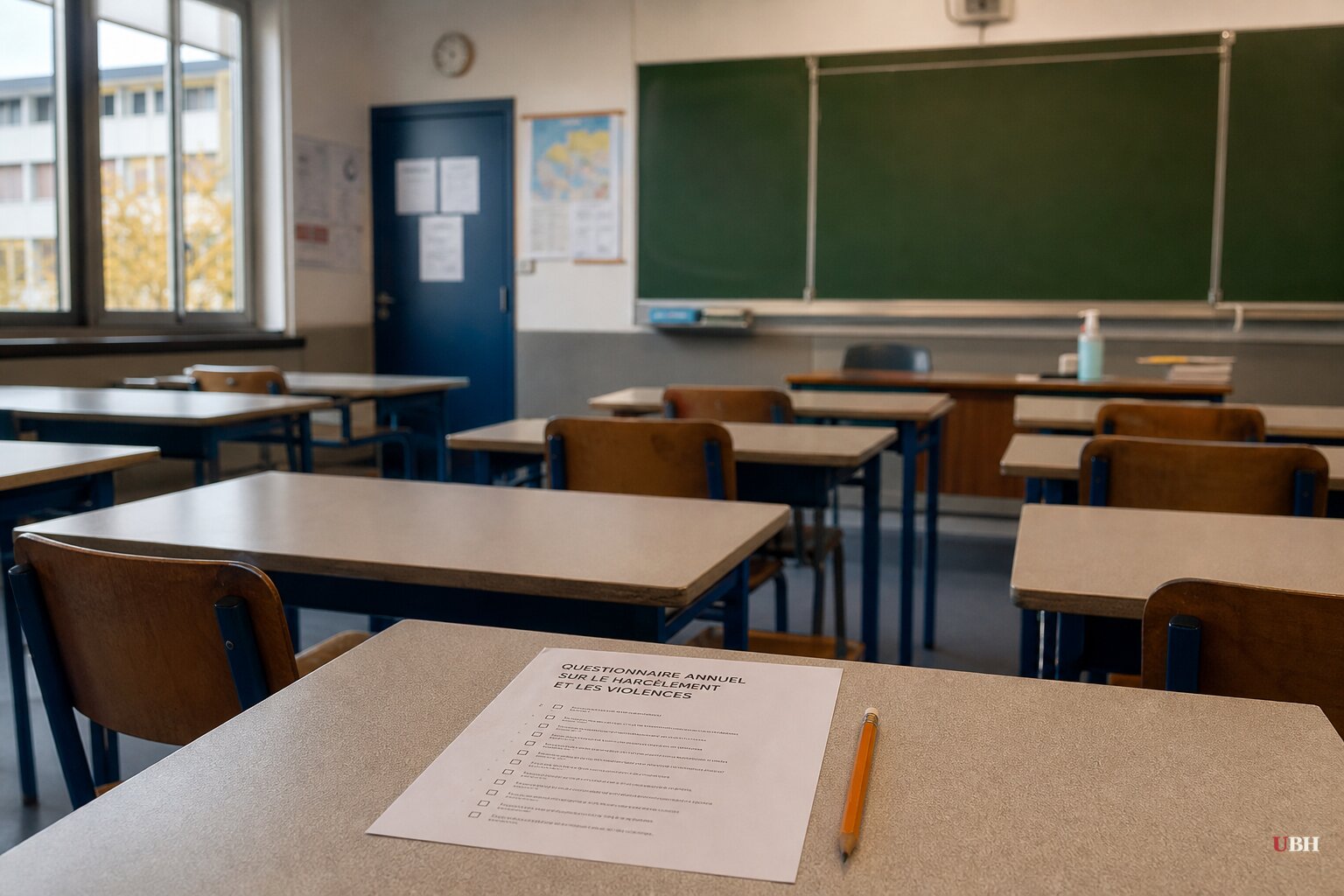
French schools reopened Tuesday, September 1, and for the first time the country's annual school bullying questionnaire will ask pupils directly about sexual violence.
Education Minister Édouard Geffray announced the change to French regional newspapers on August 25, telling broadcaster BFMTV the survey would reach roughly 10 million pupils, from the final year of preschool through the end of secondary school. The forms go out in November. Geffray said the questions were built "with school staff, parents' associations and a committee of experts, including child psychiatrists," and he expects the results to be "seismic."
The survey will be anonymous by default, but students can identify themselves if they want to talk to a trusted adult, according to Euronews and WTX News. Teachers collect the forms first. If answers raise red flags, school leaders are expected to notify the regional education authority or, in serious cases, refer the matter straight to prosecutors.
Why Now
Geffray told reporters "one child in 10 is a victim of sexual violence in France," according to NewsWav. That figure sits alongside a separate 2023 estimate from CIIVISE, the government's Independent Commission on Incest and Sexual Violence against Children, which put the number of children victimized annually at around 160,000, with 77% of that abuse happening inside the family. CIIVISE's math works out to one child raped or sexually assaulted roughly every three minutes.
The ministry says French schools are already the country's single biggest source of abuse reports. Euronews and WTX News cite the minister's figure of about 80,000 reports a year; NewsWav reports a slightly different number, 88,000 reports filed in 2025 tied to sexual violence or parental failings. Both figures come from the same ministry, and the discrepancy hasn't been explained in available reporting.
What Prompted the Survey
The survey didn't come out of nowhere. Last fall, dozens of activity leaders in Paris after-school childcare programs were suspended over sexual assault allegations, part of a wider scandal that Inbox News EU says still hangs over parents as this school year begins. As of August 26, Paris alone had 203 open criminal investigations into alleged violence, including sexual violence, in schools and after-school programs, according to Euronews.
Then came the killing of 11-year-old Lyhanna, whose body was found in the Gers department in early June. The main suspect, Jérôme Barella, had already been the subject of multiple sexual assault complaints involving minors, according to NewsWav, but had never been questioned about them.
Justice Minister Gérald Darmanin ordered prosecutors nationwide to review pending complaints involving children. What they found reveals the deeper problem: 85,047 complaints alleging sexual violence against minors were still sitting unprocessed, a figure Darmanin forwarded to Interior Minister Laurent Nuñez, per NewsWav. That number doesn't even include so-called "phantom" cases, complaints that technically exist in the system but never showed up in official counts. In Nîmes, magistrates found 3,972 pending cases buried in investigative services, nearly triple the 1,497 cases previously logged.
This is a backlog problem sitting inside the justice system that's supposed to act once a report comes in.
Parents and Child-Protection Groups Split
Some parents back the survey. Samuel Bougnat, father of a three-year-old, told Euronews he sees it as a step forward, saying school "should be a sanctuary" where kids can talk about what's happening at home. Another father, who asked not to be named, called it "pragmatic" since every child eventually passes through school. Other parents, like Caroline Varas, are less convinced, telling Euronews she isn't sure school alone should be responsible and that there's "a missing intermediary between the school and parents."
Child-protection groups have reacted with caution. Laura Morin-Baudet, who heads the Paris-based non-profit L'Enfant Bleu, told Euronews and WTX News she welcomes the ministry taking up the issue but questioned the practical side: results depend heavily on whether children feel safe and unobserved when answering, and on whether they trust where their answers will go. She also stressed that teachers and childcare professionals remain poorly trained to spot and respond to signs of abuse.
Separately, according to Ground News, some associations fear an "advertising effect" — that the survey could generate headlines without being paired with a dedicated budget or a broader overhaul of how child protection actually works.
The November questionnaire will tell France how big the problem looks on paper. Whether the system — already sitting on tens of thousands of unresolved complaints — can act on what it hears is a separate, unanswered question.
Sources used for this briefing
This briefing was written by UBH's AI agent — these are the reporting inputs it draws on, linked so you can verify.


